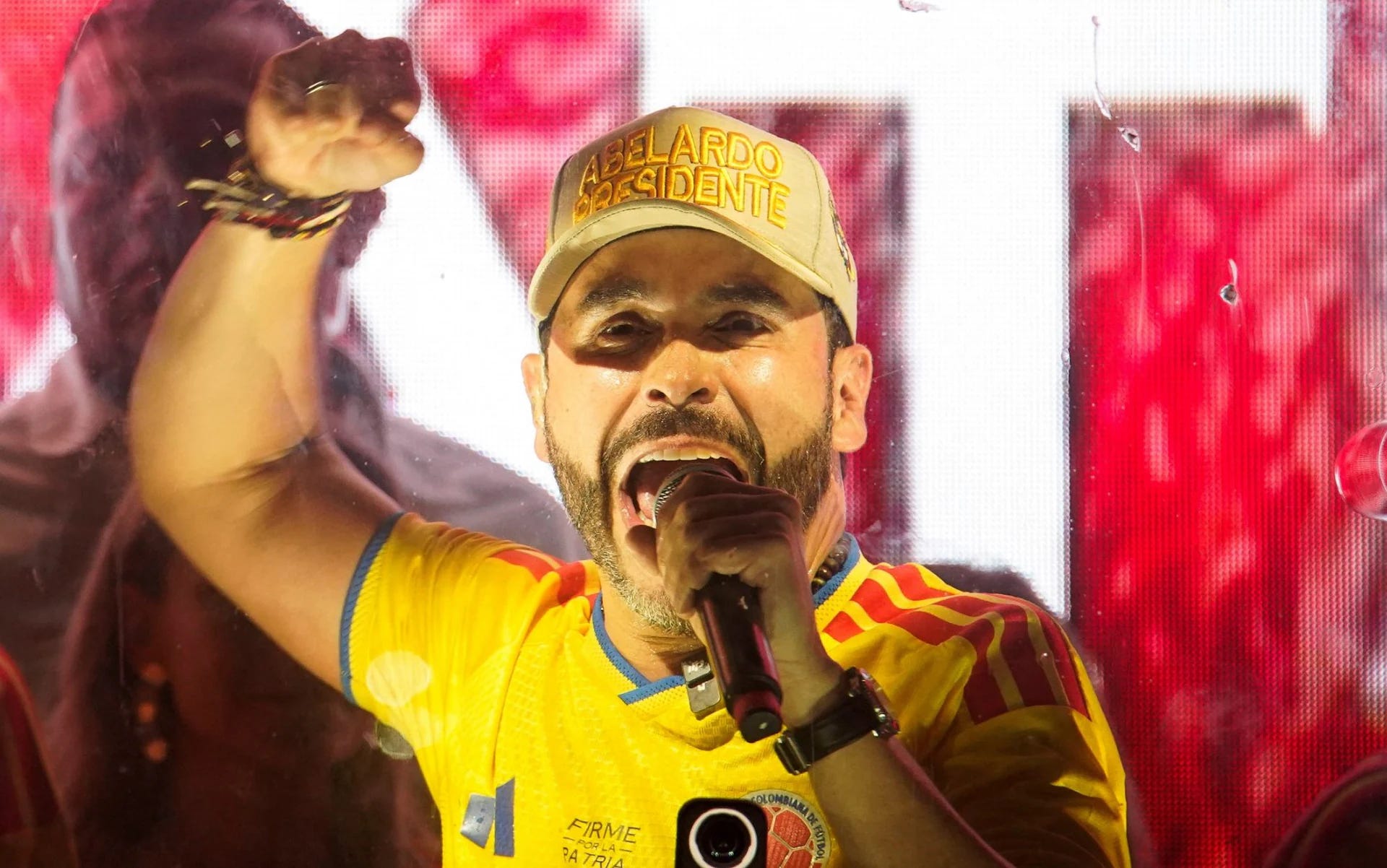
Colombian President Abelardo de la Espriella never got a honeymoon. Just over a month into his administration, three of his core campaign promises have already been torpedoed, and labor sectors are already planning street protests.
The self-proclaimed “Tiger” was forced by courts to cancel a pilot program that would have resumed aerial fumigation of coca crops — the raw ingredient for cocaine production — due to the environmental impacts of pesticides the government planned on using.
His “iron hand” security policies have also suffered serious setbacks. Aggressive bombings against non-state armed groups (NSAGs) in the country have killed at least three children in Guaviare. A Bogotá judge suspended any further bombings in the region in response to a lawsuit brought by children’s advocacy groups.
Colombia’s Defensoria has also strongly criticized de la Espriella for posting photos of bodies on social media of alleged NSAG fighters killed by state security forces.
During his first 3 weeks in office, the new Colombian President listed at least 72 people killed during security operations. A Colombian judge ordered he remove the images from social media as well the Presidential website.
He has since stopped posting daily updates of killings as well as photos of bodies.
Colombia does not report details of security operations monthly, and it is currently unclear if the aggressive measures are ongoing. Details will become clearer as the year winds to an end, but de la Espriella is already experiencing considerable pushback for his posts, even from some erstwhile allies.
Meanwhile, his 2027 budget will massively balloon Colombian debt. De la Espriella ran on promises to cut spending and shrink the size of the state by a third, and often criticized his predecessor, Gustavo Petro, for excessive spending.
His new proposed budget is the largest in Colombian history. His Ministers have declined to defend the proposal before Congress, and blame inherited spending from the previous administration. They have declined to provide details.


Opposition political parties and labor organizations seem to smell blood in the water.
On Friday, More than 1,500 delegates from labor federations, teachers’ unions, peasant organizations, ethnic communities, and political movements agreed to call for a national strike in response to Abelardo’s loosening of firearm restrictions and plans to form “self-defense” militias to combat crime.
Self-Defense, or autodefensa, paramilitary forces have a dark and violent past in Colombia.
The groups are calling for opposition parties and student groups to organize national protests beginning in October, and have launched a two-day strike to call attention to their cause.
De la Espriella started his administration on rocky ground, but in addition to scandals and court orders, national disasters have also taken an early toll on his presidency.
De la Espriella won elections by less than 1%, and the country was rocked by an earthquake that killed hundreds just a few days after taking office. Massive wildfires in the agricultural region of Tolima have also displaced thousands and caused tens of millions in economic damages to the industrial farming sector.
The Colombian President has blamed NSAGs for the fires. There is no evidence to support that claim.
A new fracking pilot program being designed by the Ministry of Mining and Energy is also almost certain to be struck down by courts. A similar program was attempted by then-president Iván Duque in 2019. A lawsuit was carried all the way to the Constitutional Court, the highest court in Colombia, and the court struck down all fracking efforts.
The court cited Constitutional environmental protections in its decision. Any new attempts to re-implement fracking are highly likely to be struck down on the same grounds.
There is one area where De la Espriella has experienced successes, at least from his perspective. The ultra-right-wing president has already dismantled broad swaths of peace programs as well as all ongoing negotiations with NSAGs and organized criminal structures.
The decision terminated negotiating tables involving the National Liberation Army (ELN), FARC dissident factions, the EGC (Gulf Clan), and other urban criminal gangs operating in Medellin, Buenaventura, Putumayo, and Quibdó.
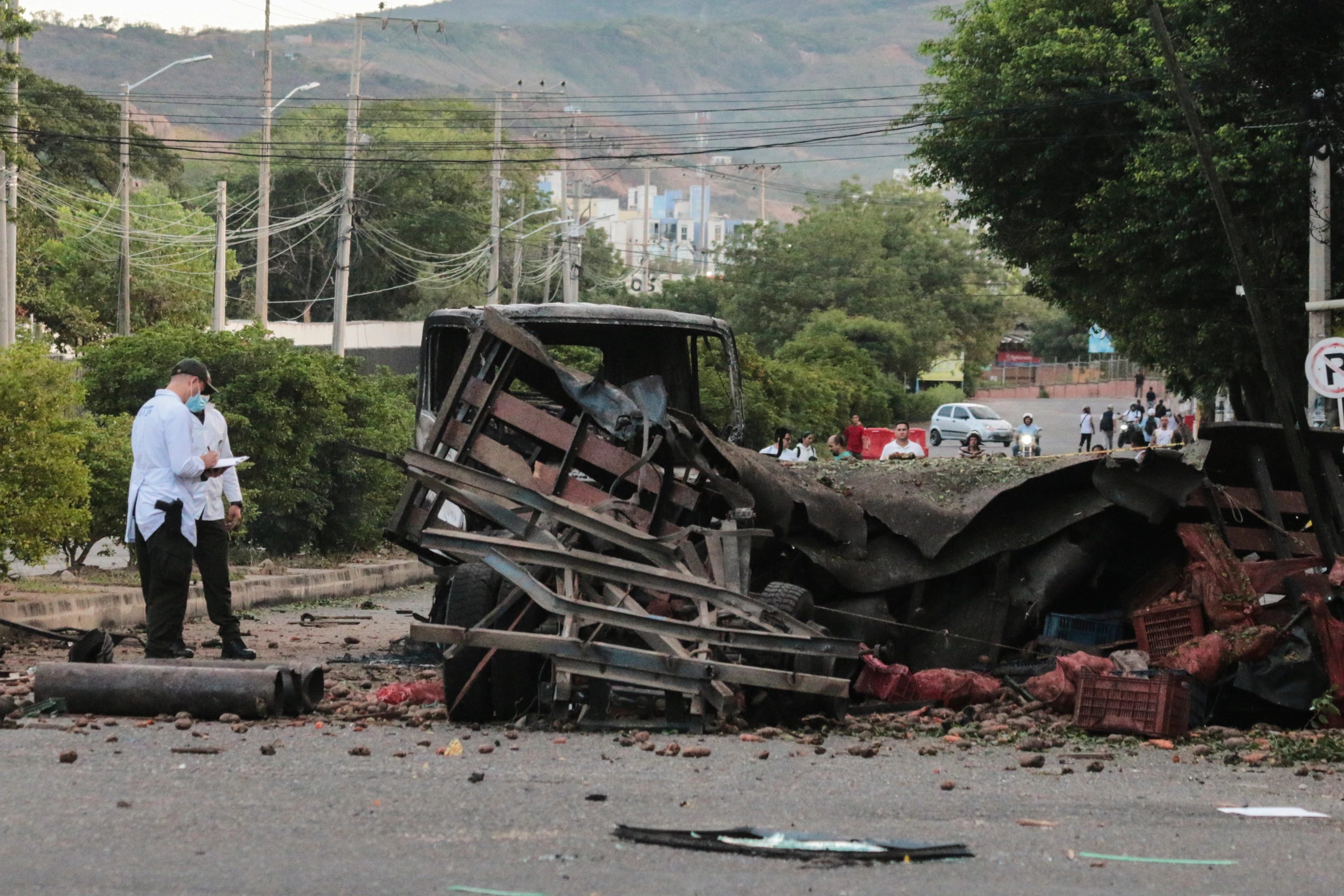
NSAGs have stepped up attacks on security force infrastructure in recent weeks in response to de la Espriella’s military strikes, including car bomb and drone attacks on police and military stations, especially in Norte de Santander, on the Venezuelan border.
De la Espriella has promised to work closely with intelligence and military organizations in the United States. He met with US Secretary of State Marco Rubio last week. Although details of the meeting were scarce, the two promised “unprecedented cooperation” on “combating crime and illegal migration.”
You can also donate a one-time gift via “Buy Me a Coffee”. It only takes a few moments, and you can do so here.
And if you can’t do any of that, please do help us by sharing the piece! We don’t have billionaire PR teams either.
Hasta pronto, piratas!