This week’s feature is by freelance journalist Joseph Bouchard, writing from Bolivia
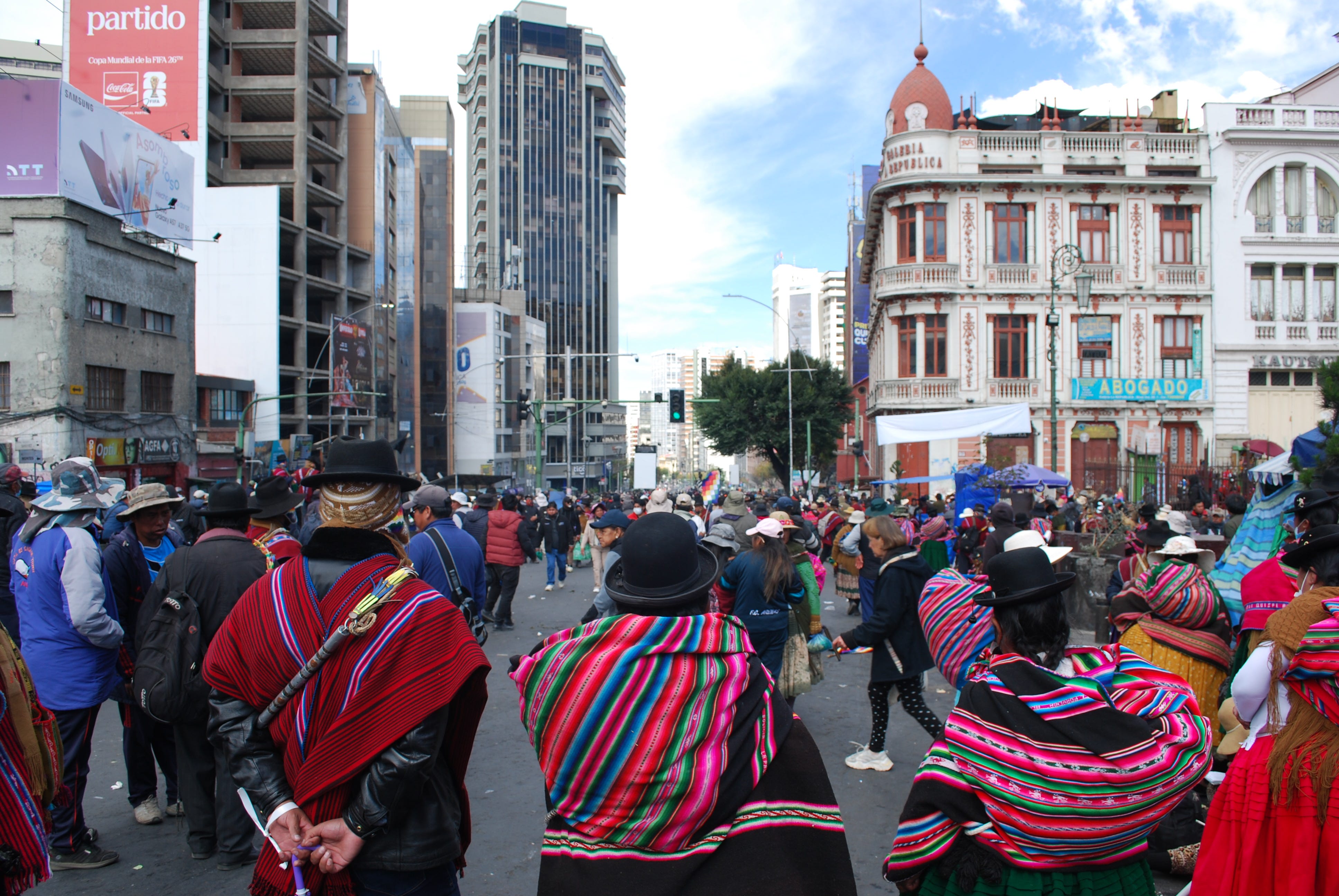
At a march organized by various social sectors in El Alto last weekend, as thousands of demonstrators marched toward the seat of government, Plaza Murillo in La Paz, the mood was divided. Most were demanding better economic conditions, more political representation, or new elections. Some chanted that right-wing president Rodrigo Paz Pereira will “burn like a chicken,” in reference to the president’s father, former president Jaime Paz, who suffered severe burns in a plane crash during the military dictatorship. None of the protesters, however, mentioned Evo Morales.
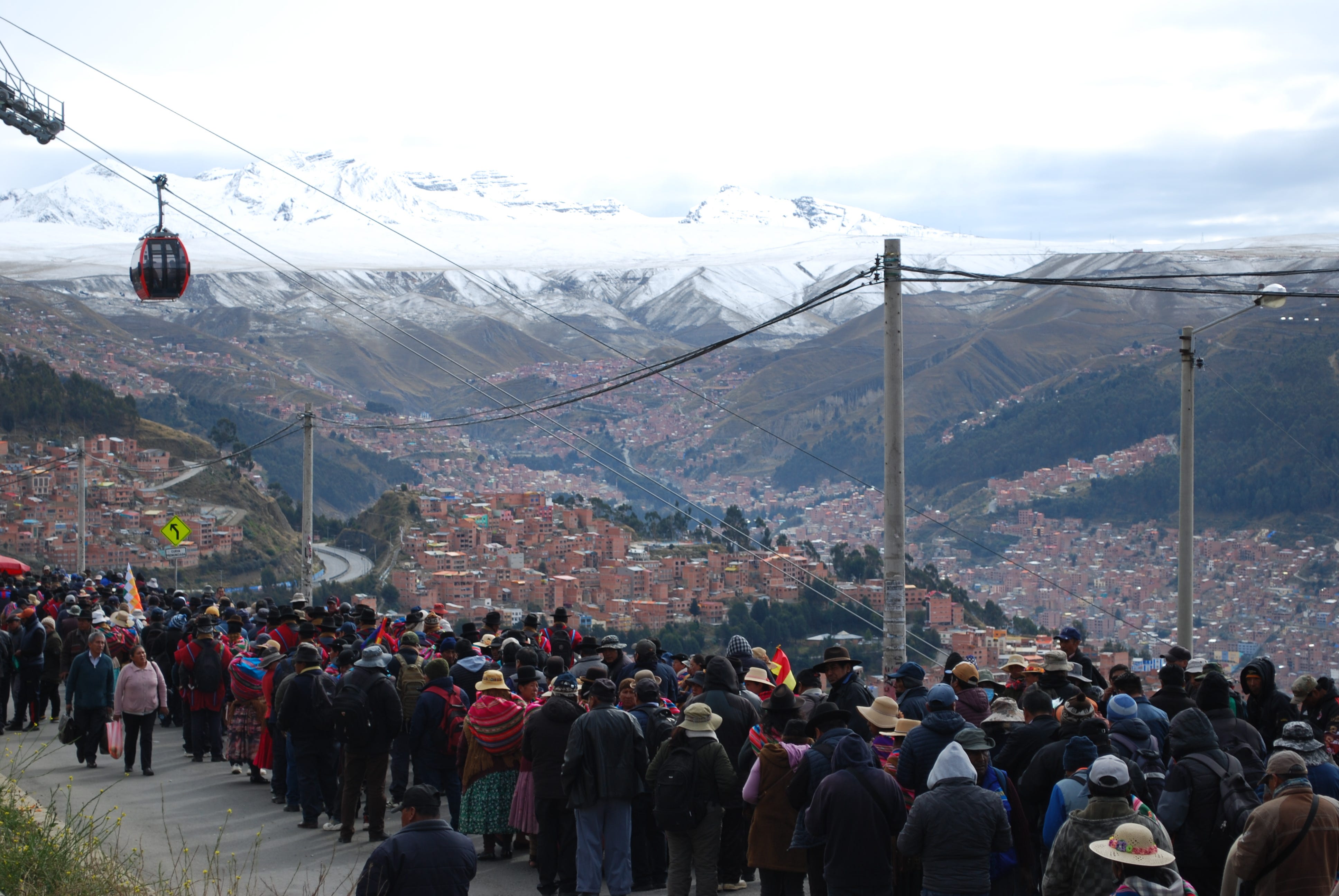
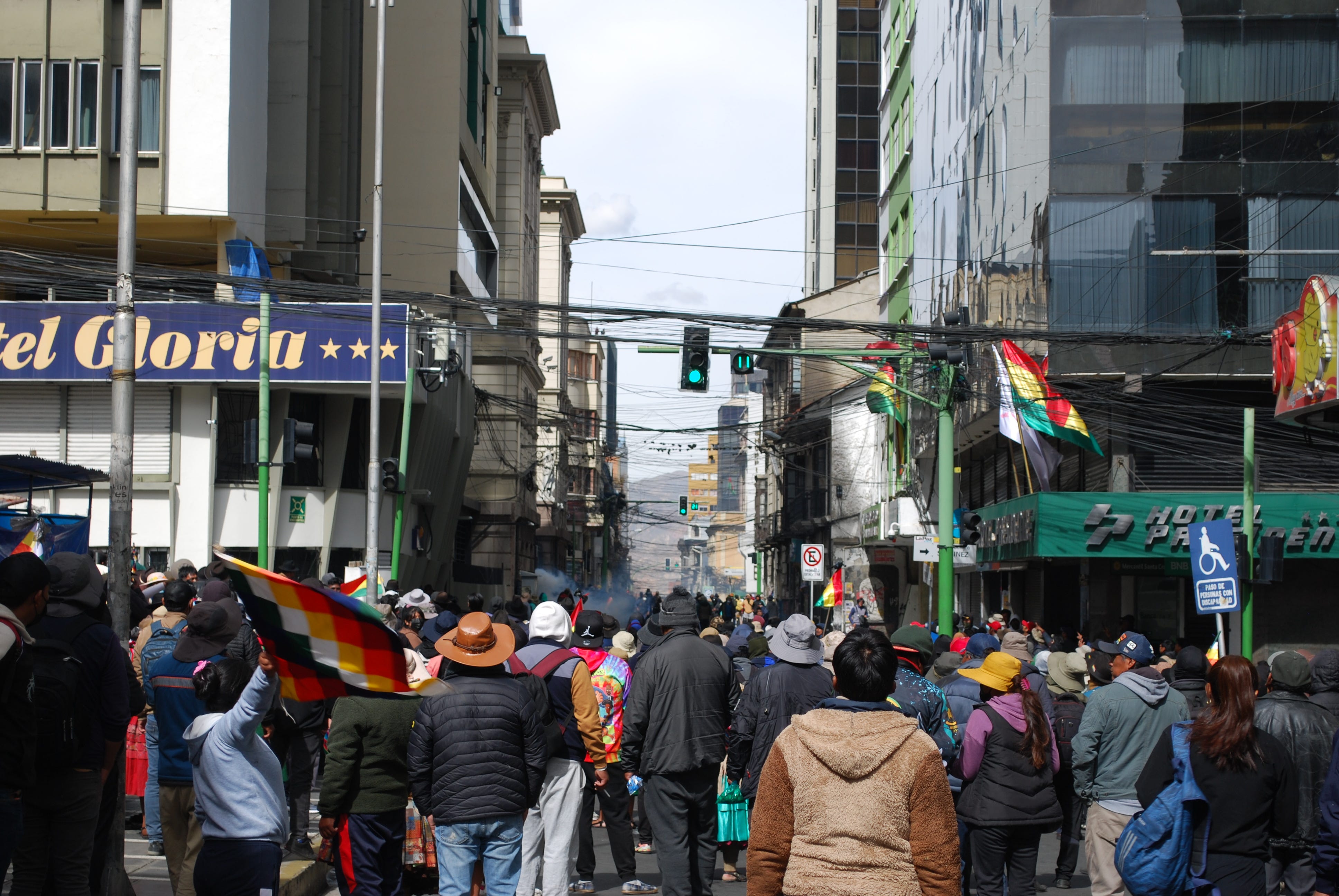
Protests in Bolivia have now stretched into their fourth week. Much of the center of the country, including the capital La Paz, is paralyzed. Blockades stretch from the Peruvian border to the El Alto airport, as roads to Cochabamba, Potosi, and Oruro remain sites of active demonstrations.
The cost of basic food staples in some areas has risen in response to protests, and the government claims La Paz is running out of food, fuel, and medicine. The government, and even some US media, have framed former Bolivian President Evo Morales as the mastermind of ongoing demonstrations. He isn’t.
The still-growing protests oppose neoliberal austerity and land reform policies, a cost-of-living crisis, persistent inflation, and politicization of the judiciary (releasing 2019 coup plotters while jailing socialist former president Luis Arce and wanting to jail former president Evo Morales). The protests are diverse: social organizations, national unions, and indigenous movements have all contributed collective, if at times uncoordinated, efforts.
Jorge, one protester with the Kataristas, an indigenous social movement formed in the 1970s, told Pirate Wire Services in El Alto, “This government is conducting a war on indigenous peoples and the poor, they are making it impossible for us to live.”
The Paz government is considering declaring a “state of exception,” which would grant extraordinary powers to security forces and suspend some civil rights in the country.
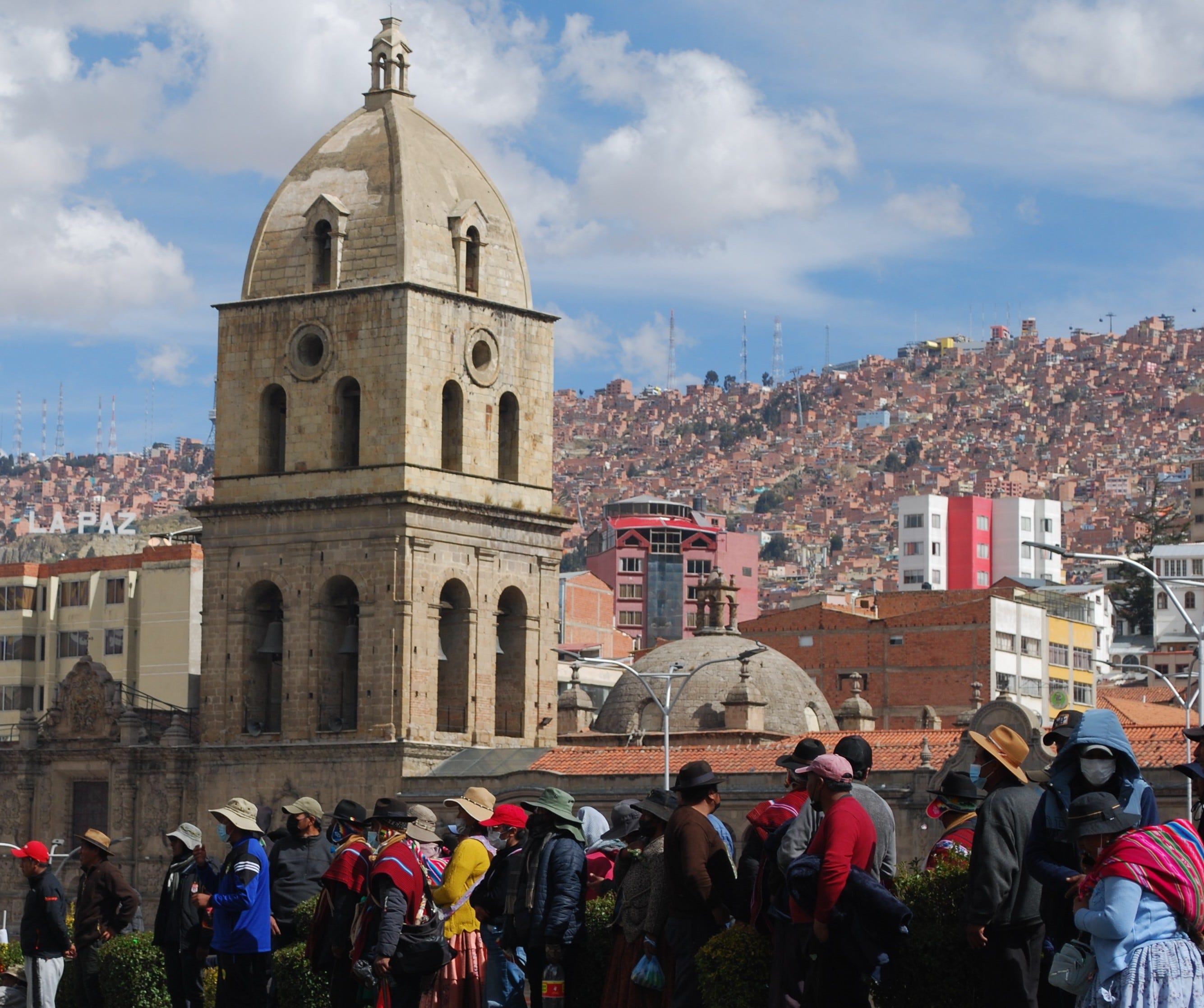
Much of the media, right-wing politicians, and even the Paz government argue that protesters are “bought out”, controlled, or gullible victims being financed by former leftist president Evo Morales.
Some politicians and commentators have alleged that the social movements active in the current uprising against the Paz government, including the Bolivian Workers’ Central (COB), the Kataristas, the Six Federations of Cochabamba, the Coca Growers’ Union, FEDECOMIN, the Rural Teachers’ Union, and the Transportation Union, have been co-opted by the now-splintered MAS political movement.
Others, like US Secretary of State Marco Rubio, go even further, saying that the groups, and Morales, are “terrorists and drug traffickers.” The Vice Minister of Social Movement and Indigenous Justice, Jorge Garcia, has made similar allegations, which have been shared by other prominent government and right-wing politicians. Even the Washington Post, AP, Al Jazeera, BBC, and other mainstream newspapers of record have claimed that the protesters are “allied with Evo Morales.”
Is there any truth at all to those claims? Where did the protests in Bolivia come from? Is anyone “controlling” them? Is Morales really leading them?
Morales has at times denied it, saying, “It doesn’t surprise me that they keep blaming me for everything. For years, they’ve accused me without evidence, and I’ve faced dozens of trials in courts, many of them biased and controlled by those in power.”
But he also seems eager to utilize the protests in an attempt to reclaim some of the political capital within Bolivia’s left he has lost in recent years.
Morales’s political party, the Movement Towards Socialism (MAS), dominated Bolivian politics for almost two decades. But the movement fractured into numerous factions under the previous government of leftist Luis Arce, a feud within the MAS that included Arce initiating the legal process to jail Morales for allegedly fathering a child with a 15-year-old girl while in office.
Morales called for Arce to be jailed in return, while actively working to tank his government. MAS effectively imploded as a result, leaving Bolivia’s left politically weak and fragmented, at least in the halls of power. The fracture also resulted in bad blood between the MAS factions, and left Morales with significantly less power and influence over the Bolivian left more broadly.
Arce was jailed by the new right-wing administration in December over allegations of corruption when he was the Finance Minister under Morales.
Protests began in early April, when farmers and miners blocked key highways and trade routes. The blockades were initially sparked by laws aiming to reform land titles in Bolivia, which would have privatized mineral deposits in indigenous territories, allowing corporations and the state to begin exploitation projects in the region.
The protests grew in intensity, as well as scope, in mid-May, and at times turned violent amid brutal police crackdowns.
Paz scrapped the controversial mining legislation in May, but protester demands expanded as state repression ramped up, and most of those demonstrating now call for Paz’s resignation from office.
Morales retains considerable regional support in the Chapare region, but more nationally, his influence has waned considerably. Most of his calls to action are done using social media, including his personal account and the news agency he helped found, Radio Kawsachun Coca.
There is no doubt that Morales supports the protests. On April 13th, Morales, from his personal Twitter account, denounced Paz’s attempts at land reform, which he linked to the “coup plotter Jeanine Áñez,” the former right-wing president who took over after disputed elections in 2019. He claimed the law would hurt the indigenous rural poor and be a gift to multinationals, big banks, and corrupt politicians in the state, including those linked to the Libre Party of far-right former president, and Paz’s second-round opponent, Tuto Quiroga.
On May 12th, Morales put out his first defence of the demonstrators, arguing that “The anger in the streets won’t be covered up with slander and judicial persecutions. The people are moving from patience and resistance to rebellion against neocolonialism and neoliberalism.” He added that “As long as there are sellouts, racists, discriminators, landowners, and exploiters, the people’s fighting spirit will never disappear.”
Morales has also condemned violence at demonstrations multiple times, urging “the government and the people to find peaceful solutions.”
But Morales is not leading or organizing the demonstrations. News outlets have continued to claim that the protests are mounted by “allies of Evo Morales,” but not a single protest group has asked for Morales to be reinstated, or even to be brought back into political life. No group outside of his immediate influence have demanded criminal charges against Morales be dropped.
Instead, many of the social movements present have rebuked Morales publicly.
In the last election, movement leaders from key workers’ unions and indigenous groups broke off from the left to endorse the now-president, Paz and his party, the Christian Democratic Party (PDC). PWS spent four days with the protesters, interviewing their leaders, as well as left-wing politicians. None of them expressed any alliance with, or support for, Morales.
Most leaders who spoke with PWS recognized progress made between 2006 and 2015, when Morales was in office, but then criticized his actions afterwards, as well as the MAS overall, particularly subsequent president Luis Arce, now Morales’s sworn enemy.
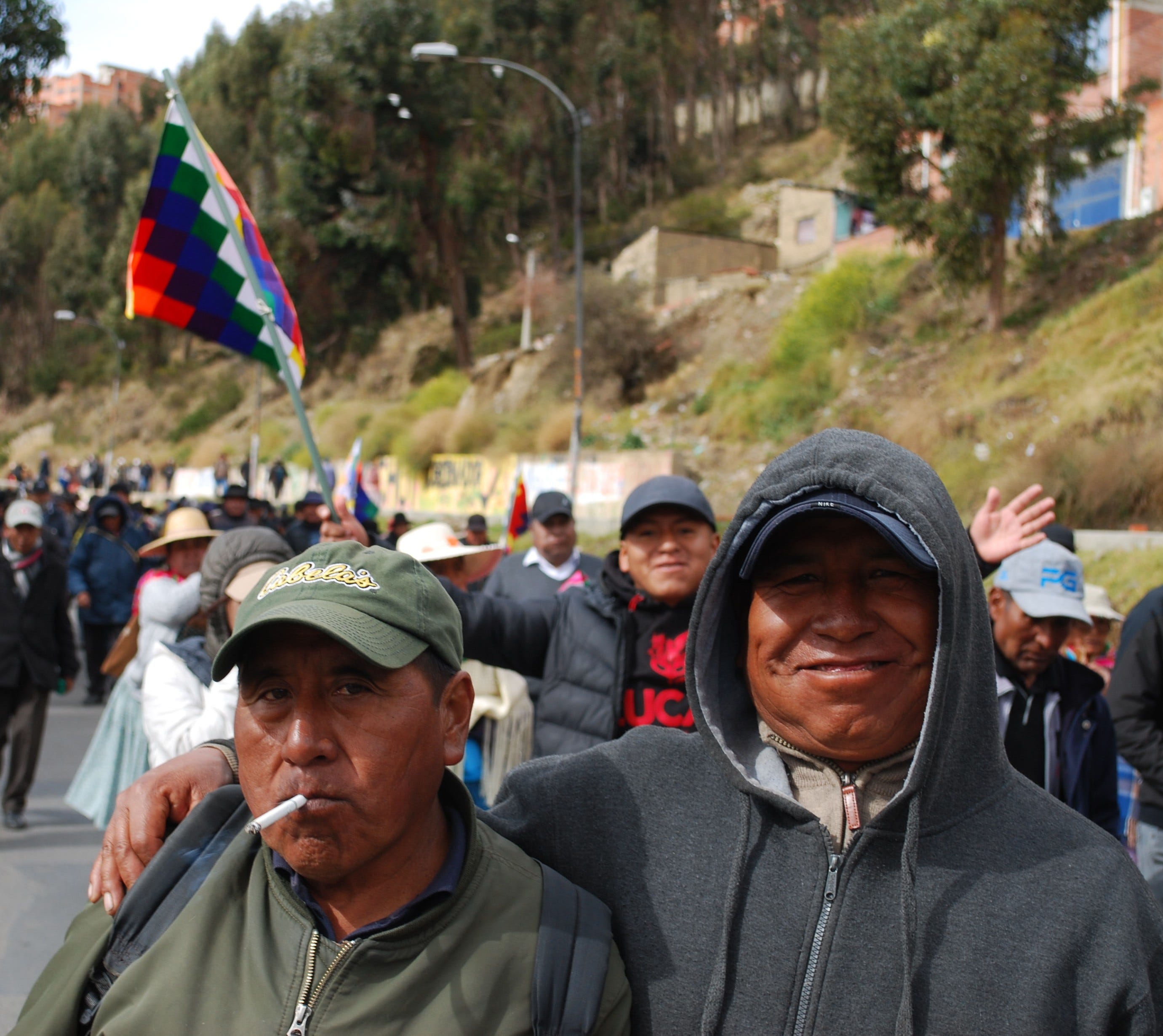
When asked who they voted for in the last elections, almost universally say that they supported Paz (or, more accurately, his vice-presidential candidate, Edmand Lara) in an election between two right-wing leaders, but that they now feel betrayed by the administration. The terms “Masista” and “Evista” are themselves insults screamed by protesters at counter-protesters and security forces, an action that shows their enmity for Morales.
Yet, the government and the right still say those same groups that got them elected are with Morales, rather than voicing genuine concerns. Part of that came from the popular conspiracy theory, birthed in the second round of the election, that Morales and the MAS signed a deal with the Paz’s political party, the PDC. Shortly after taking office, Paz’s vice-president, Lara, repeated the theory.
PWS was unable to find any evidence to support these claims.
Even the Ponchos Rojos, the aymara militia who are among the most radical left-wing groups at protests, do not side with Morales openly. The groups embrace violence as a tool against state power and marginalization, and one of them called for civil war last week. A manifesto published last week by one leader included a list of demands. Morales was not mentioned.
There are small factions of the Ponchos Rojos who have hunkered down with Morales in the Chapare since arrest warrants were issued against him, to protect him as his personal ideological guard. They have said anyone who enters their territory “should be ready to die.”
But Ponchos Rojos, who spoke to PWS in La Paz and El Alto, wanted nothing to do with Morales. One of their leaders, when questioned last week, said,“We are not affiliated with any politician or political party. We are here to defend the rights of indigenous peoples, our sovereignty, and our lands, against a corrupt and incursionist government.”
Yet, La Derecha Diario, a far-right tabloid that backs right-wing autocracies in Latin America, wrote “Evo Morales gave weapons to the Red Ponchos to invade the city of La Paz,” and, like the Trump administration, claimed protesters are“staging a coup d’état.”
The newspaper has also propagated the nonsensical claim, without evidence, that Colombian guerrillas are deployed among the protesters.
Morales undermined his successes as president through a series of damaging and self-inflicted actions. He ran for president again in 2019 despite losing his constitutional referendum to extend term limits before he was removed by a right-wing coup.
The accusations of statutory rape of underage girls are credible. Morales is also accused of using blockades of medical supplies and food to achieve political goals while in office. Some of his policies set the stage for the multiple crises of the mid-2020s, giving us the current political landscape.
Without those actions, the violent government of Jeanine Áñez, which killed dozens of protesters in a brutal crackdown, might have never existed. Many leftists blame him, and his ego, for squandering the good will that two decades of socialist rule brought to the country.
Morales has a lot to gain politically from these protests, which could, in theory, bring about a left-wing government. For the moment, however, Paz is holding firmly onto office. And if Paz does resign, his vice-president is even more adamantly anti-Morales and has vowed to capture Morales “by any means necessary.” Lara has recognized that “Evo is not behind all of the mobilizations,” and urged “not to demonize the protests and link them to Evismo.”
But the attempt to claim that Morales is somehow a shadow “puppet master” of protesters is politically expedient for both the Bolivian right and Washington, D.C.
The government needs a scapegoat for their problems. Admitting that widespread popular discontent and backlash stem from their policies is, to them, unacceptable. They have instead chosen to use a well-worn playbook by states facing a genuine uprising, calling protesters thugs, terrorists, and narcotraffickers, in an attempt to drum up support for martial law.
Joseph Bouchard is a journalist and researcher from Québec covering security and democracy in Latin America, currently based in La Paz, Bolivia. His articles have appeared in Drop Site News, The Intercept Brasil, Responsible Statecraft, and Le Devoir, among others.
You can also donate a one-time gift via “Buy Me a Coffee”. It only takes a few moments, and you can do so here.
And if you can’t do any of that, please do help us by sharing the piece! We don’t have billionaire PR teams either.
Hasta pronto, piratas!