

This feature contains additional reporting by our sister organization Colombia Reports.
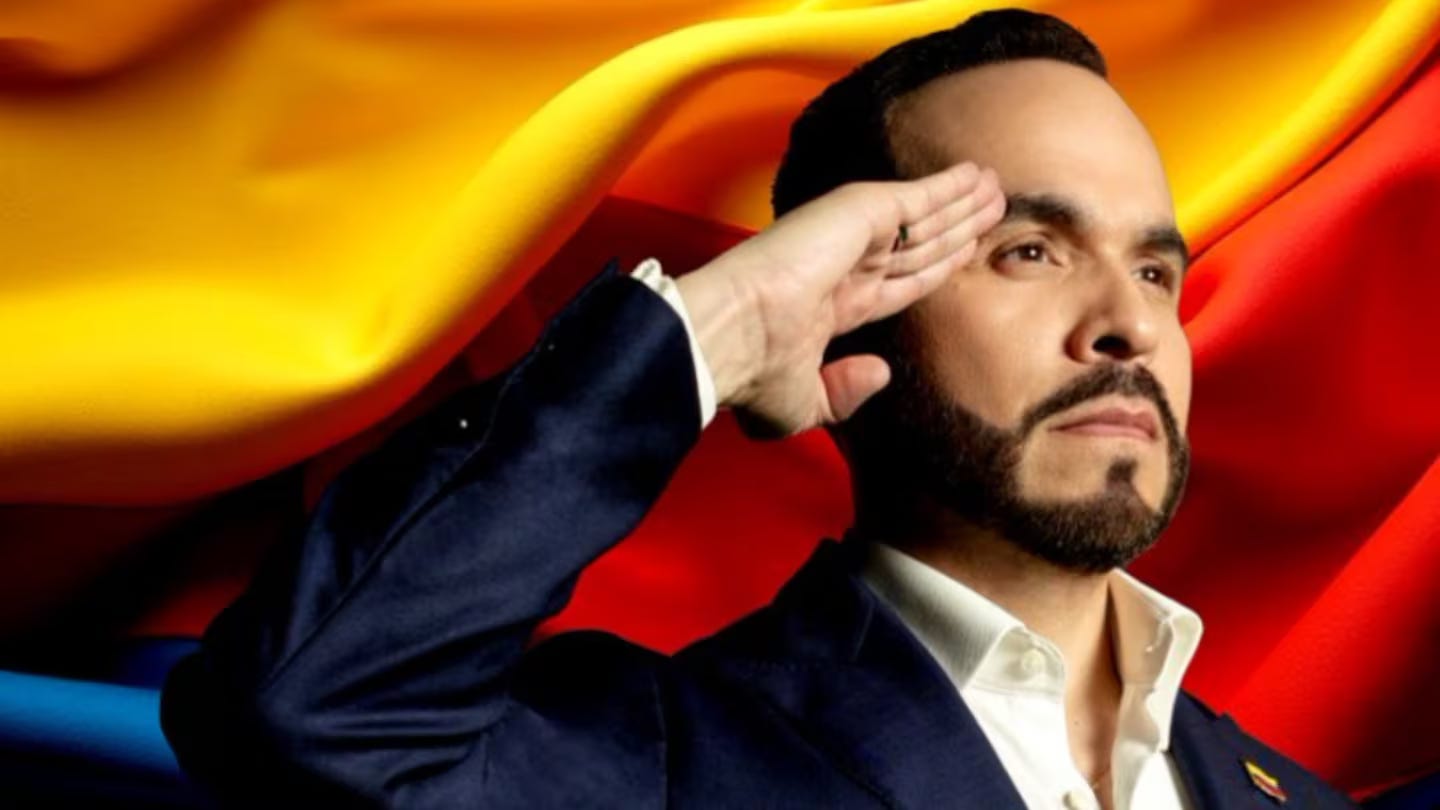
Colombia is about to head to the polls for the first round of presidential elections. For months, the race has been viewed as a three-way contest, with two right-wing candidates vying for who would likely face leftist candidate Ivan Cepeda in the second round.
A month ago, the failure of the right to consolidate behind a single candidate even put Cepeda far enough ahead of his opponents that his campaign began pursuing a strategy to win outright in the first round by achieving more than 50% of the vote.
But if the last polls before voting on Sunday, May 31, are to be believed, it is increasingly likely the second round will be a showdown between Cepeda and controversial and outspoken ultra-right outsider Abelardo de la Espriella, a man who made his name advocating for one of the most infamous right-wing death squads in Latin America.
Who is Abelardo de la Espriella?
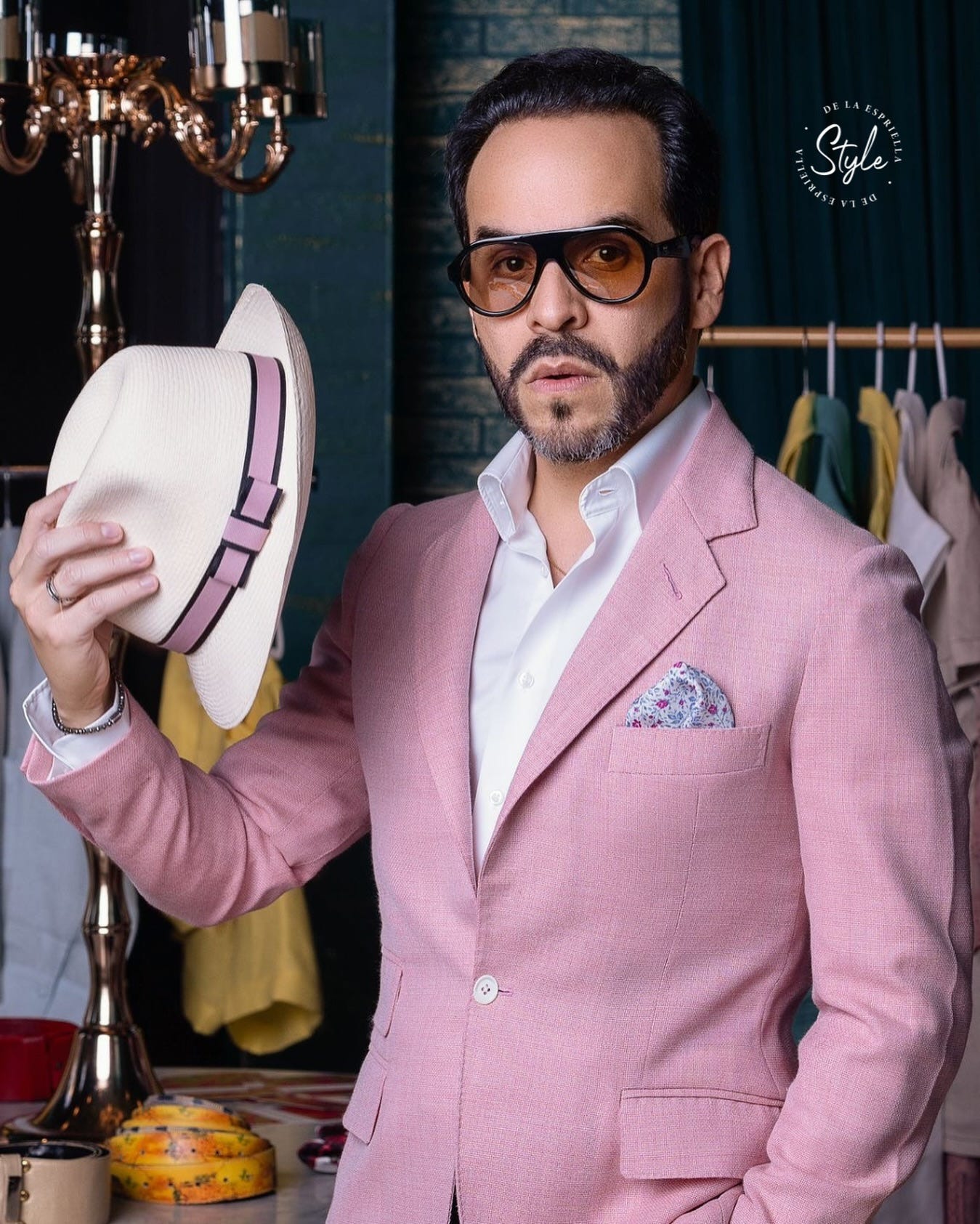
Abelardo wants you to call him “The Tiger,” a moniker he gave himself as part of his election campaign. He is an outspoken admirer of Salvadoran President Nayib Bukele, Javier Milei in Argentina, and Donald Trump in the United States.
He is Italian-Colombian, holding passports in both countries, and is most famous as a high-profile defense attorney. He has defended controversial clients, including former Colombian President Alvaro Uribe, narco-traffickers, and Alex Saab, who was extradited this week to the US over money laundering accusations related to his time as a minister in Venezuela.
He has often publicly dropped misogynistic and homophobic comments, including in formal interviews. He often brushes off criticisms of his behavior as “woke” or claims that critics can’t take a joke.
He is also a businessman, with a line of clothing, a brand of rum, a coffee distribution company, and a foundation to help impoverished children, though recent reporting by Colombian media suggests those efforts may be more about branding than profits, as few of his businesses actually sell much of anything.
Before he began to gain momentum as a divisive public figure, De la Espriella was a public advocate for the paramilitary group United Self-Defense Forces of Colombia (AUC).
He represented the paramilitary group in a personal public relations campaign during their peace negotiations with the government of former president Álvaro Uribe between 2002 and 2005.
The AUC participated in countless human rights violations during the country’s civil war, including the “false positives” scandals, in which thousands of civilians were killed to inflate casualty statistics of rebel fighters.
As part of those efforts, de la Espriella established a foundation to represent the interests of AUC fighters. In addition to attempting to clear their public images, he also advocated against their possible extradition to the United States for crimes committed in Colombia.
The foundation, called FIPAZ, received more than 1.3 billion pesos ($350,000 USD) from the AUC, according to Colombian media.
De la Espriella’s campaign platform has been short on details, but he promises “iron fist” security policies and economic austerity programs designed to bring down Colombia’s debt and attract foreign investment.
Security has become a predominant theme of the campaign as Colombia’s internal conflict continues unabated. This election season has also brought about attacks on campaign workers, sitting senators, and bombings by guerrilla groups in the south of the country.

De la Espriella also, paradoxically, plans to increase funding for Colombia’s military forces. The ultra-right candidate has promised “Total War” on criminal armed groups, and has capitalized on his status as an outsider with promises to go after corruption in the country, which is endemic.
He has stated that he will begin by restructuring Ecopetrol, Colombia’s state-owned oil company. He has promised a “full new house” of board members and directors, hand-picked by himself, of course, as the first step.
His relationship with the media has grown increasingly fraught. In addition to forcing a female journalist in a live interview to look at a picture of his groin (saying, “This is why all the women go wild for me”), he has often attacked journalists who report factually on his checkered past, initiating more than 100 lawsuits against journalists in the country.
A ‘defense’ lawyer who has often gone after journalists
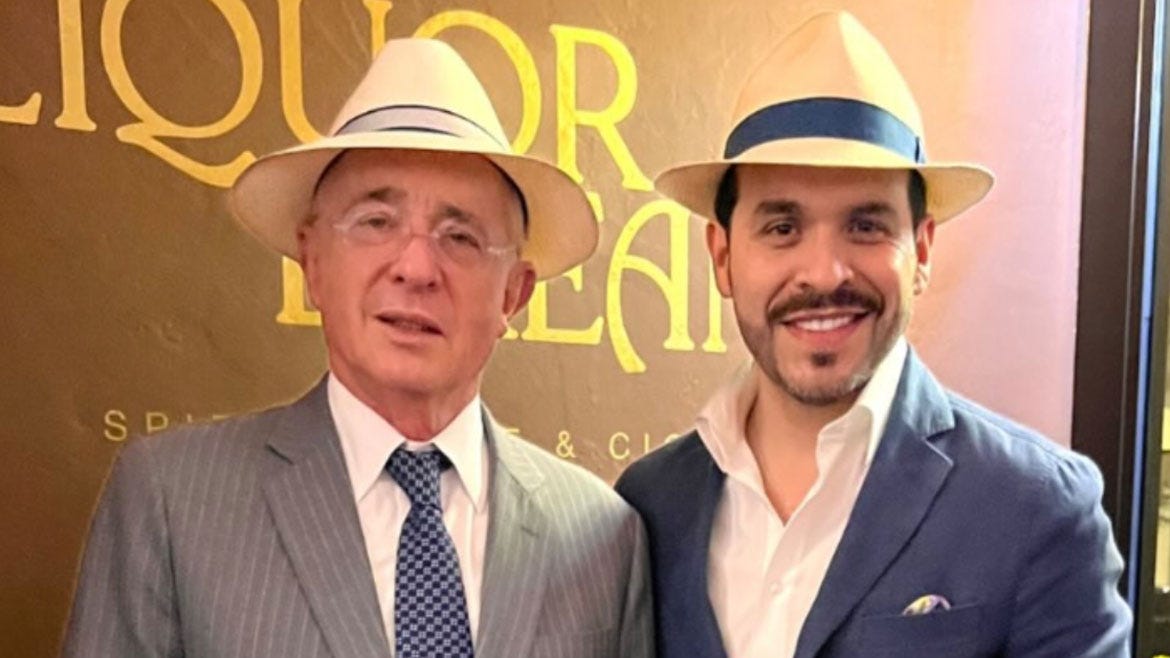
De la Espriella is a close associate of former president Álvaro Uribe, one of the main promoters of paramilitary groups in the 1990s.
On Uribe’s behalf, De la Espriella tried and failed to take down a popular online series, “Matarife,” which exposed Uribe’s ties to the Medellin Cartel and alleged ties to the AUC.
This lawsuit was part of a campaign that sought to intimidate journalists reporting on Uribe’s controversial past.
According to the Press Freedom Foundation FLIP, De la Espriella “abuses legal tools to intimidate and silence voices who reveal or question any issue that concerns him,” in often futile attempts to protect his clients’ self-proclaimed “good name and honor.”
Can he win?
Ivan Cepeda is almost certain to win the first round, but Abelardo is looking ever more likely to be his opponent in the run-off.
According to the most recent and final poll of the first round, Cepeda has the support of 44.6% of voters, which is only 0.3 points higher than he polled in late April.
De la Espriella rose more than 10 points since that same April poll to 31.6%, principally due to the collapse of support for his immediate rival on the far-right, Senator Paloma Valencia.
Support for Valencia dropped a staggering 5.8 points to 14%, making an appearance by the far-right senator in the second round unlikely.
Centrists and liberals, many of whom were willing to hold their noses to vote for Paloma over Cepeda, who they view as too progressive, have been increasingly left without options in an extremely polarized race.
If polls are to be believed, De La Espriella is now the likely second-round contestant who will face off against Cepeda. His campaign has aggressively pushed back on journalists in recent weeks, creating increasingly hostile relations with news media over their reporting on Abalardo’s ties to the AUC as well as notorious drug traffickers.
Polling suggests that Paloma would fare better against Cepeda in a second round, counting on support from liberal and centrist parties, some of whom may simply stay home or vote “blank” rather than support de La Espriella.
We don’t feel comfortable making a prediction, as Colombia is anything but predictable. However, many centrist pundits are suggesting that Abalardo is in danger of handing the election to the Colombian left as they try to whip up last-minute support for Paloma.
Abelardo’s critics, however, fear a much darker possibility: a throwback to the most authoritarian right-wing era at the height of the Colombian war, or worse, a Bukele-style expansion of the power of the office as well as security forces.
Colombia’s police and military committed grave human rights abuses during the country’s 53-year civil war, and Abelardo seems to be advocating a return to those same levels of impunity.
A runoff vote is scheduled for June 21 if no candidate secures more than 50% of the valid ballots.
You can also donate a one-time gift via “Buy Me a Coffee”. It only takes a few moments, and you can do so here.
And if you can’t do any of that, please do help us by sharing the piece! We don’t have billionaire PR teams either.
Hasta pronto, piratas!

Pink accessorizing, anti-gay views. In case you are very young or naive, this is an instantly recognizable stereotype: the naturally gay guy rejecting his own tendencies by fortifying against them, hating gays. Well known for over 100 years. Freud called it the defense mechanism of reaction formation but it is easily observed; no Freud necessary.