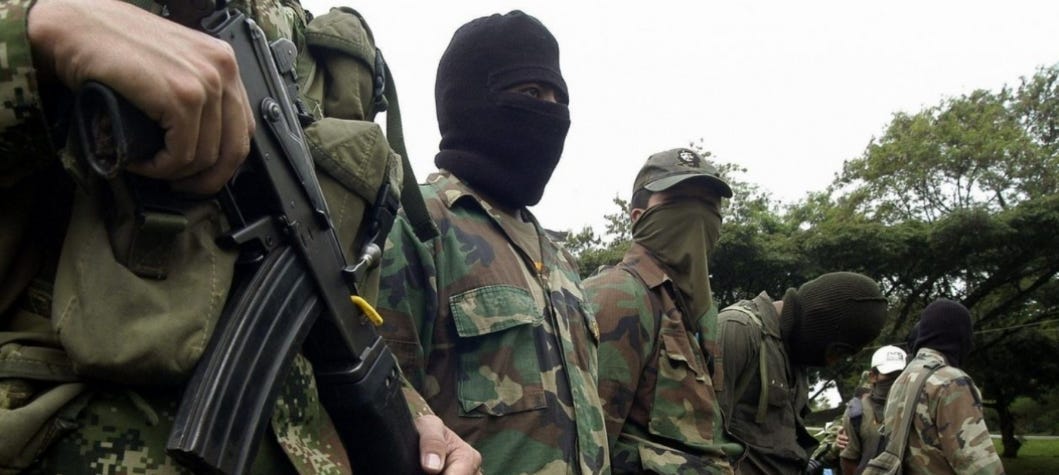
The first term of leftist Colombian President Gustavo Petro is coming to an end. It has been a rollercoaster ride, and perhaps the most controversial government of the century.
In May, the country goes to elections. And Colombians will face a decision over whether to continue the agenda of a left wing that had previously never held power here, or, based on likely presidential candidates, swing back to decades of policies and rule by the far right.
They must also elect a new Congress, lawmakers who will be key to implementing, or blocking, the vision of whoever the next candidate is.
And they must do so in the midst of a surge in armed conflict, as well as threats from non-state armed groups and organized crime. Last week, two congressmen were kidnapped; one of them, Jairo Castellano, of the liberal Green party, was ambushed in an attack on his motorcade that killed his security team.
Violence related to armed groups is surging. So is their power
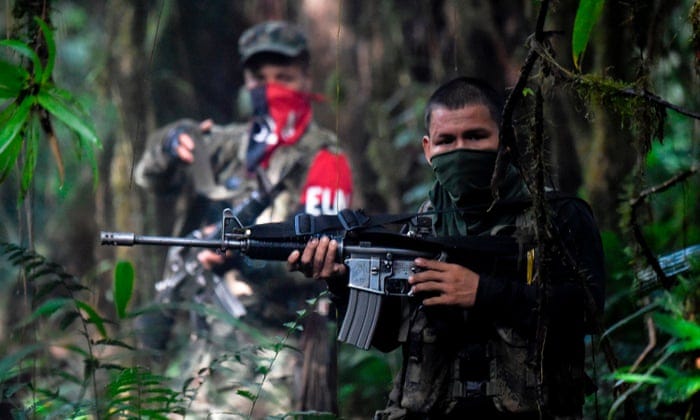
According to the NGO Fundación Ideas para la Paz (FIP), last year Colombia experienced the highest number armed disputes in a decade, and, unfortunately for Colombian politicians, especially those who try to represent regions long torn by violence, election season is likely to make that dynamic worse.
This increase in violence is happening for clear reasons. According to the FIP report, the number of members in armed groups has grown by 23% since Petro assumed office, producing a total estimate of 27,000 members of armed non-state actors in 2025.
Last year alone, the FIP estimates that criminal structures added 5,000 people to their ranks.
The fastest growing among them, by far, is the Ejercito Gaitanista de Colombia (EGG), often dubbed the “Golf Clan” by the government and western media — a group which has its origins in the right-wing paramilitaries that fought on the side of the government during Colombia’s 52-year civil war.
The EGC has an enormous territorial presence in the country but, paradoxically, is currently engaged in peace talks with the government, which are being moderated by representatives from Qatar. The FIP also adds that the military capacity of these groups has been enhanced by the use of drones. According to data from the Public Force, last year there were 277 attacks with drones loaded with explosives, mainly in the department of Cauca.
The drone attacks have become so common that most are rarely reported on by the media here unless the number of casualties is unusually high.
The number of violent attacks total by some form of armed groups doubled in 2026 compared to the previous year.
Ahead of the 2026 national elections, Colombia’s Electoral Observation Mission (MOE) warned that the risk of violence in the upcoming elections is “extremely high”.
Of Colombia’s 1,100 municipalities, it identified 170 as being at some level of electoral risk due to fraud or violence. The number of municipalities at “extreme risk” rose from 49 during the last cycle in 2022 to 81 this year.
Put more simply, one in 10 municipalities in Colombia is at electoral risk. “The findings show a worrying increase in risk in vulnerable territories, where violence and the presence of illegal armed groups limit citizen participation and affect press freedom,” reads the report by the MOE. The most affected departments are Cauca, Norte de Santander, and Antioquia.
All of this follows the high-profile murder in June of last year of Miguel Uribe, a right-wing presidential pre-candidate in Bogota during a campaign event.
“Colombia is experiencing one of the worst humanitarian crises of the last decade,” Human Rights Watch wrote at the time. And although the motives for the assassination have not yet been fully clarified, the kidnapping of indigenous senator Aida Quilcué last week and the armed ambush on Castellano show that security during elections this year is going to be a concern for voters and candidates alike.
Children are the biggest victims
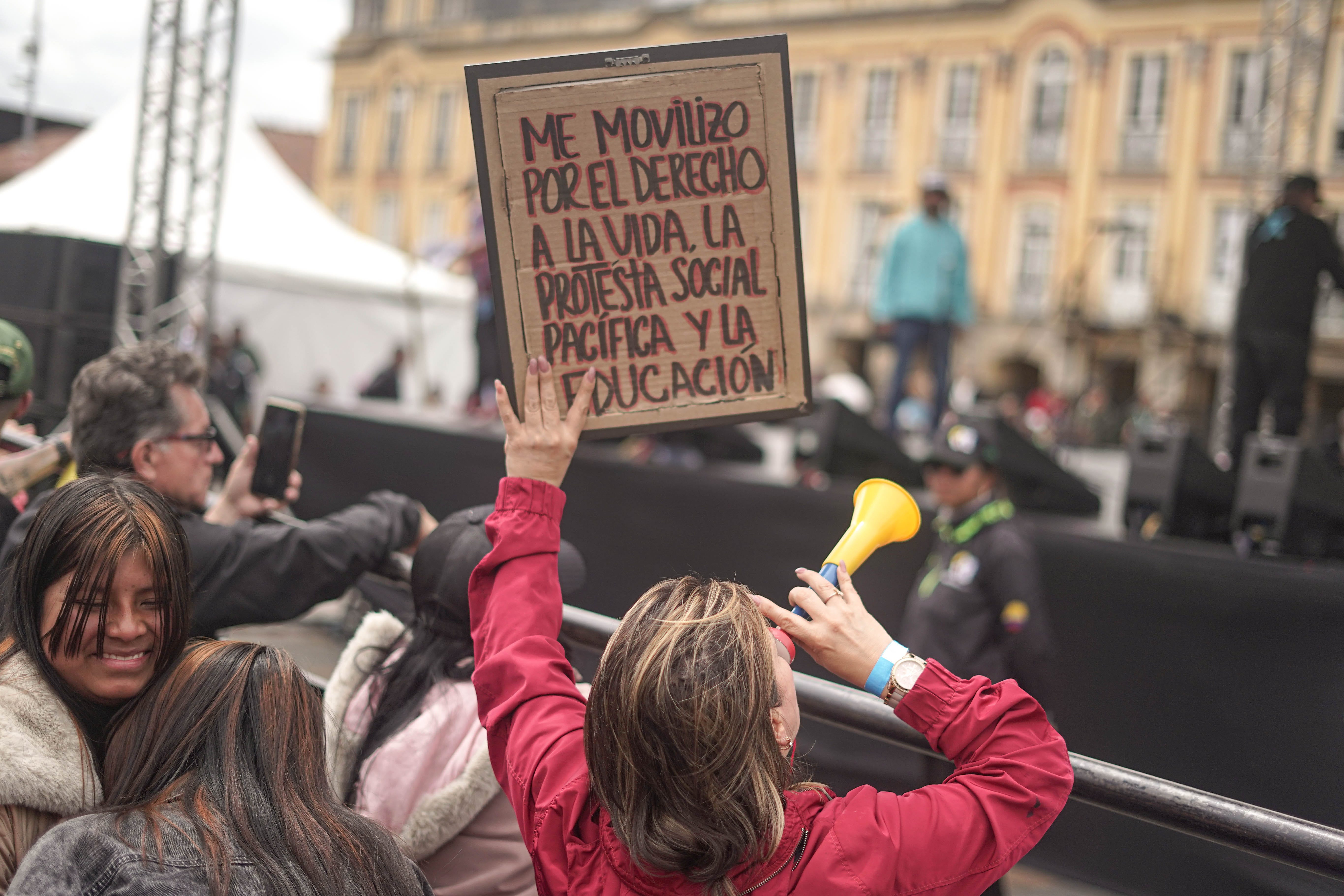
Behind this alarming increase lies an even more worrying situation: recruitment of Colombian children, mostly indigenous or from rural areas, into armed groups is rising at an alarming rate. The Cauca Indigenous Council, in the southwest of the country, reported 700 cases of child recruitment since 2023 in Cauca country alone.
They strongly suggest that this figure is likely under-reported, as many families fear reporting the incidents out of the ongoing threat presented by armed groups.
“Child recruitment is one of the most effective strategies that armed groups have developed to break the resilience of communities. Families who have lost a child fear for their safety and often remain silent in the face of pressure from armed groups, knowing that their son or daughter could pay the price if they report it,” warns the latest report Kids on the Front Lines: Stopping Child Recruitment in Colombia by the International Crisis Group.
In fact, Gustavo Petro has been strongly criticized not only for failing to contain violence despite his Total Peace initiative, which sought to negotiate with various criminal groups, but also for bombing guerrilla camps in which the government was aware in advance that there were minors present.
Petro has a long history of criticizing previous governments for failing to adhere to both Colombian and international humanitarian law, which prohibits intentional attacks on children.
Attacks and recruitment are occurring even at schools in the country. Although Petro’s administration signed the “Safe Schools declaration in 2022”, a global commitment between states to protect children and their school environments from conflict, it has done very little to fulfill the promises contained within.
According to international organizations participating in his initiative for Total Peace, schools, especially in rural areas, have not been a priority.
In 2025, Colombia was the country with the most attacks on schools in the Americas, and fourth in the entire world, surpassed only by Congo, Ukraine, and Gaza.
Petro was a break from decades of hard-right rule. Now Colombia is deciding whether to continue on a leftist path or, like some of its neighbors, veer back towards the failed military strategies of the past that led to rampant human rights abuses. Violence is playing a central role in that decision. Peacebuilding in the country clearly requires a course change, but whatever government forms this year must keep children at the center of its initiatives to finally protect them from war, after years of broken promises from political actors of both sides on the spectrum.
You can also donate a one-time gift via “Buy Me a Coffee”. It only takes a few moments, and you can do so here.
And if you can’t do any of that, please do help us by sharing the piece! We don’t have billionaire PR teams either.
Hasta pronto, piratas!