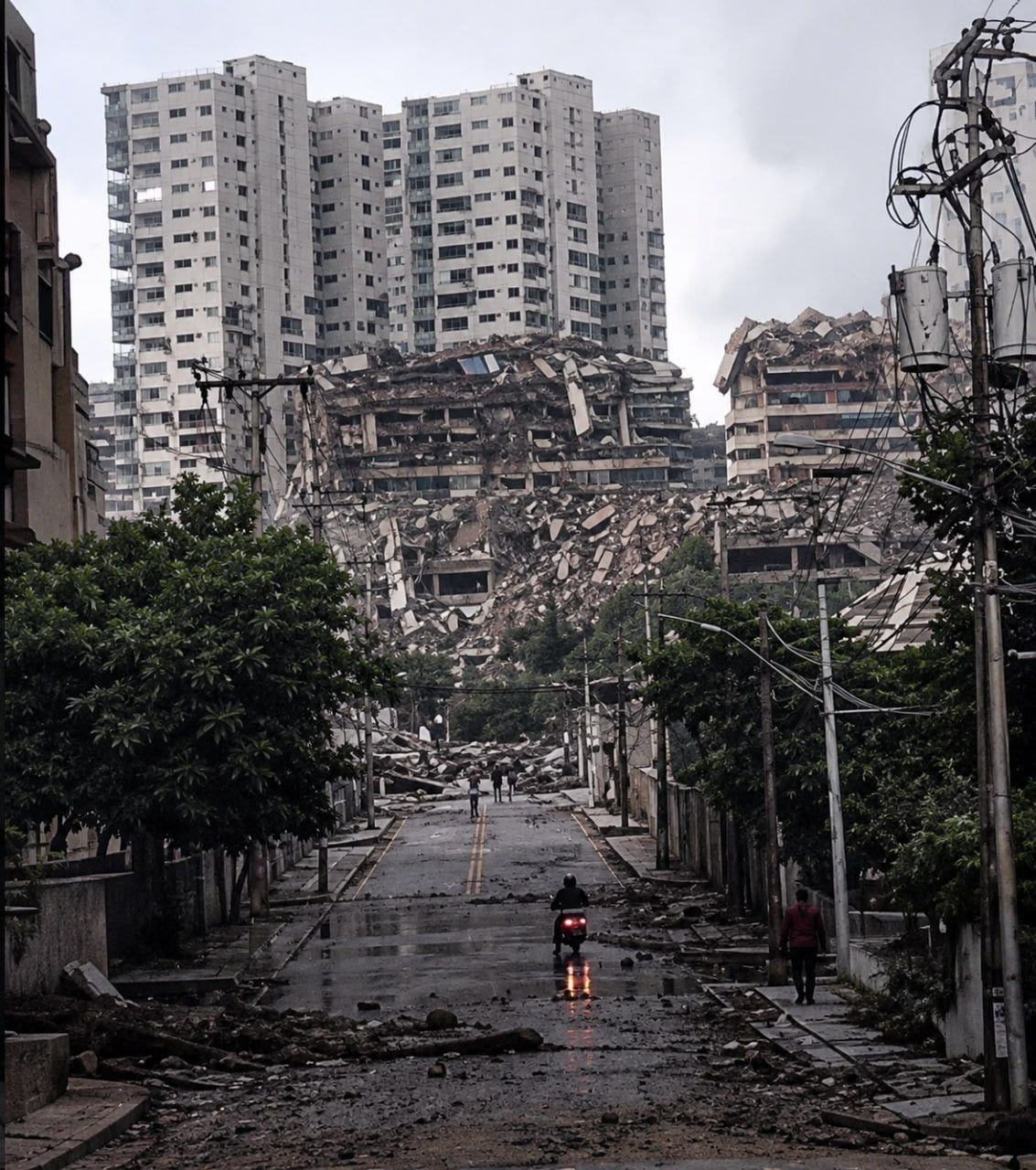
Venezuela was rocked by two earthquakes in quick succession early Wednesday evening, destroying hundreds of structures and causing an unknown number of casualties.
The first earthquake, with a magnitude of 7.2, struck off the central coast of Venezuela at 6:04 p.m., according to the U.S. Geological Survey (USGS). Its epicenter was near the city of San Felipe, in Yaracuy state, about 280 km west of Caracas.
Almost immediately afterward, a second, even more powerful earthquake struck the same area. The epicenter was located near the municipality of Yumare, a little further north, and had a magnitude of 7.5.
Multiple states were strongly affected, as was the capital of Caracas. Due to censorship and a lack of independent media in the country, as well as a lack of statements by the Venezuelan government, and widespread blackouts in affected areas, it was not immediately clear how grave the natural disaster really was.
But as images and videos began to emerge through social media, in WhatsApp channels, and by independent reporters in the country over the following hours, it became clear that the damage was catastrophic, particularly in areas near the epicenters of the twin earthquakes.
In her first public statement after the earthquakes, just after 10 p.m, Acting President Delcy Rogriguez declared a national emergency and asked the international community for humanitarian aid.
Almost every country in the immediate region quickly announced a willingness to send aid or help in rescue efforts, as did the United States and China.
Multiple residents of Venezuela who spoke with PWS by phone expressed frustration at a lack of information as state-owned channels continued with regular programming, and official statements were both vague and infrequent.
“We’re organizing information networks among ourselves,” said ‘Miguel’, who asked that his real name be withheld. “We’re trying to get potable water to neighbors, especially elderly neighbors. Luckily, the structural damage in the area where I live isn’t life-threatening, but we have no information at all from official sources. We are organizing ourselves. It’s like we are blind here.”
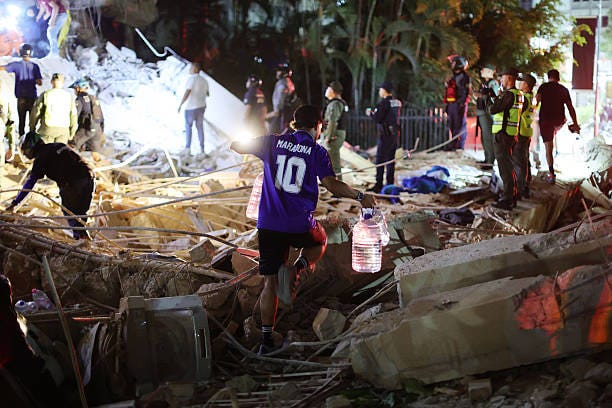
Other areas near Caracas were not so lucky. The state of La Guaira, northeast of Caracas, seemed particularly hard hit. Rodriguez confirmed “hundreds” of collapsed buildings and “ongoing rescue efforts.”
Images from social media and independent reporters showed devastation: collapsed buildings, impassable roads, and medical personnel working in the parking lot of a hospital, presumably because of structural damage to the hospital.
Large areas of La Guaira remained without power, internet, or phone signal as of the filing of this report. Thousands of people began to appear on websites hastily constructed to aid relatives in finding their loved ones. The number of those reported as disappeared does not necessarily reflect casualties, as many people remained unable to connect to digital or phone communication networks.
Rodriguez, in later statements, said Venezuela had confirmed more than 30 deaths, but the number is almost certainly much higher.
USGS estimated numbers possibly as high as 10 thousand, but stressed that it was a projection based on the strength of the quake and remained unconfirmed.
Venezuela’s Interior Minister, Diosdado Cabello, the first high-level official to speak after the earthquake, said that “all security and emergency response agencies, civil protection, volunteers, firefighters, and police” had been deployed to respond to the emergency.
Cabello urged citizens to evacuate any buildings that had sustained damage and spoke of “alarming situations” in areas of Caracas such as Los Palos Grandes and Altamira.
Rodriguez stated that hotels deemed to be safe had been opened to shelter those whose homes had been damaged or destroyed.
Thousands of people left without shelter affected areas slept on the streets and in parking lots.
Airports remained closed, and airplane tracking websites showed no air traffic in the airspace in the country, despite unconfirmed reports that some countries had sent aid by air, including rescue crews.
Venezuela was rocked by two earthquakes in quick succession early Wednesday evening, destroying hundreds of structures and causing an unknown number of casualties.
The first earthquake, with a magnitude of 7.2, struck off the central coast of Venezuela at 6:04 p.m., according to the U.S. Geological Survey (USGS). Its epicenter was near the city of San Felipe, in Yaracuy state, about 280 km west of Caracas.
Almost immediately afterward, a second, even more powerful earthquake struck the same area. The epicenter was located near the municipality of Yumare, a little further north, and had a magnitude of 7.5.
Multiple states were strongly affected, as was the capital of Caracas. Due to censorship and a lack of independent media in the country, as well as a lack of statements by the Venezuelan government, and widespread blackouts in affected areas, it was not immediately clear how grave the natural disaster really was.
But as images and videos began to emerge through social media, in WhatsApp channels, and by independent reporters in the country over the following hours, it became clear that the damage was catastrophic, particularly in areas near the epicentres of the twin earthquakes.
In her first public statement after the earthquakes, just after 10 p.m, Acting President Delcy Rogriguez declared a national emergency and asked the international community for humanitarian aid.
Almost every country in the immediate region quickly announced a willingness to send aid or help in rescue efforts, as did the United States and China.
Multiple residents of Venezuela who spoke with PWS by phone expressed frustration at a lack of information as state-owned channels continued with regular programming, and official statements were both vague and infrequent.
“We’re organizing information networks among ourselves,” said ‘Miguel’, who asked that his real name be withheld. “We’re trying to get potable water to neighbors, especially elderly neighbors. Luckily, the structural damage in the area where I live isn’t life-threatening, but we have no information at all from official sources. We are organizing ourselves. It’s like we are blind here.”
Other areas near Caracas were not so lucky. The state of La Guaira, northeast of Caracas, seemed particularly hard hit. Rodriguez confirmed “hundreds” of collapsed buildings and “ongoing rescue efforts.”
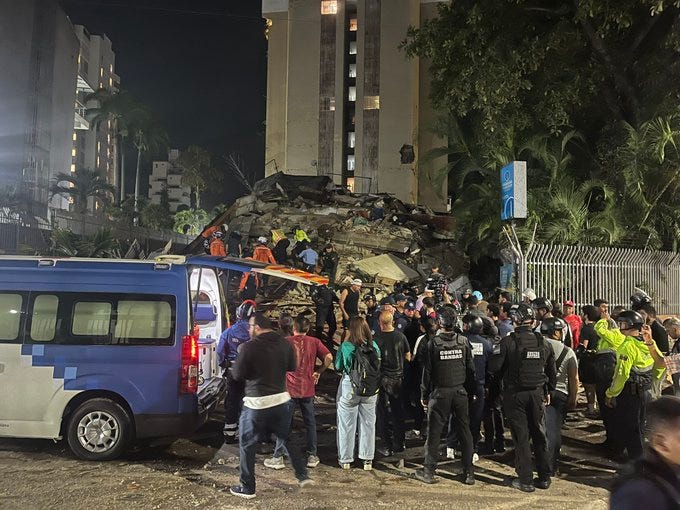
Images from social media and independent reporters showed devastation: collapsed buildings, impassable roads, and medical personnel working in the parking lot of a hospital, presumably because of structural damage to the hospital.
Large areas of La Guaira remained without power, internet, or phone signal as of the filing of this report. Thousands of people began to appear on websites hastily constructed to aid relatives in finding their loved ones. The number of those reported as disappeared does not necessarily reflect casualties, as many people remained unable to connect to digital or phone communication networks.
Rodriguez, in later statements, said Venezuela had confirmed more than 30 deaths, but the number is almost certainly much higher.
USGS estimated numbers possibly as high as 10 thousand, but stressed that it was a projection based on the strength of the quake and remained unconfirmed.
Venezuela’s Interior Minister, Diosdado Cabello, the first high-level official to speak after the earthquake, said that “all security and emergency response agencies, civil protection, volunteers, firefighters, and police” had been deployed to respond to the emergency.
Cabello urged citizens to evacuate any buildings that had sustained damage and spoke of “alarming situations” in areas of Caracas such as Los Palos Grandes and Altamira.
Rodriguez stated that hotels deemed to be safe had been opened to shelter those whose homes had been damaged or destroyed.
Thousands of people in affected areas are sleeping on the streets and in parking lots, left without shelter.
Airports remained closed, and airplane tracking websites showed no air traffic in the airspace in the country, despite unconfirmed reports that some countries had sent aid by air, including rescue crews.