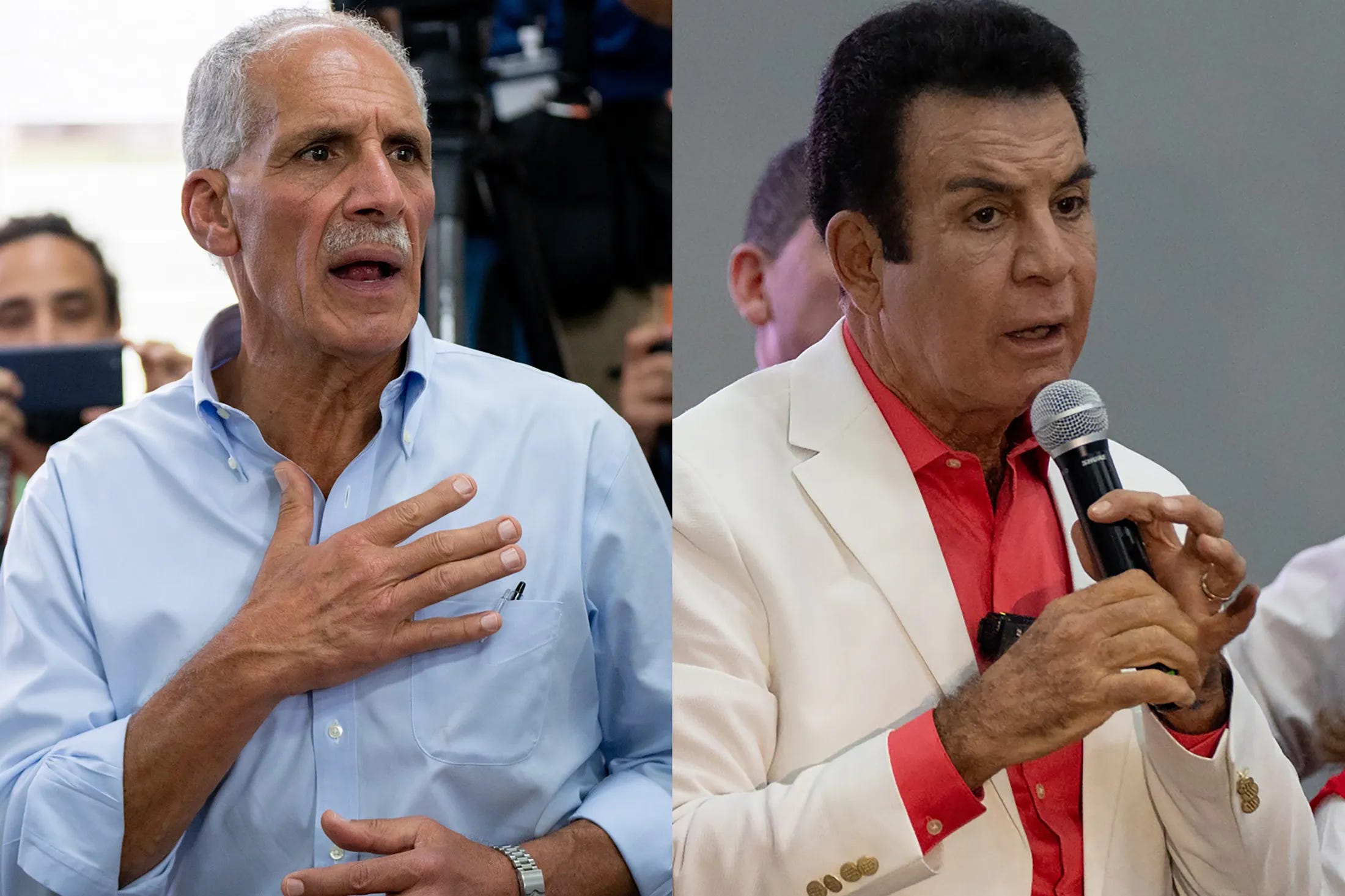
Honduras’ electoral commission (SNE) has effectively finished a slow count of votes after a week of technical failures, miscommunications, irregularities, as well as repeated accusations of fraud and US interference in presidential elections.
They still aren’t certain who the president will be.
After a “technical tie” between two of the candidates, right-wing Nasry Afura, and centrist Salvador Nasralla, the CNE suspended a rapid count on the night of elections. The decision to move from a “rapid count” to a more careful handcount, followed by blackouts on the CNE website as well as long periods of silence, during which vote tallies released to the public appeared to be changing.
The CNE, in response to heavy criticism, stated that their website, which was being run by Colombian polling firm ASD, collapsed under heavy visitor traffic, a phenomenon they claim was further exacerbated by a “cyber attack.” They did not provide proof or state who may have been responsible for the alleged hack.
The irregularities led the third-place left-wing candidate, Rixi Moncada of the LIBRE party, to call foul the following day, alleging fraudulent electoral processes.
Sitting President Xiomara Castro, also of the LIBRE party, on Sunday demanded “a complete annulment of the process, alleging that with so many technical failures, errors, and accusations of malfeasance, it is impossible to trust election results.
On Monday evening, the CNE announced that with 99.3% of the vote hand-counted, Afura led Nasralla 40.56% to 39.16% (a difference of just over 35,000 votes).
“After carrying out the necessary technical actions (with external auditing), the data is now being updated in the results,” Ana Paola Hall, president of the CNE, said in a social media post.
Moncada is trailing in third with just over 19% of the vote.
In addition to other irregularities, the CNE confirmed allegations of irregularities in some ballot papers.
Of the 16,858 ballot papers counted as of Friday, 2,407 showed “inconsistencies,” which were supposedly corrected in a vote-by-vote recount conducted by the electoral authority.
Nasralla has claimed that the true number is much higher, and the CNE is “stealing” votes that would put him ahead of his conservative opponent. Nonetheless, he refuted claims by the sitting administration that the election should be annulled.
“The elections should not be canceled; someone should be appointed to count the votes that have already been cast, however long it takes,” he told the press Monday morning. It is not immediately clear if he will accept the final tally by the CNE published that evening.
In a statement, the Organization of American States (OAS), which was monitoring the election, noted that its observations confirm that the race is tight and urged all sides to remain calm. They blamed “a marked lack of expertise in development and execution, particularly regarding technological solutions,” for the technical problems.
Honduras has long suffered from allegations of corruption and opaqueness as part of its election processes. Following a coup in 2009, Honduras experienced a period of repression and election scandals that left many sceptical about the legitimacy of the electoral process.
Security forces killed at least 16 people when they opened fire on protesters following a contested vote in 2017, with about 30 killed in protests across the country.
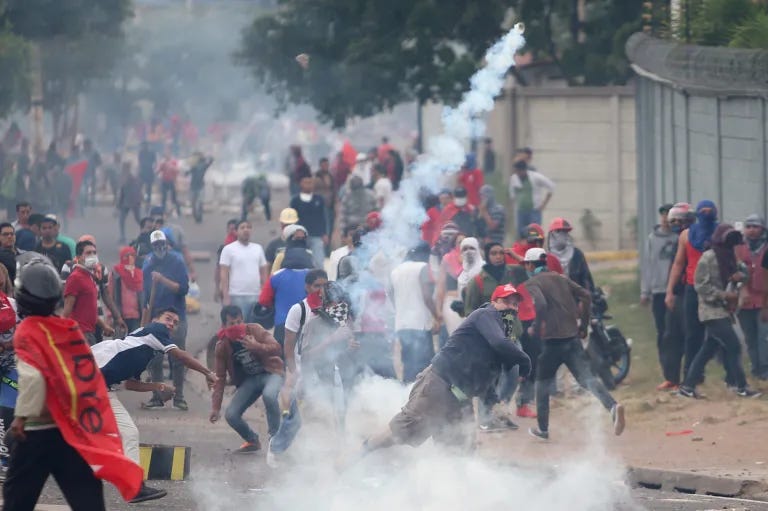
In addition to the long series of questionable occurrences on election day, many supporters of Nasralla and Moncada have described statements by the United States in the days and weeks leading up to Honduran elections as “foreign interference.”
US President Donald Trump had threatened to cut off aid to the country if his preferred candidate, Nasry Afura, didn’t win. “The US won’t be throwing good money after bad,” he said.
In such tight elections, it is entirely possible that his threats to revoke foreign aid tipped the balance towards his preferred candidate.
So were elections valid? Should they be redone? Even if candidates accept the CNE’s latest tallies, many are likely to reject an election process plagued with so many irregularities.
You can also donate a one-time gift via “Buy Me a Coffee”. It only takes a few moments, and you can do so here.
And if you can’t do any of that, please do help us by sharing the piece! We don’t have billionaire PR teams either.
Hasta pronto, piratas!