

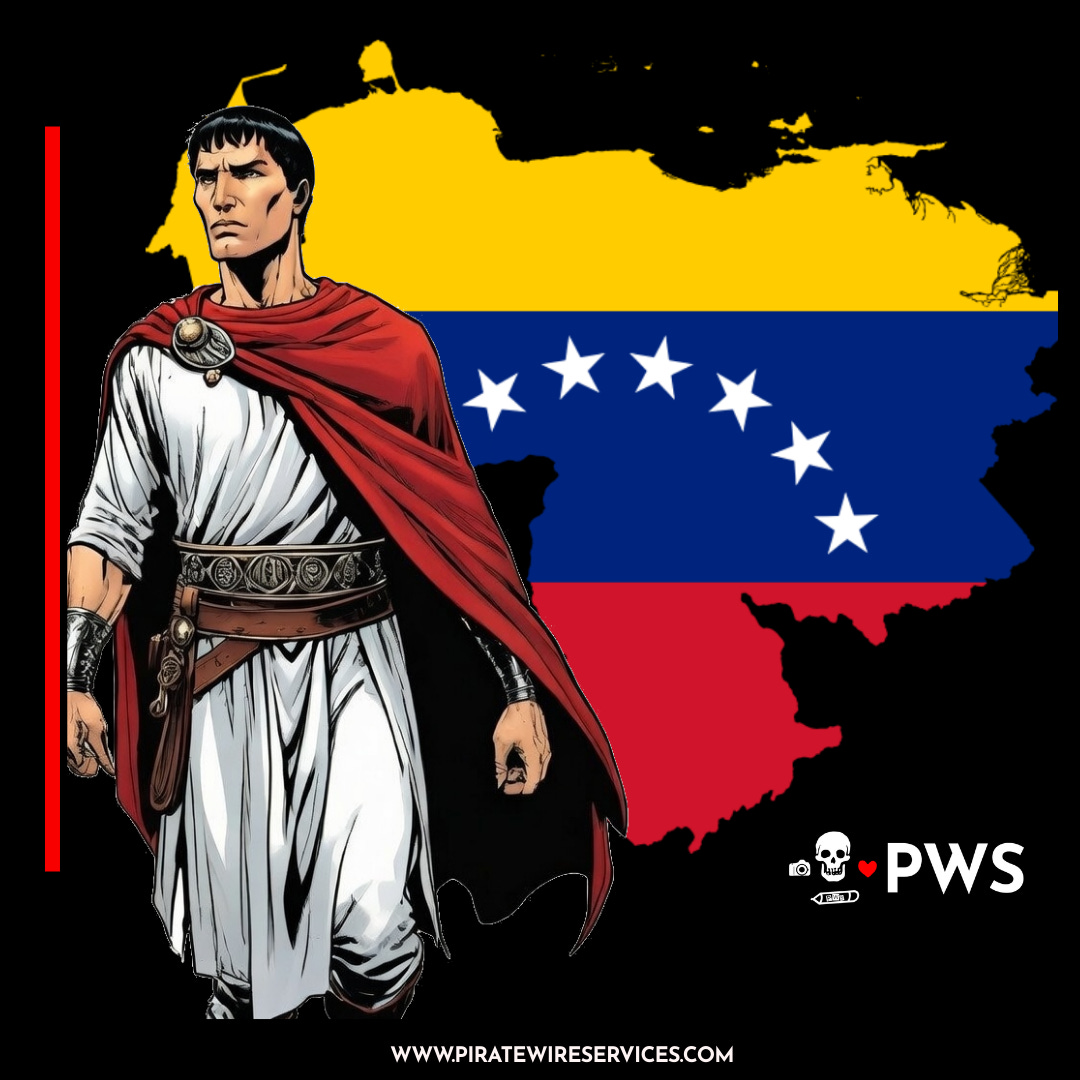
What do we call a government left largely intact after military intervention, with administrative autonomy in running the day-to-day activities, but is forced to bend to the will of an external empire?
There is an ancient name for this arrangement: Meet the United States Protectorate of Venezuela. When it comes to Venezuela, it would seem the United States is going old school, as in Bronze Age old school.
Immediately after the US attacked the Caribbean nation and captured its then-president, Nicolas Maduro, Donald Trump suggested the US would “run” the country. But in the weeks since, another plan has been revealed to the public.
Secretary of State Marco Rubio has clarified that the United States will not govern Venezuela’s day-to-day operations other than enforcing an existing “oil quarantine.” Rubio, in multiple public appearances, has said that the oil blockade and a veiled threat of further military intervention would be used to pressure the government of the new Venezuelan President, Delcy Rodriguez
That government will be left largely intact, but “we expect to see that there will be changes,” said Rubio last week on ‘Face the Nation,’ and “not just in the way the oil industry is run for the benefit of the people, but also so that they stop the drug trafficking.”
In the words of US officials themselves, who are eager to put distance between themselves and the looming shadow of US failures in Iraq, this “is not a regime change.”
The practice of a Protectorate has held many forms over the years, and many names. In the time of the Florentine Republic in modern-day Italy, Niccolo Machiavelli was intimate with the term.
A series of warring city-states often vassalized other cities, forcing them to bend to their will. In such situations, Machiavelli, in ‘The Prince’, wrote that the most effective method of conquest wasn’t occupation, but rather subjugation.
He recommended that upon the conquest of a city, the former leader be executed publicly, but that the administration — the ones who knew the day-to-day activities of the city, and who controlled which levers of power — be left intact.
It is difficult to build the apparatus of the state from scratch. Much better, warned Machiavelli, to let the officials who already knew the bureaucracy run things the way Machiavelli’s Prince wanted.
And if they didn’t, well, more public executions were always a possibility down the road. But Machiavelli also warned that anyone who would seek to seize true power for themselves must be recruited into the Prince’s employ, banished, or beheaded.
In what we are sure is completely unrelated news, Reuters recently revealed that over the past year, US intelligence service, the CIA, had been in regular contact with Venezuelan Interior Minister Diosdado Cabello.
Cabello, who runs Venezuela’s PSUV socialist party, is widely viewed as a Chavista hardliner by analysts, many of whom speculated he might make a bid for power after the removal of Maduro.
But it seems the CIA spent months making sure that wouldn’t be in the cards. President Rodriguez met with the CIA as well, hosting Director John Ratcliffe in Caracas for a meeting which, according to those who attended, stressed potential business interests shared by the two countries.
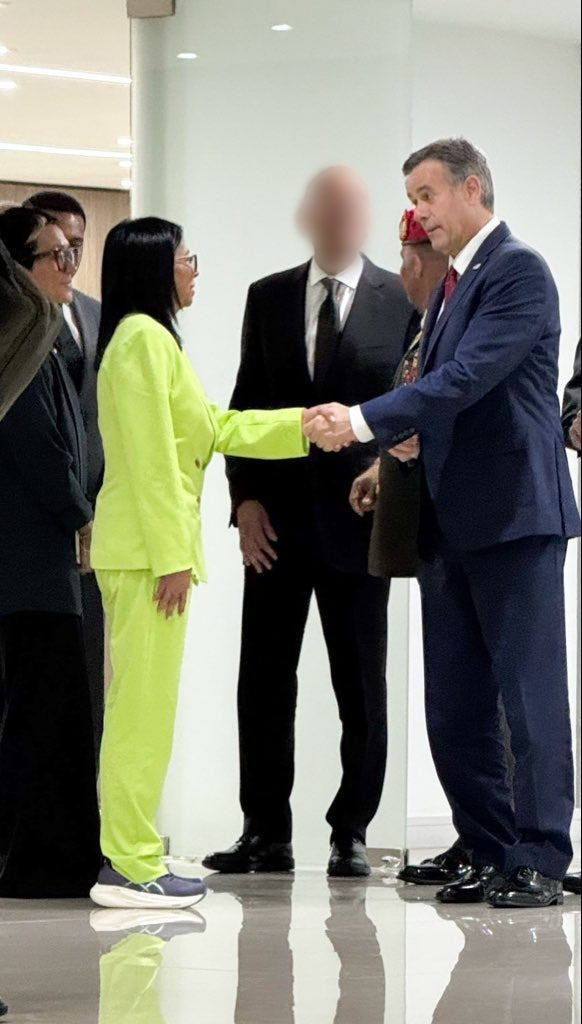
President Rodriguez, in comments to the nation shortly after the meeting, called for Venezuela to open its markets to US oil companies and pledged cooperation.
“Venezuela, in free trade relations with the world, can sell the products of its energy industry,” she stated
In colonial times, the idea of a Protectorate was insidiously refined. The idea of a vassal became couched in the terms of global liberalism: client states, ‘compact’ states, and a host of other terms were coined.
Less flattering terminology developed as well: ‘puppet states’ and ‘satellite states.’
There are fine distinctions between them all, but they are all variations on a theme, and that theme is subjugation.
In Colombia, I often hear another way of describing this arrangement, one made famous by the Medellin cartel in their negotiations: “plata o plomo”, “lead or silver.” It is less poetically translated as “money or bullets.”
Pablo Escobar often offered payouts to those he would bend to his will, and of course, in the interest of fair negotiations, if the party being negotiated with wouldn’t accept money, well, there was always summary execution.
Machiavelli would have approved. So would have CIA director John Ratcliffe.
And thus was born, the US Protectorate of Venezuela. If you’re a US citizen reading this, your country just got a new puppet state in the family. Congratulations, or something.
You can also donate a one-time gift via “Buy Me a Coffee”. It only takes a few moments, and you can do so here.
And if you can’t do any of that, please do help us by sharing the piece! We don’t have billionaire PR teams either.
Hasta pronto, piratas!
Maybe the most remarkable thing is how quickly and completely the "antiimperialist revolution" decided to capitulate