

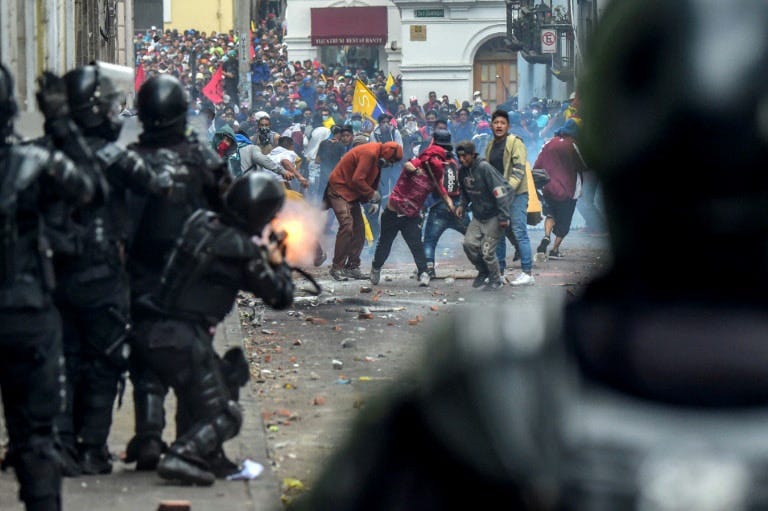
Despite declaring an internal “war” on organized crime, the designation of several non-state armed groups as “terrorist organizations”, military strikes in cooperation with US forces, and “iron fist” policies, Ecuadorian President Daniel Noboa is failing to stem the growth of organized crime in the country.
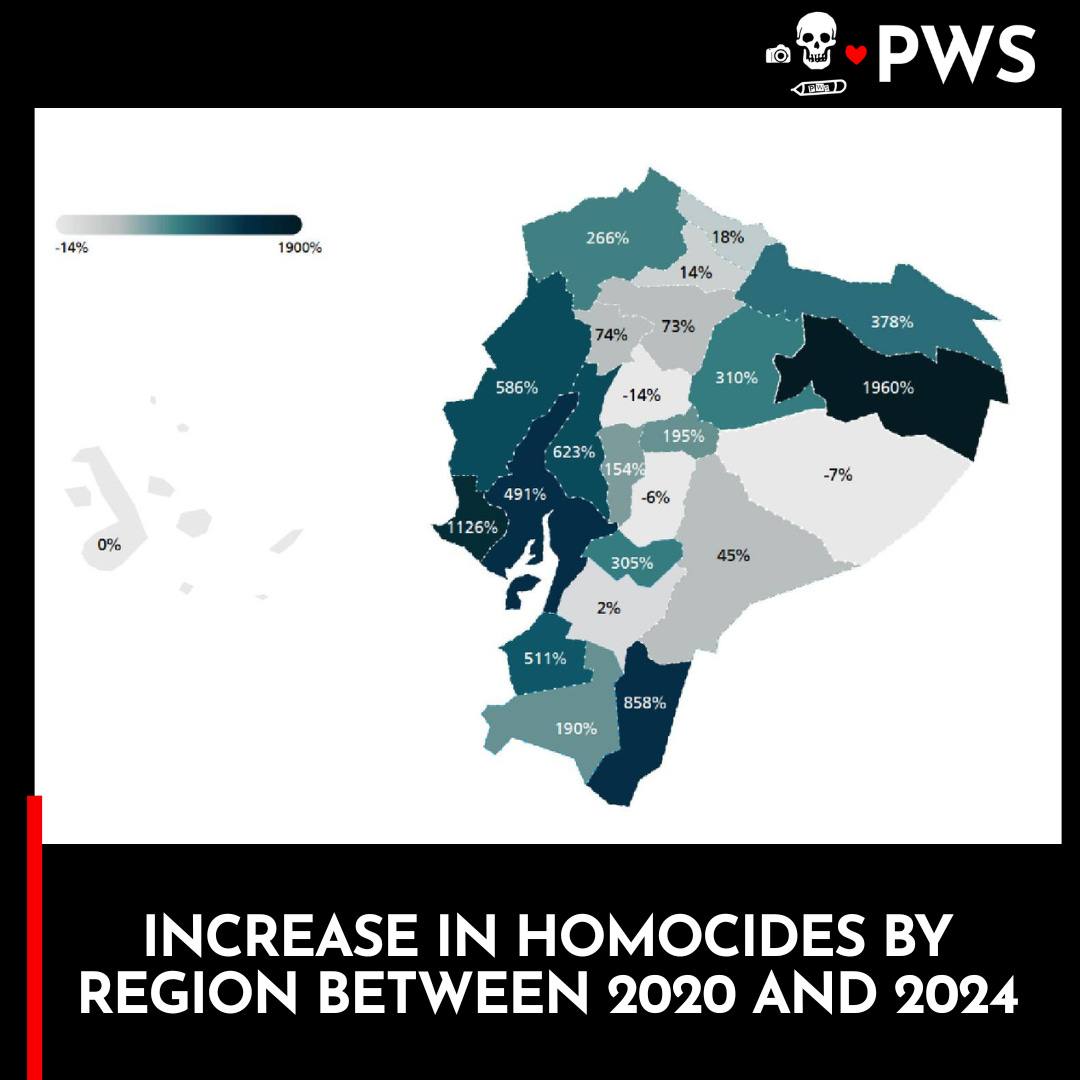
Instead, his policies are having the opposite effect as armed groups push into new territories that were previously relatively unaffected by rising homicide rates in the country.
The causes of Ecuador’s transformation from one of the safest countries in the region to one of the most dangerous in the world are many, but prime among them has been the explosion of cocaine trafficking from Peru and Colombia — the two biggest cocaine producers in the world.
Smuggling routes from the borders to port cities within the country led to the rise of armed groups operating along Ecuador’s coast and in the port cities such as Guayaquil.
As a result, violence in Ecuador in recent years had been largely concentrated along the coast and near the country’s northern border with Colombia.
But a report by a coalition of NGOs within the country, using information from civil organizations, crime monitoring groups, and data from the US embassy and Ecuadorian government, has shown a recent strong upsurge in criminal activity inland in the interior of the country as well.
Criminal groups are diversifying their income streams and moving inland
As armed groups such as Los Choneros and Los Lobos gained power within the country from narco-trafficking in recent years, they built logistical relationships with hybrid organizations in Ecuador’s port cities.
Logistical networks in cities like Guayaquil were run by actors who maintain footprints in both the legal private sector as well as illicit activities, such as international smuggling and money laundering.
Principally through these hybrid actors, but also at times directly, armed groups in the country formed relationships with international criminal organizations in northern and eastern Europe, as well as Mexican organizations like the New Generation Jalisco Cartel (CJNG).
However, groups such as the Choneros, which originally enjoyed a near monopoly along cocaine smuggling routes, fractured or were attacked by new armed groups as the astronomical profits from cocaine smuggling grew.
Ecuadorian military strikes worsened this dynamic by killing or capturing the leadership of some of those armed groups, which led to more destabilization and fighting among them.
As a result, many newer groups were forced out of coastal regions and into previously relatively safe rural zones away from smuggling routes.
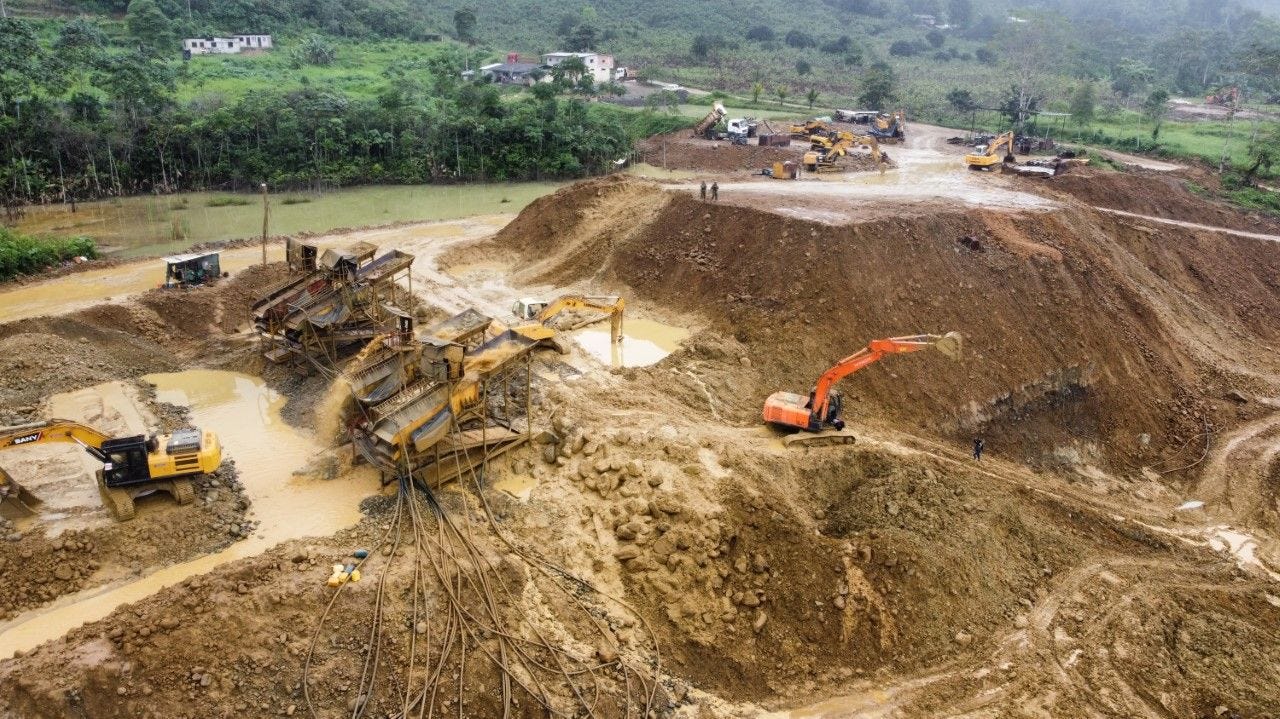
At the same time, both established larger armed groups and smaller challengers began to look for new activities to fund their operations. Since 2024, Ecuador has experienced sharp growth in illegal mining, particularly in the north of the country near the Colombian border, extortion, kidnappings, and fights over territory controlled by armed groups in regions that were previously relatively unscathed by the rise of criminality in the country.
Data from 2025 also shows a diversification of financial activities carried out by these same armed groups, as well as collaboration with organized crime groups that have deep ties to the private sector in the country.
Noboa wants to bomb, but military actions alone are very unlikely to be successful
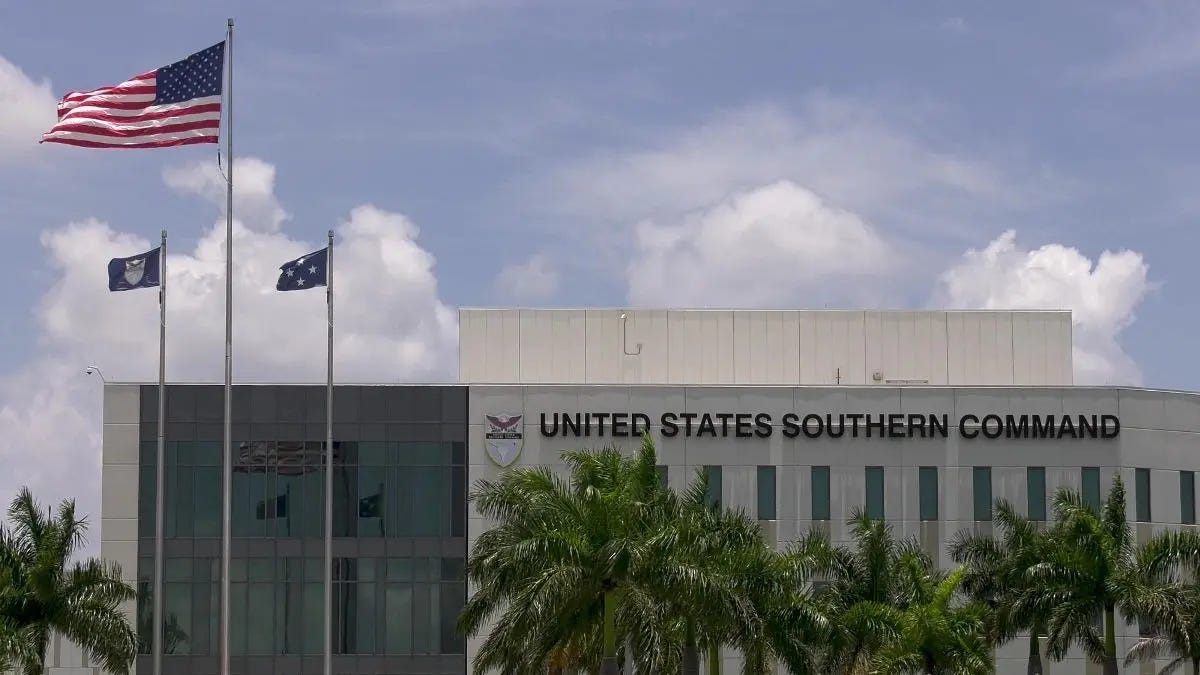
Noboa wants to double down on iron fist policies, which have led to severe human rights violations of civilians, but haven’t made much progress towards stemming criminality.
As part of those efforts, he has announced partnerships with the US military and the FBI. In the past, he has blamed the Venezuelan gang “Tren de Aragua” for the rise in crime. That claim was false. Shortly after the US launched a war against Iran, Noboa also claimed that Hezbollah has an organized presence in the country. There is no evidence to support that assertion.

If Noboa is serious about stemming crime in the country, he is going to have to address its root causes. It remains to be seen whether he has the political will to do so.
According to the most recent available data from Ecuadorian census efforts in 2025, more than 21% of the country’s population lives in “poverty or extreme poverty.” In the rural areas, where criminal organizations are currently expanding most rapidly, that rate jumps to 37.6%.
The lack of legal economic opportunities allows for easier recruitment of armed groups as well as civil support for the activities of hybrid legal/illegal organizations that have been tied to their actions.
Systemic corruption within both Ecuadorian political structures, as well as within security forces, are also significant barriers to combating criminality in the country.
“Anti-corruption” efforts over decades, and across administrations, have often served merely as a tool to prosecute political opponents. In simpler words, the party in power has rarely prosecuted members of its own ranks, meaning that many prosecution efforts have served to cement corruption rather than reduce it.
Relative impunity for the ruling party, with a few notable exceptions such as former President Rafael Correa, has been the rule rather than the exception, particularly on a rank-and-file level.
The ‘Bukele method’ has clearly failed, so what will work?
In the early 2000s, Colombia was in a similar position as Ecuador is now regarding state infiltration by criminal structures. It was also the most dangerous country in the world as measured by homicide rates.
Colombia continues to suffer greatly from internal conflict, narco-trafficking, and fighting among non-state criminal actors, but has made great strides from the darkest days of the civil war.
Many of those gains were made by purging the Prosecutor’s Office of systemic corruption and allowing deep investigations into politicians from all parties that had been effectively co-opted by organized crime and non-state armed groups.
Although the parallels are not perfect — Ecuador is not embroiled in a civil war — the capture of state institutions in Ecuador is very similar to Colombia in that period.
If the country is serious about combating decaying security and rising criminality, it will need to strengthen professionalism and purge corrupt prosecutors from their positions and focus anti-corruption efforts on all parties, not merely political rivals.
However, the diversification of criminality in the country also presents strategic weaknesses for criminal organizations.
Illegal mining, particularly in the north of the country, has evolved from a small-scale operation carried out by a few workers with basic tools into a “structured, organized crime operation that requires a complex supply chain and logistics network” to function, according to the same security report by Ecuadorian NGOs.
The dependence upon that supply chain, which includes heavy machinery and logistical chains both into and out of the regions where illegal mining is being carried out, presents an opportunity for both prosecutors and security forces to learn who is behind hybrid organized crime groups as well as to disrupt them.
Criminal organizations that operate in the private sector have also left a considerable financial footprint that could be investigated. But it is unlikely that Noboa has the political will to investigate financial elites who have become entangled in criminal structures. Many of them are his political allies.
Ecuador will also need to address rampant poverty and inequality rates to slow the rate of growth of armed groups. That requires actual reform, and perhaps a step away from the market-friendly policies that Noboa favors, however.
Labor or land reform are very unlikely to be priorities for elites in the country.
Noboa would prefer to blow up huts in the jungle and impose crackdowns on civil society. But without other steps to address the root causes of criminality, military actions alone will be ineffective.
You can also donate a one-time gift via “Buy Me a Coffee”. It only takes a few moments, and you can do so here.
And if you can’t do any of that, please do help us by sharing the piece! We don’t have billionaire PR teams either.
Hasta pronto, piratas!

An excellent revealing article. Worthwhile reading for anyone.