

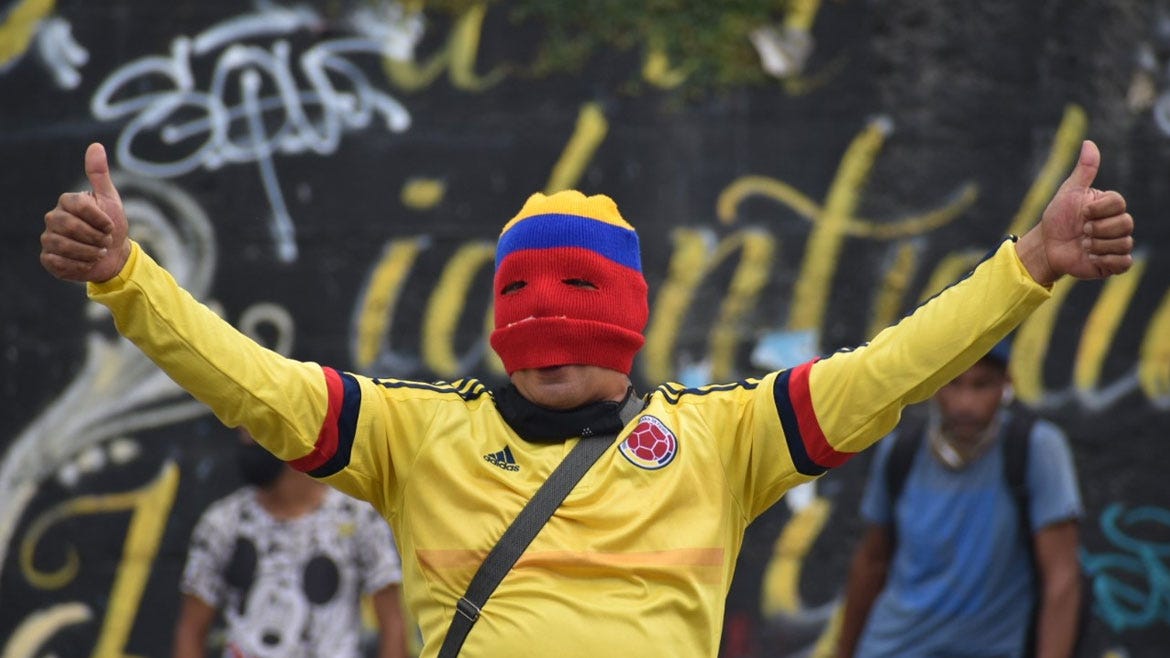
A wave of right-wing leaders is taking power in Latin America. Washington, D.C is demanding aggressive and violent security policies and “kinetic strikes” across the region, ostensibly to combat “cartels” and “narco-terrorists.”
Despite “iron fist” security policies failing to deliver results — they have neither reduced violence rates nor the quantities of drugs being transported in the Americas — the new populist wave of right-wing presidents in the region are doubling down.
For Colombians, this is, in many ways, a return to a dark past they know all too well. The new millionaire outsider President, Abelardo de la Espriella, said as much on the campaign trail, vowing to re-implement aggressive military strategies from the height of the country’s civil war.
Activists, human rights defenders, residents in conflict zones, student groups and unions have faced these policies before. And they have a name for the tactics, attitudes, and community organizing they undertake to protect their communities when the government in Bogota decides to start deploying shock troops and bombs — “resistencia.”
The literal English translation is simple: “resistance.” But truly understanding the concept behind what people in Latin America, and specifically Colombia, mean when they use the word requires a bit of unpacking — and some understanding of the history of Latin America.
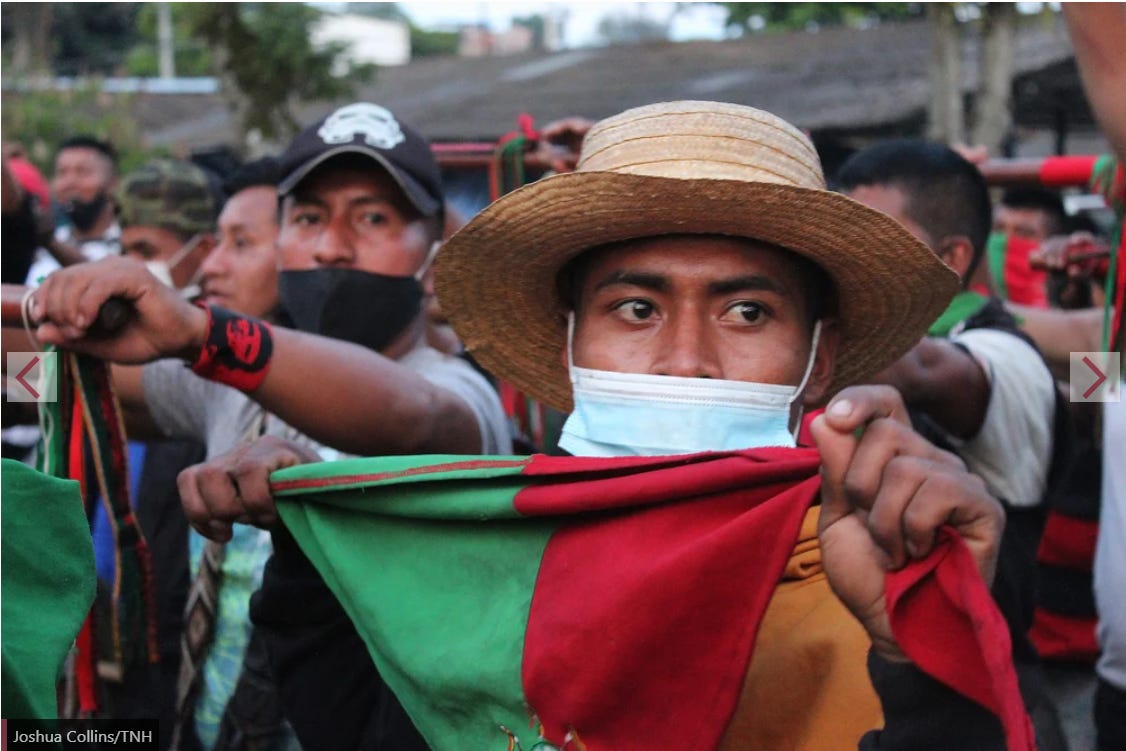
I had, of course, seen the phrase “resistencia” before arriving in Colombia almost a decade ago, usually on posters or street art supporting protest movements in various countries. But the first time someone really explained to me what it means as a broader concept was when I spent a week travelling in a caravan with indigenous communities on their way to Bogotá as part of a ‘Minga.’
A ‘Minga ’ is any collective task organized by the community. If someone’s house is damaged by fire, for example, all of the residents will organize a ‘Minga’ to repair it — with everyone contributing until the task is completed.
In times of strife, however, a ‘Minga’ can take other forms: such as resisting encroachment by an armed group, or, in my case, organizing a caravan of thousands to march on the capital demanding Bogota fulfill promises to stem violence in their homelands — promises the central government has long failed to fulfill.
Travelling by day, and staying with a growing number of protesters in camps by night, people began to explain to me what “resistance” means to them. It is a social concept perhaps even more than a political one, though of course social factors have political ramifications.
The ‘Minga’, is a form of resistance. But to function, it requires deep ties within communities, deliberately formed over years
“A garden is worth more than a hundred Molotov cocktails,” a young Afro-Colombian musician from the same conflict-torn region of Cauca, where the Nasa people organized their Minga, told me last year. She asked to be identified only as Valery for security reasons.
Valery hails from a community that faces tyrannical rule by the criminal armed groups who control the region where she lives. “Community building is a radical act,” she explained to me.
Valery is a violinist and leads a musical group that performs traditional music in regions of Cauca that have had to learn how to survive largely outside of state presence and to communities that face extreme poverty, discrimination, and high rates of violence — violence which is often perpetrated by security forces and non-state actors.
She explained that the collective actions undertaken by a community aren’t just more effective than actions by individuals; they build the kind of relationships that make life better for all residents.
The stronger the ties that bind communities together are, the more resilient those communities are to all forms of oppression, the more pleasant they are to the people who live in them, and as social trust within a community increases, those communities become safer as well.
“A community with deep social ties doesn’t just ‘endure’ shared hardships or oppression,” Valery continued, “it actively resists it.”
In an attempt to explain the concept more fully, I asked friends from Latin America what ‘resistencia” means to them. A Venezuelan friend, on social media, told me that the concept means “confronting a system that intentionally erodes your defenses, trying to force you to be co-opted or dominated. Refusing to give in and fighting to change things, even if it’s not the easiest path.”
Resistance also means surviving crushing poverty in one of the most economically unequal countries in the world, and doing so with dignity. It can mean “carrying on with daily responsibilities and keeping living, even though—emotionally, financially, or physically— I may not have the resources to do so.”
To resist is to deny. To resist is to refuse to accept. The employment of resistance, and the social ties that bind a community together in times of both good fortune and bad, means those who form it can stand firm, upright, and with dignity, regardless of the circumstances.
And that resistance in Latin America has often countered grave threats, not just economically, but in terms of horrifying violence. Resistance in Colombia, specifically, has meant standing against massacres carried out by state forces just as often as resisting criminal groups.
There is little that oppressive forces in the world, and those who would exploit us, fear more than a people who have learned to rely on each other rather than seeking help from those in power.
For authoritarianism to function, we must believe we are isolated. We must fear threats that require us to seek protection in exchange for our liberty.
Sometimes those perceived threats are internal: migrants, religious minorities, or dissenters. Sometimes that threat is presented as external: a rival state bent on undermining ours, foreign terrorists, or invading criminals.
From the point of view of those who benefit from our fear — be they those who would rule over us, or those who would profit by selling us “solutions” — it is best that we fear both.
Fear of an external enemy justifies spending on weapons of war as well as militarization of borders. Fear of an internal enemy means we remain divided, isolated, and quick to trade away our rights and liberties for someone who we would perceive as saving us.
The smaller our circle of trust becomes, and the more isolated we feel, the more power authoritarian and exploitative systems can acquire.
Even better if we fear the very idea of collective action itself as subversive. In the US, like everywhere else, this is achieved by demonizing and criminalizing dissent. Just as Trump paints any organization that opposes fascism as “domestic terrorists,” Colombia has often painted any civil opposition as “guerrillas.”
Colombia’s national strike in 2021 lasted months, and it was supported by a social fabric built over years that was not inherently political in nature. At the time, the government falsely claimed protesters were funded by criminal armed groups or George Soros. It was not. In Cali, I saw “abuelas” running soup kitchens that fed those who could not work.
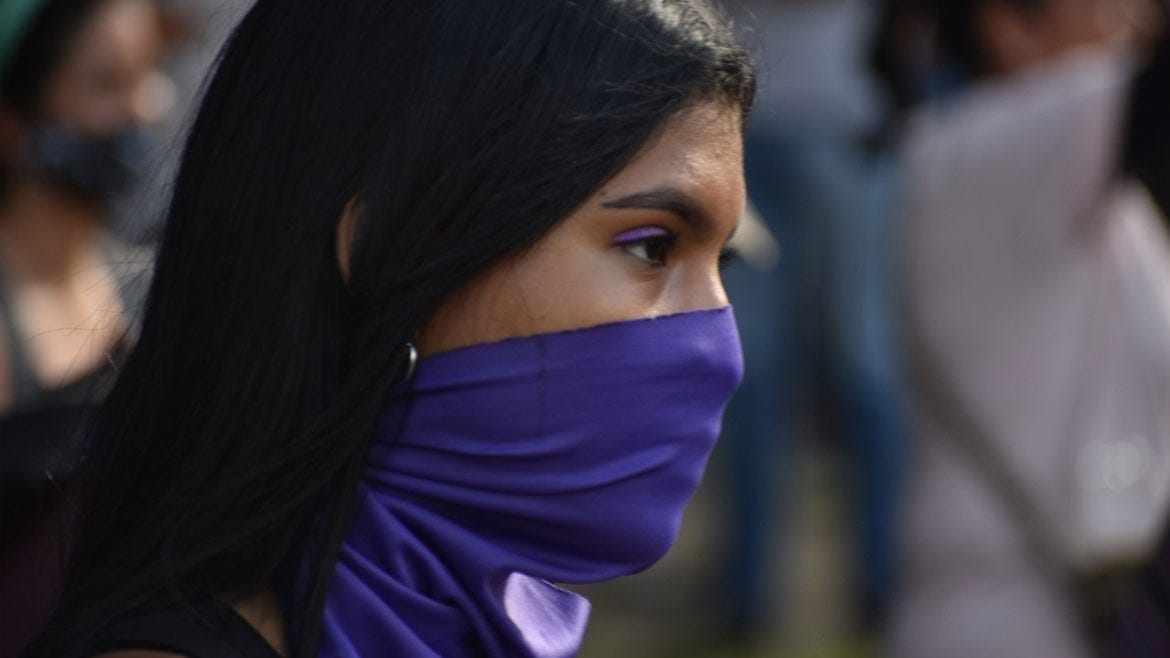
I saw neighbors sharing resources with families who had nothing. I saw a community come together to “resist.” And they endured months, with no external funding whatsoever.
Much like how organizing first carried out during the George Floyd protests in Minneapolis was the same that defeated ICE and DHS earlier this year in the US.

“Resistencia”, as it is understood in Colombia, has been painted as leftist in the US — a leftover from half a century of Cold War propaganda — but it is not inherently an idea that is defined by left or right.
It is instead bottom-up, and there is little that those at the top fear more than those who are ruled realizing their potential. “Resistencia” in Latin America is a broad concept, and can mean different things in different contexts.
Those in power would prefer we fear our neighbors, and confine our solidarity to those in our immediate family and social circles. They prefer we remain divided, blaming one another for the problems created by our rulers.
To them, the alternative, that we find strength within ourselves, and build communities capable of “resistencia”, is the most terrifying idea in the world.
You can also donate a one-time gift via “Buy Me a Coffee”. It only takes a few moments, and you can do so here.
And if you can’t do any of that, please do help us by sharing the piece! We don’t have billionaire PR teams either.
Hasta pronto, piratas!
Thanks, Josh, excellently written up.
Great post, thank you