

This week’s feature is by investigator Thomas Garrison who writes the Substack “Armed Groups of Colombia.” It is cross-published here at PWS with his permission.
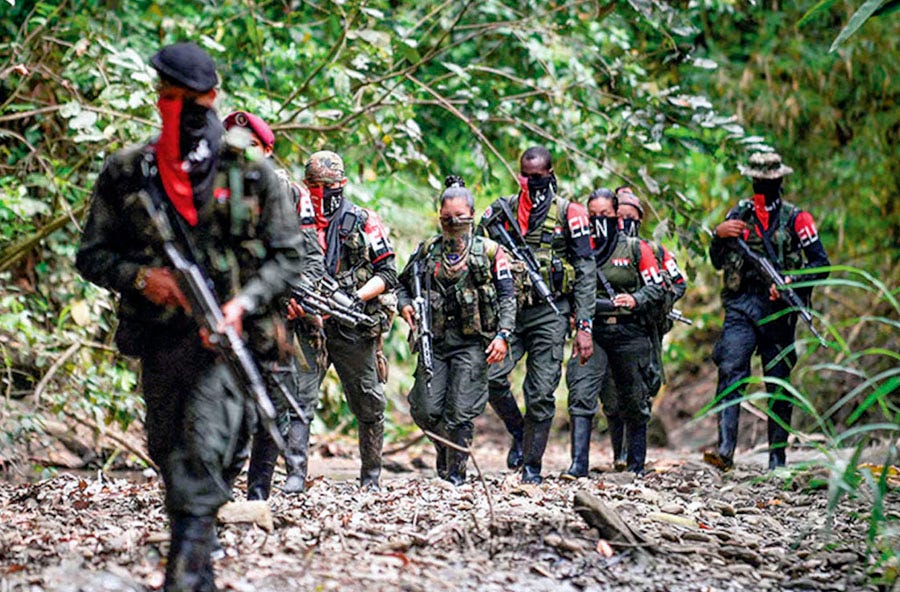
In mid-June 2026, as the second round of Colombia’s presidential election approached, a team of reporters from Reuters traveled deep into the jungles of Colombia’s Choco department to speak with members of the ELN’s Western War Front and their leader, an individual known as Yerson.
Seated on a fallen tree trunk, his rifle resting across his legs, and clad in an ELN scarf and balaclava, Yerson spoke about Abelardo de la Espriella, the far-right presidential candidate who had vowed to cease all negotiations with armed groups and unleash the full might of Colombia’s security forces against them. While acknowledging that ELN fighters would probably “suffer” if military operations increased, Yerson expressed confidence that the ELN would survive. “The ELN will not disappear because of a strong offensive,” he said, “you can be completely sure of that.”
Yerson is almost certainly correct. The ELN is already actively at war with the Colombian state. Furthermore, de la Espriella’s ability to actually increase military pressure against it is quite limited.
While de la Espriella’s predecessor, Gustavo Petro, did announce a ceasefire with the ELN in 2023, he rescinded it two years later when the ELN launched a violent war against FARC remnants in Colombia’s Catatumbo region.
In addition, Petro deployed more than 10,000 troops specifically to fight the ELN, declaring at the time, “The ELN has chosen the path of war, and war it shall have.”
The ELN has decades of experience resisting a very capable military in Colombia, in multiple areas of the country.
Top-level leaders have never been killed, even by former presidents like Ivan Duque, who employed aggressive measures against the group for the duration of his administration.
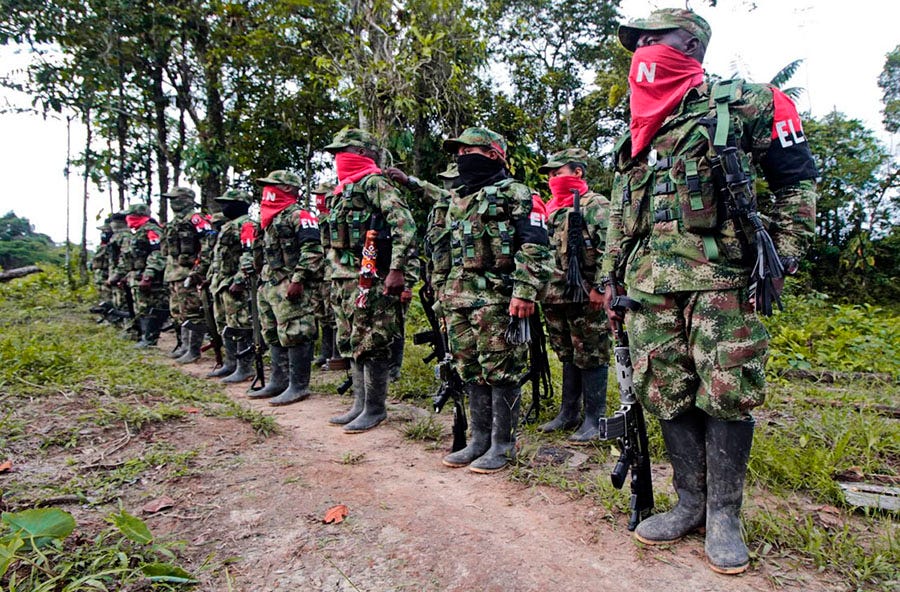
Today, Colombia’s security forces are “already operating on all cylinders,” and “stretched to their limit,” according to an official from the International Crisis Group. In other words, de la Espriella cannot meaningfully strengthen military operations against the ELN without weakening them against other active threats, such as the FARC-EMC. De la Espriella has also vowed to designate additional armed groups such as the FARC-EMBF as military targets, spreading Colombia’s forces even thinner.
However, even in a hypothetical scenario where Colombia’s military capacity was limitless, the ELN would still be a difficult group to dismantle. This is, in part, because the ELN is bolstered by its strong presence in neighboring Venezuela, where it operates with the implicit support of the Venezuelan government and military.
This allows it to replace killed or captured fighters with Venezuelan recruits and to fund its operations through drug trafficking and gold mining in Venezuelan territory. Much of the ELN’s leadership is also reportedly based in Venezuela, putting top ELN commanders out of de la Espriella’s reach without risking a major international incident.
While the January 2026 capture of Venezuelan President Nicolas Maduro raised hopes that his replacement, Delcy Rodriguez, would sever ties with the ELN, she has quietly resisted doing so. By some accounts, Rodriguez is facing growing dissent from Chavista hardliners in Venezuela, many of whom could see the ELN as an ideological ally. Additionally, Venezuela’s security forces are both less military capable than the ELN and financially benefit from its illicit activities.
Because of this, it’s little surprise that Rodriguez’s government denied Colombian claims that Venezuela participated in an attack against the ELN leadership’s security detail in May 2026. Later, in June, Venezuelan security forces conspicuously left ELN positions untouched during operations against criminal gangs in the country’s Orinoco region.
So long as the ELN maintains its Venezuelan safehaven, de la Espriella can neither weaken nor destroy it. No matter how many ELN fighters he kills or captures, they can be replaced. No matter how many coca plots he destroys or labs he dismantles, the ELN will continue to generate illicit profits.
Owing to these factors, ELN commanders like Yerson will continue to menace Colombia long after de la Espriella’s four year presidency has come to an end.
You can also donate a one-time gift via “Buy Me a Coffee”. It only takes a few moments, and you can do so here.
And if you can’t do any of that, please do help us by sharing the piece! We don’t have billionaire PR teams either.
Hasta pronto, piratas!

Thanks, Joshua, very informative. I had no ideas this was the case with the ELN.