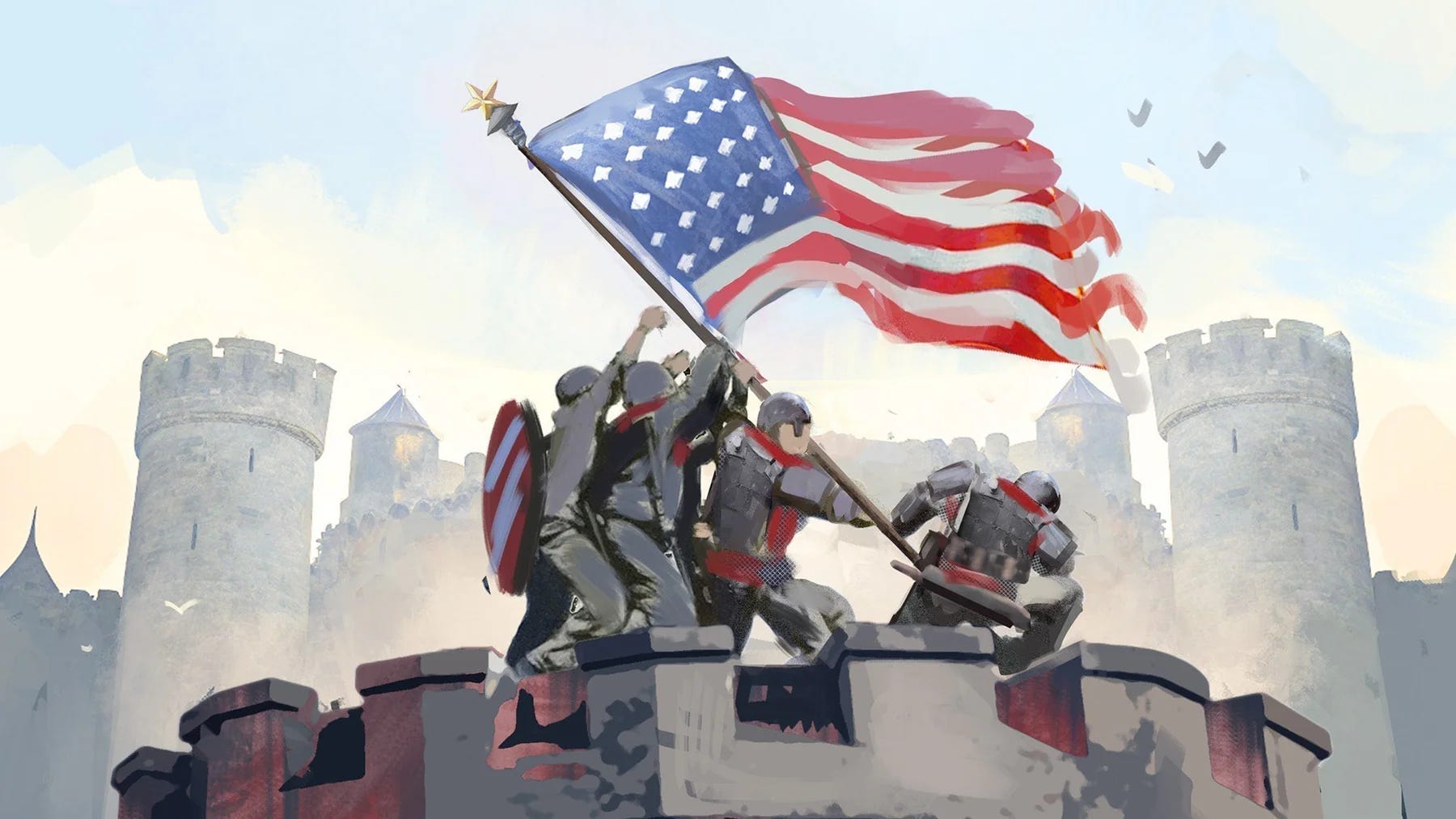
Officials in the United States seem to be worried that widespread human rights violations, likely illegal under both US and international law, may eventually catch up to them.
The US State Department called for the abolition of the International Criminal Court (ICC) on July 13. In the days that followed, US diplomatic missions in multiple countries also called on US allies to withdraw from the international court.
The statement explained US reasoning in attacking the court as rejecting the possibility that “U.S. soldiers, police officers, Border Patrol agents and elected leaders could be dragged before an international court, tried by judges from random countries across the globe, found guilty under international laws we neither consent to nor control, and then imprisoned thousands of miles from America.”
Many experts have posited that the move is preemptive to avoid investigations into severe human rights violations that are being carried out by the administration of US President Donald Trump across the world, many of which are likely illegal under both US and international law.
Nowhere have those actions been more prevalent than in Latin America, where the US is carrying out bombings as well as supporting states that enforce repressive measures on their populations, including allies veering strongly towards authoritarianism.
As part of his “Donroe Doctrine,” designed to project US power in Latin America, US President Donald Trump is actively abetting authoritarian drift across the region. But unlike previous US efforts in the region, Trump has illustrated through his actions that he doesn’t care about international law, or left/right political ideologies.
His main concerns seem to be only submission and acquiescence to US interests.
Although legislators in the Republican Party have leaned heavily into anti-communist rhetoric ahead of elections in November (a ‘golden oldie’ of classic US political rhetoric), Trump has shown that he is willing to work with, and protect, both right, and left-wing autocratic states as long as they prioritize US interests.
In sharp contrast to a recent report from the US State Department criticizing leftist influences in the US, Trump’s actions show what matters to him aren’t the ‘evils of socialism’, but rather installing a system of vassals, fiefdoms, and protectorates that will be subordinate to US goals in the region the US considers its backyard.
Throughout much of the 20th century, the US supported anti-democratic and even outright authoritarian movements and governments in Latin America. Multiple times the US lent military aid, or even outright attacked other countries in the Americas in actions that many of its own laws consider illegal. Many of the seeds that led to the Trump administration’s support for democratic backsliding were sown decades before by politicians from both political parties.
But unlike previous efforts, the US is no longer interested in killing communists. Instead, like the current government in Venezuela, it is offering them backing, and even acting to protect them from ongoing ICC investigations.
‘Operation Albatross’ in LATAM
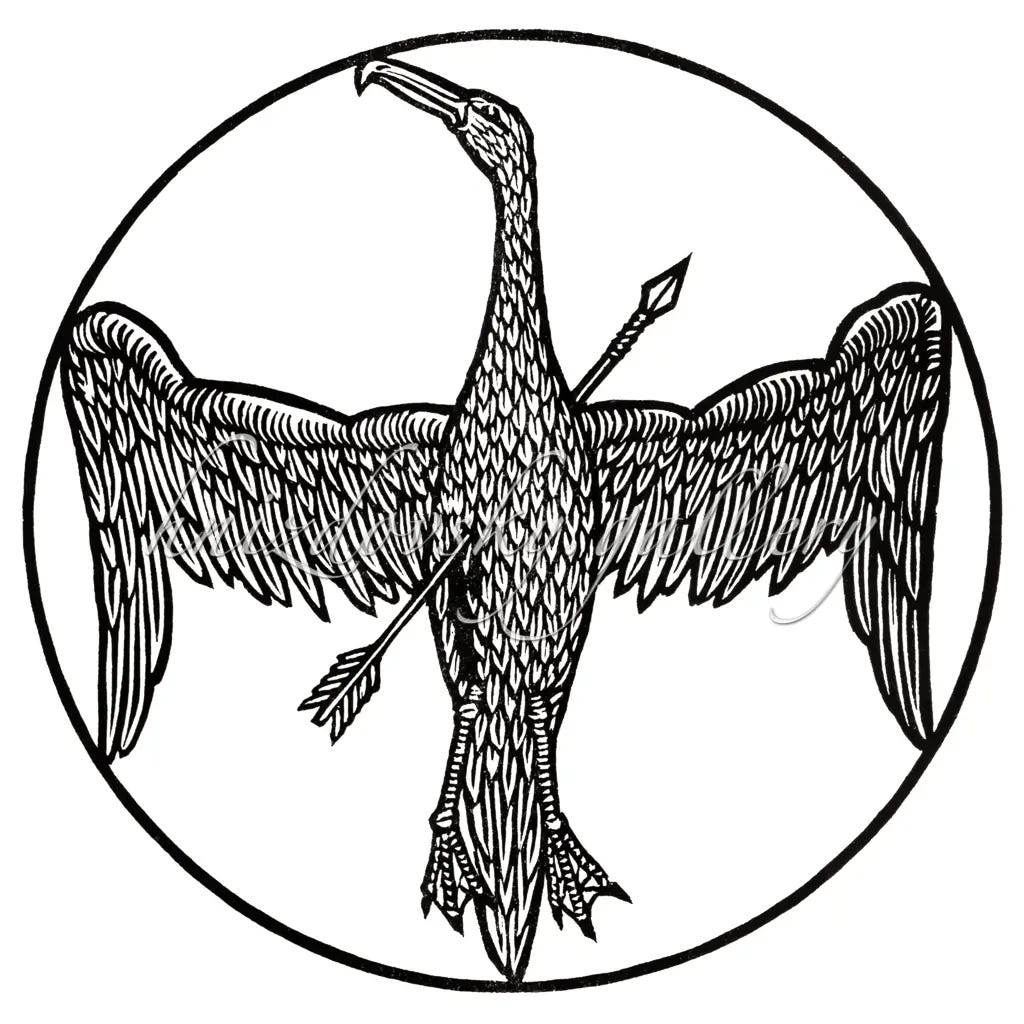
In the poem The Rime of the Ancient Mariner, an albatross appears to a ship stuck in Antarctic ice. The bird leads them on a course that frees their ship.
However, the narrator shoots the albatross with a crossbow. The seemingly meaningless action curses the ship and its crew, who are forced to endure a series of catastrophic events that kill many and nearly cause the rest to perish of thirst.
The surviving crew forces the narrator to wear the dead albatross around his neck for the rest of the journey as a constant reminder of the malice and violence that cursed them.
The US is currently aiming the crossbow at the same metaphorical bird in Latin America, an action that is certain to lead to grave consequences in the months, years, and even decades to come.
Some US violence in the region is direct: the US military has killed at least 221 people in Latin America and the Caribbean as part of strikes on what they claim, without proof, are drug traffickers.
US military forces invaded Venezuela in January and captured then-president Nicolas Maduro to install a more US-friendly puppet regime.
Other efforts have been more about supporting the anti-democratic efforts of populist strongmen in the region, as in the case of the Trump-friendly (and hopeful president-for-life) Nayib Bukele. Bukele has all but dismantled checks and balances against his growing power, and arrested thousands without trials as part of a “temporary” state of exception that has now stretched into its 5th year.
The US gives material and intelligence support to Ecuador’s Daniel Noboa. Noboa’s “iron fist” security policies emulate the “Bukele model” of crackdowns, mass incarceration, dismantling of judicial powers in the country, and dismantling election institutions that allow opposition parties to run for office. Despite findings of arbitrary detentions, torture, and extrajudicial killings by Ecuadorian security forces, the US has even collaborated in bombings in Ecuador.
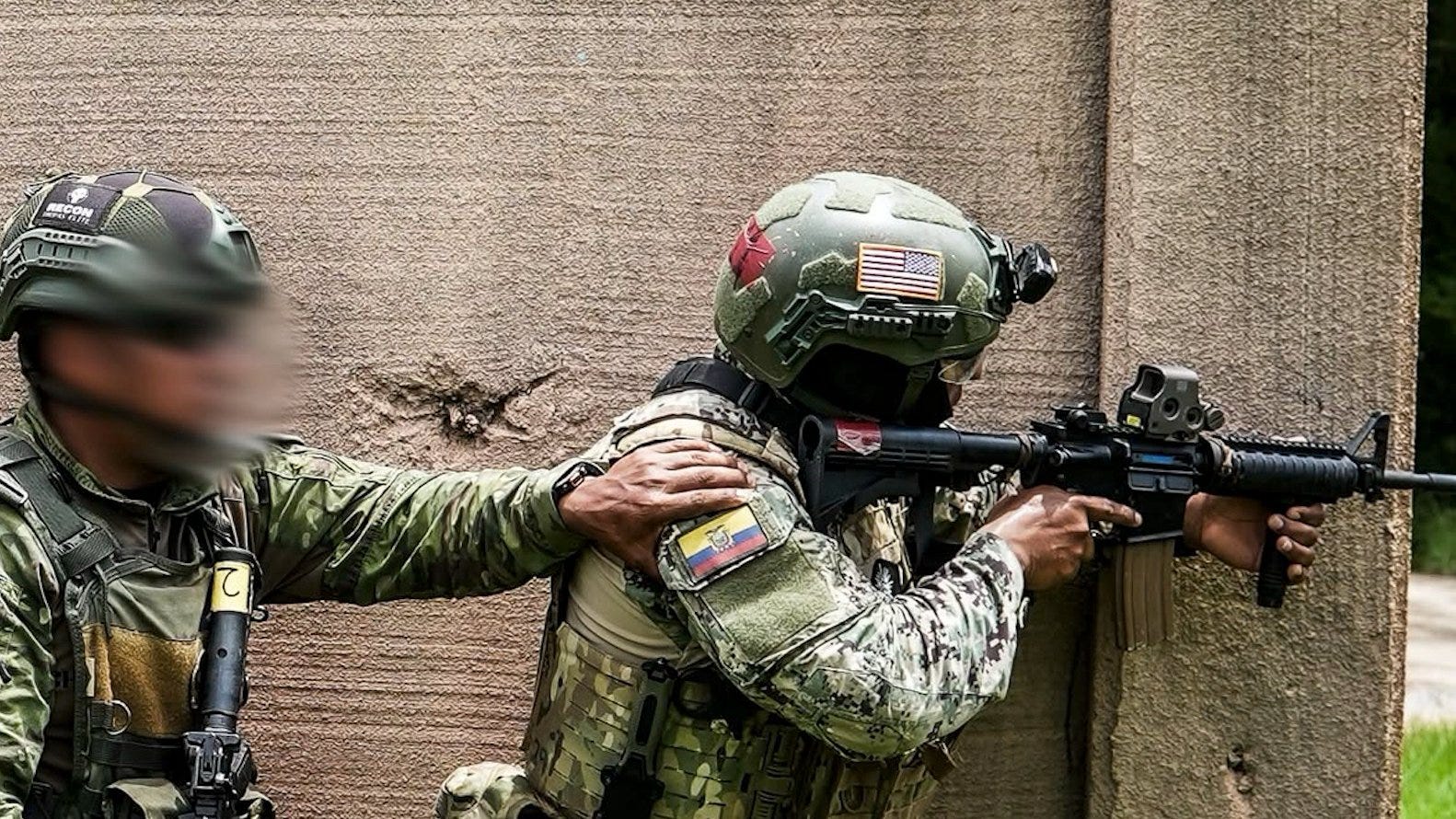
In one infamous case, trumpeted at the time on social media by US Secretary of War Pete Hegseth, the US targeted an alleged “narco-facility.” Follow-up by journalists on the ground later revealed the location to be a dairy farm.
The US has unleashed the CIA in Mexico and Venezuela, coordinating with state intelligence organizations in both countries to kill criminal suspects in military strikes. The Trump administration endorsed Trump-friendly candidates in elections in Honduras, Brazil and Colombia, in efforts that opposition parties have described as election interference.
The new American feudalism
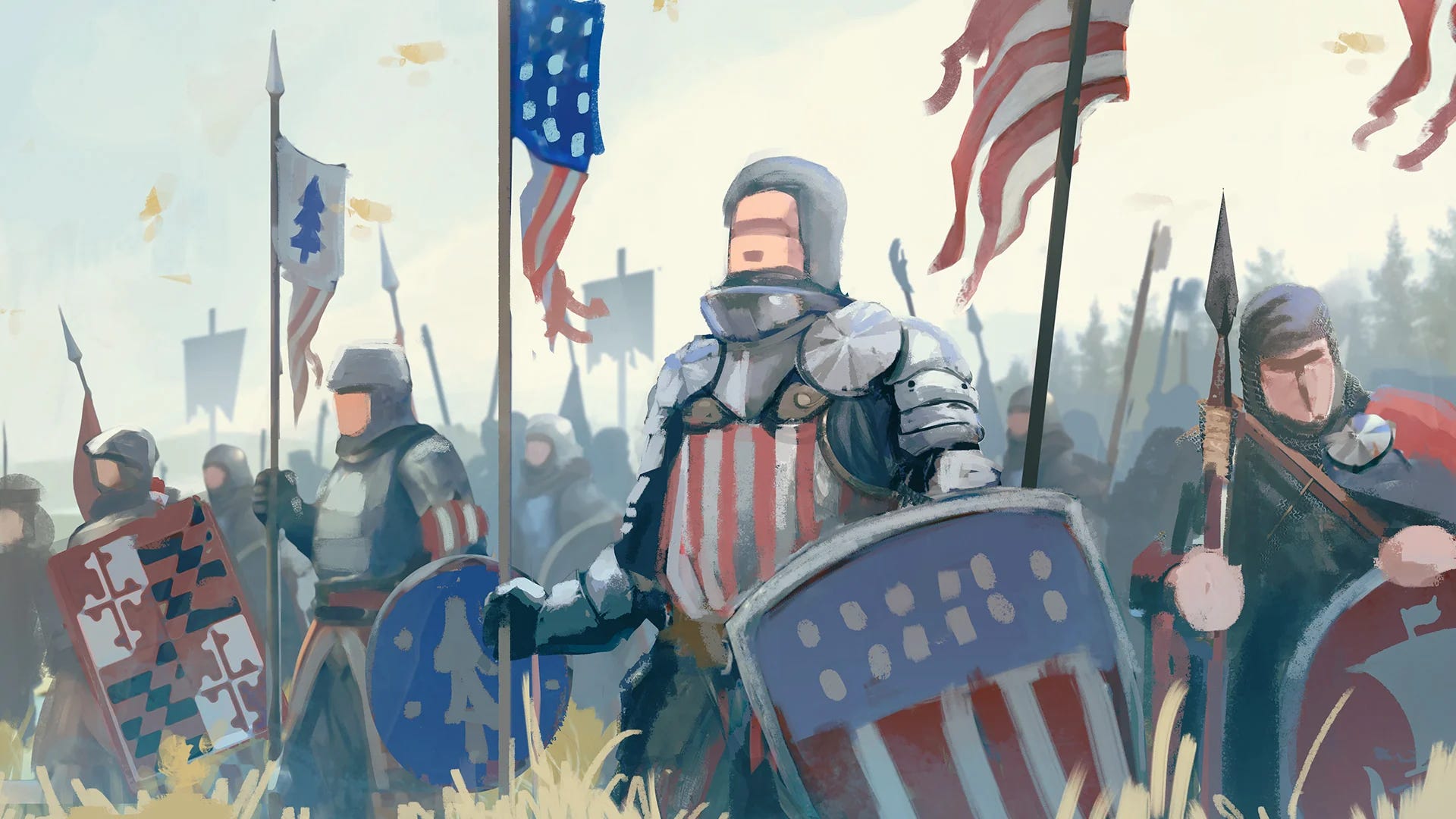
Critics have described US actions in LATAM as “neo-colonialism,” but it may be more accurate to describe them as modern feudalism, at least in the sense of power dynamics.
US Secretary of State Marco Rubio continues trying to keep up the appearance that the US cares about human rights via his long-time and very personal obsession with Cuba. But even a glance at the level of support for US allies that commit similar (or in some cases much worse) human rights abuses dispels the illusion that democracy or civil rights are at all a priority.
Rather, the opposite. US statements defending their allies in Venezuela from ICC illustrate that, if anything, human and civil rights are often viewed as an obstacle by the Trump administration.
Even longtime targets of US ire seem to have been given a relative carte blanche. When Nicaraguan President Daniel Ortega last week announced his country would no longer bother to hold elections, the statement from US lawmakers amounted to finger-wagging and tut-tutting.
Interestingly, when Salvadoran President Bukele abolished term-limits, his arguments justifying the decision were almost word-for-word what Ortega supporters said when the Nicaraguan strongman did the same in 2014.
In statements on social media, Bukele compared himself to leaders of countries with Parliamentary systems, who served for years in the UK and Germany, saying “the United Kingdom, Germany, Australia, New Zealand, Ireland, Italy…and Japan, among many other countries, also have” no term-limits.
A parliamentary leader can be removed at any time, instantly, by lawmakers in a simple vote of no confidence, unlike the leader of a Presidential system, which El Salvador employs.
Bukele, Noboa, and Trump are all attempting to stack the judiciary with appointments who will support their interests, while their prosecuting political enemies, and setting up election obstacles for opposition parties.
The US is also trying to cast doubts on the integrity of Brazilian elections. Trump has long feuded with Brazilian President Luiz Inácio Lula, imposing tariffs on the country and even threatening Brazilian judges who are investigating ultra-right former President Jair Bolsonaro.
Trump administration officials are pushing Latin American countries to use their militaries to conduct police actions as part of the US-led ‘War on Drugs’ — a dynamic that in the past has led to severe human rights abuses in the region.
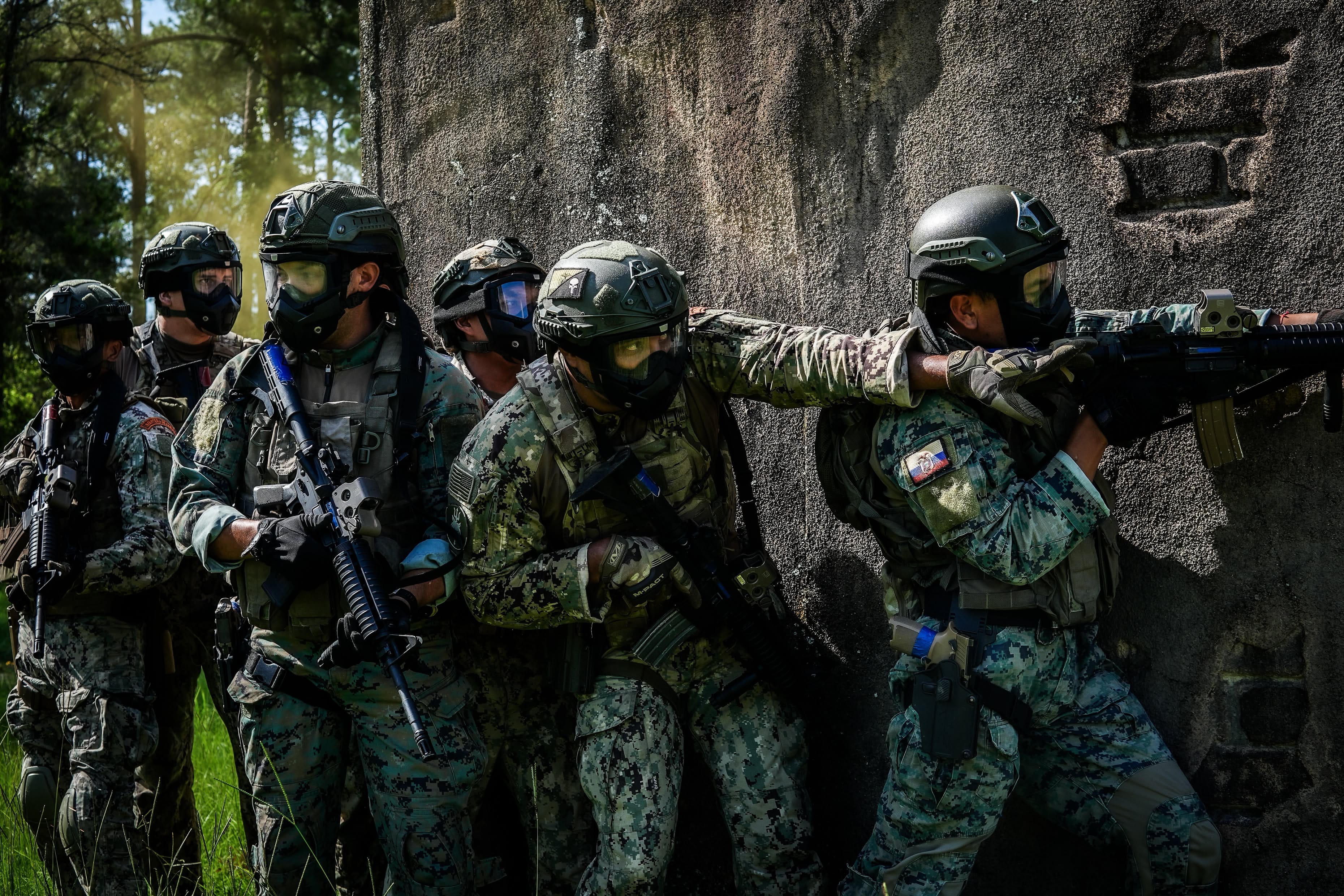
At the recent The Conference of Defense Ministers of the Americas, in Peru, Under Secretary of Defense for Policy Elbridge Colby pushed for Latin American governments to increase their defense spending and to use military forces “to recover control over your territory, secure your borders” and “defeat the narco-terrorists who terrorize all of our people.”
The ‘narco-terrorism’ label has been used by the White House to justify military actions abroad, such as the strikes on alleged drug boats in the Caribbean and Pacific oceans.
It is a label that has also been embraced by Noboa in Ecuador, and President-elect Abelardo De La Espriella in Colombia — whom Trump roundly endorsed in recent Colombian elections.
The US’s feudalistic approach to Latin America, in which minor lords run fiefdoms that pay tribute to, and depend on, the Trump White House for protection and aid, even has a fittingly named organization to aid in autocratic unity.
The administration launched the“Shield of the Americas,” a coalition of Trumpista governments in Latin America, in March. In the words of the State Department, the organization seeks to battle cartels and “expand multilateral and bilateral cooperation to enhance security’; cooperate in ‘whole of government’ efforts regarding ‘border security, countering narco-terrorism and trafficking, securing critical infrastructure, and ‘advance peace through strength.’”
De La Espriella has requested Colombia be included in the organization as well. Current President Gustavo Petro, who leaves office in August, has strongly opposed to initiative, which he has described as “inherently fascist.”
So far, US violence in Latin America has failed to reduce drug flows to the US, or seriously damage the operational capabilities of any organized crime groups.
But the US power projection has allowed Trump to project US interests in the region, and is widely considered to be a point of great success by the White House.
However, shooting the albatross brought about grave consequences in the Rime of the Ancient Mariner, and it very may as well for long-term US prospects in Latin America.
After the Cold War ended, Latin America underwent a series of pro-democracy reforms, and the history of US imperialism in the 20th century gave rise to populist opposition to US policy in the region. That sentiment was in part responsible for the “Pink Wave,” a series of progressive and leftist president in Ecuador, Venezuela, Bolivia, and Brazil, who loudly opposed US interests in the region.
Similar US actions may result in the same again, though this time not organized along right/left political alignments, but rather anti US sentiment more broadly. In addition, US officials claim that one of their prime goals currently is to reduce Chinese influence in LATAM, but their actions may be driving some governments towards closer relations instead.
Beyond geopolitics, however, US support for autocracy in the region is already having dire consequences for the people in affected countries, who face reduced civil rights in the best of cases, or worse: state violence and political persecution.
Just as was the case under ancient feudalism, it is the people who pay the price when the lords and ladies exert a brutal rule.
You can also donate a one-time gift via “Buy Me a Coffee”. It only takes a few moments, and you can do so here.
And if you can’t do any of that, please do help us by sharing the piece! We don’t have billionaire PR teams either.
Hasta pronto, piratas!