

The United States “repatriated” $100 million in Venezuelan gold bars following an official visit by Interior Secretary Doug Burgum, according to statements by Burgum on March 23. The announcement follows weeks of public statements by US President Donald Trump in which he expressed interest in both gold reserves and rare earth mineral deposits in the country.
Moving in parallel with US officials, Venezuela’s National Assembly has approved a draft bill that would facilitate US mining in the country, as well as encourage foreign investment and liberalize restrictions on mineral exports.
The US frames the mining initiatives as a way to stimulate economic development in Venezuela following the capture of Venezuelan President Nicolas Maduro and his wife on January 3, and instalation of Delcy Rodriguez as acting president.
The truth about Venezuelan gold production, however, is much more complicated than the press releases from either country let on.
Venezuela has vast precious mineral reserves, especially in the south of the country. In addition to considerable gold reserves, Venezuelan deposits also include rare earth minerals.
The US views securing viable deposits of these minerals, used in aerospace, AI, satellite, and radar systems, as a critical national security matter. But securing the deposits in Venezuela presents substantial security risks. The majority exist in areas that are effectively controlled by Colombian criminal armed groups.
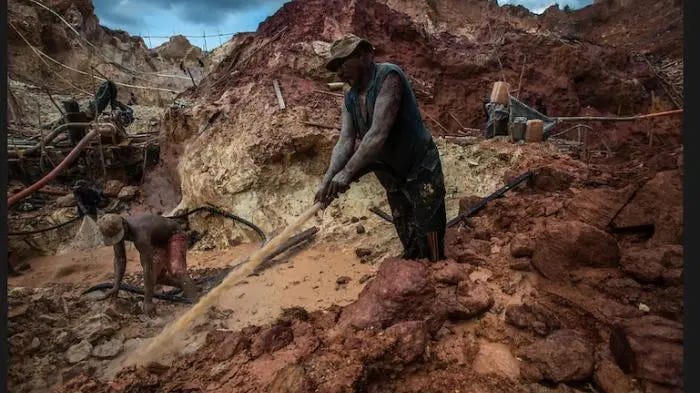
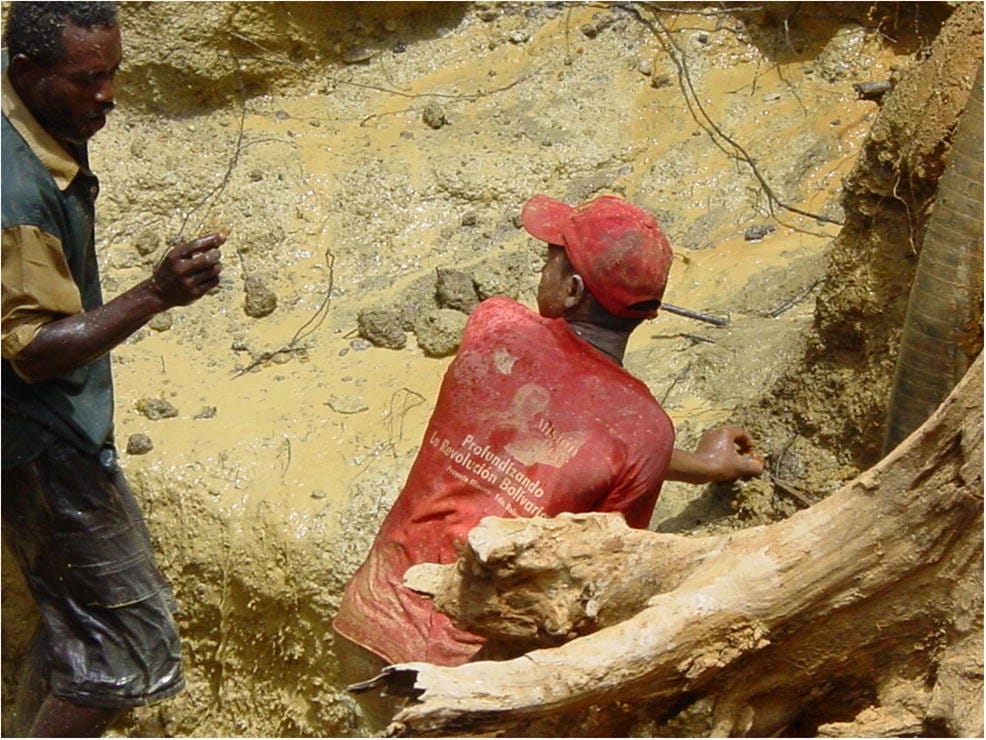
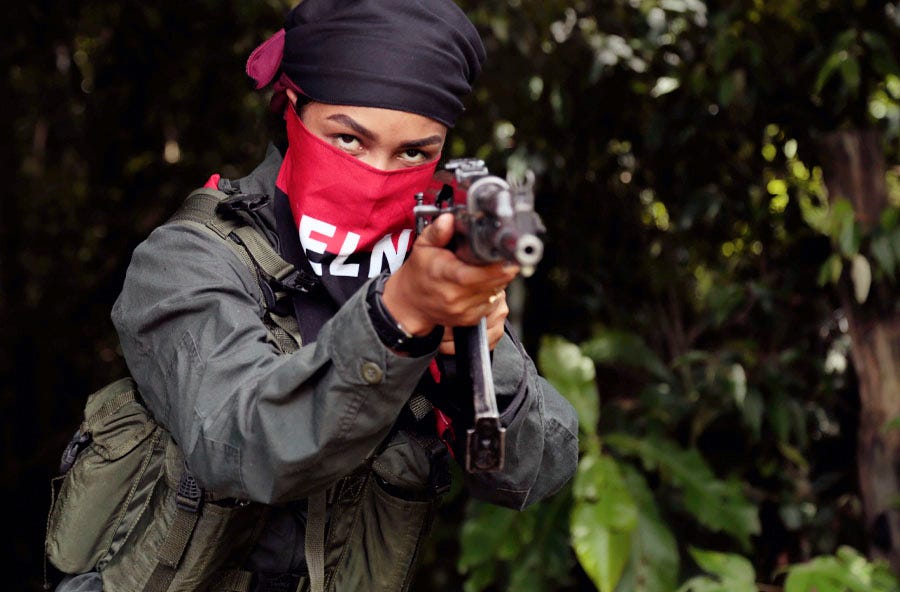
Segunda Marquetalia and the ELN have a strong presence in Amazonian and Colombian-Venezuelan border areas. They incorporate indigenous and local communities into prospecting and strip-mining efforts in the regions they control. According to field reporting from the Orinoco region by journalistic consortium Amazon Underworld, these illegal operations launder their yields into legal production streams, either by bribing Venezuelan officials, who have then sold the minerals to Chinese buyers, or by smuggling ore into Colombia, where it becomes indistinguishable from legal production chains.
In a comprehensive report from late 2025, Amazon Underworld reports that “these extraction operations involve summary executions, child labor, sexual violence, and torture,” and occur with full knowledge of Venezuelan military officials.
Gold mining in Venezuela is also carried out by state-owned company Minerven, but mineral flows in the country are saturated by gold from illegal mining operations that has been laundered into licit markets, often with the help of corrupt Venezuelan officials.
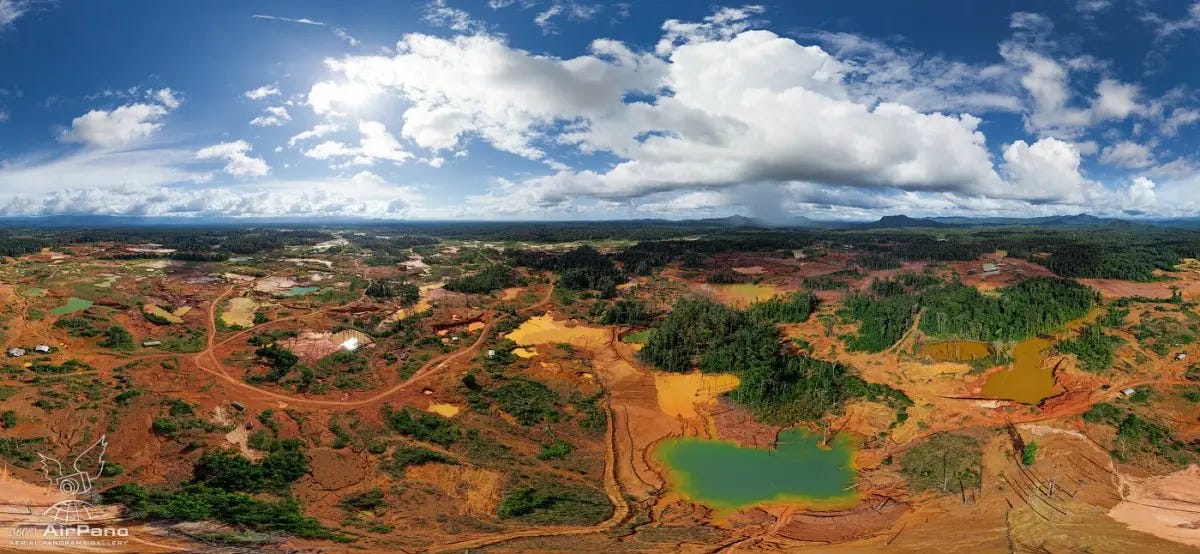
Both extraction industries, licit and illicit, wreak incredible environmental destruction in the heart of one of the earth’s most delicate ecosystems — the Amazon rainforest.
Venezuelan researchers and NGOs recently released a report that states the mining bill currently winding its way through the National Assembly would “provide a veneer of legality to the ongoing systematic plundering of the Amazon and the Guiana Shield,” the groups said, warning it could worsen environmental destruction and abuses in mineral-rich regions of southern Venezuela.
The group estimated in early 2025 that more than 3.2 million acres of undisturbed or minimally disturbed rainforest would be destroyed by current mining activities in the country, with the total devastation projected to surpass 3.7 million acres by 2030.
Expansion of the mining industry and an entrance by US firms would dramatically increase the ecological devastation.
Furthermore, any company attempting to operate in the region would almost certainly face extortion efforts by Colombian armed groups.
These payments are often hidden via contracts with private contractors and third-party companies. All of this is to say, any company operating in Venezuela will be directly financing armed groups that the US government considers terrorist organizations.
Both Seguna Marquetalia and the ELN have historically attacked oil and mining infrastructure in Colombia when private companies resist paying them to operate in their territories.
In fact, some of the “blood gold” from their mines is almost certainly part of the shipment that the US “repatriated” this week.
Any buyer doing business in Venezuela runs a very strong chance of buying illegally mined deposits, knowingly or otherwise, and thus indirectly financing Colombian groups that the US has designated as international terrorist organizations.
Entities attempting to organize extraction projects in southern Venezuela face even more serious security risks. Mining operations in the regions in Colombia where the ELN or Segunda Marquetalia operate, such as southern Chocó, northern Antioquia, and Putumayo in the Amazon basin, are some of the most conflict-prone in the country.
International companies operating in those zones are often subjected to extreme pressure to pay off the armed groups who control the regions, often through indirect means, which makes them more difficult to trace.
Further complicating the dynamic, the ELN and Segunda Marquetalia have publicly vowed to oppose US interests in Venezuela, which they view as a critical field of operations that allows them to evade Colombian security forces, act as a critical smuggling corridor, and allow them to diversify their income streams.
It is highly unlikely that Venezuelan security forces have the capability to confront either group, both of whom have decades of experience resisting a highly capable military in Colombia.
But that is likely irrelevant. The interim government in Caracas almost certainly does not have the will or the political capital to start a serious conflict in the heart of the country with groups that have been previously tolerant of Venezuelan security forces.
Fighting between the ELN and Segunda Marquetalia also complicates the security situation. In contested areas of Colombia, Non-state armed groups (NSAGs) often attack the infrastructure of state or private entities perceived as cooperating with enemy groups, correctly or not.
Conflict regions firmly controlled by one NSAG are considerably less dangerous than disputed zones. Neither the ELN nor Segunda Marquetalia has hegemonic control of southern Venezuela, though both operate with relative impunity.
How the US plans to secure these areas is unclear. The use of US ground forces is highly unlikely. Would they relegate the task to private security contractors (read mercenaries)?
The US sees profits in the big print in Venezuela, but what it doesn’t see is the complexity and the blood likely to follow those profits.
Or perhaps they simply don’t care.
You can also donate a one-time gift via “Buy Me a Coffee”. It only takes a few moments, and you can do so here.
And if you can’t do any of that, please do help us by sharing the piece! We don’t have billionaire PR teams either.
Hasta pronto, piratas!

Rape, pillage and plunder.
Thank you for your knowledge and insight into, yet another, complicated region of the world. The Tdump regime thinks it’s easy money, driven by greed and absolutely no fucking understanding of what they playing with.