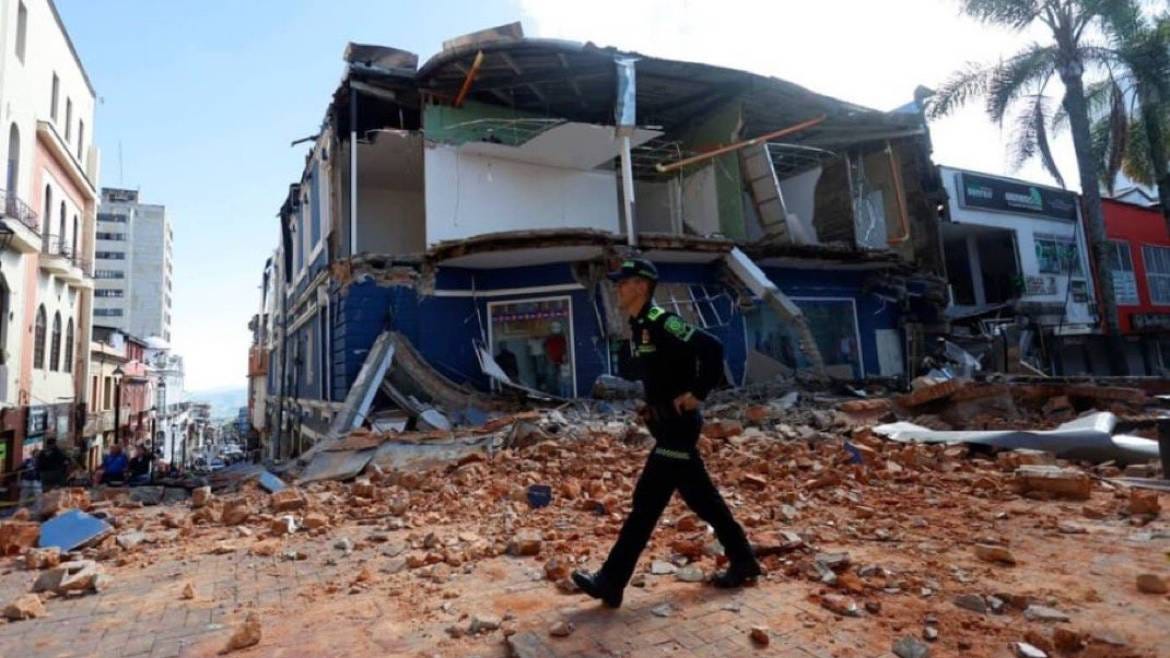
Human rights officials warned on Tuesday that the reconstruction of west Colombia, which was partially destroyed by an August 10 earthquake, fails to show progress.
In a statement, the Ombudsman’s Office warned that “difficulties persist in providing assistance to and supporting the recovery of affected communities, particularly with regard to housing, access to essential services, the protection of rights, and funding for response measures.”
The top human rights official of Pereira, Leonardo Fabio Reales, told Caracol Radio that “the reconstruction of the city has not begun. There isn’t even a rough outline of what is planned to be done after the earthquake.”
Pereira is among the hardest hit by the 7.4M earthquake that destroyed more than 123,000 homes, and hundreds of hospitals and schools.
More than 450 people continue to live in tents in temporary camps that were set up in Pereira and cities like Buenaventura, according to the Ombudsman, which raised the alarm over “the lack of clear protocols for closing shelters and providing housing alternatives for departing residents, alongside infrastructure and security deficiencies in several facilities.”
Promised rent assistance, which would allow those who lost their homes to temporarily find residence, has also been insufficient.
“More than a month ago I received a million pesos ($304) stipend, although this was supposed to be three, I haven’t received any news,” Pereira resident Christian Castañeda told France 24.
“They’ve announced a so-called ‘Miracle Fund,’ but so far we’ve only seen billboards—no major progress,” said Castañeda, whose mother is one of more than 3,000 people who have yet to receive financial aid.
This Miracle Fund was set up a few weeks ago with an initial COP625 billion ($190 million) budget, which is only a drop in the COP59.29 trillion (18 billion) bucket that the government must get together for the reconstruction process.
“I’m not sure whether the Miracle Fund is working with the diligence and sense of urgency that are required, nor am I sure that they are doing so in the most transparent way,” said House Representative Catherine Juvinao, a member of the congressional commission that monitors the recovery process.
According to Senator Alejandro Toro, local governments from parts of the country that weren’t affected by the earthquake have also tried to receive emergency funds.
Sixteen departments were listed as affected—16, when everyone knows only 5 were actually impacted. It turns out that among these 16, certain departments reported every single public building and school as damaged. For instance: in Caqueta, according to the governor, there are more affected municipalities than families. No one knows the true number of victims in Caqueta; the press didn’t cover a single damaged house there. In Bolivar, along the Atlantic Coast, 11 families were reported affected—and do you know how many total people were listed under those 11 families? 467 people from 11 families! That averages to 43 people per family! Come on, that is completely false! That is a lie; it’s not as if every household belongs to [vallenato singer] Diomedes. They also reported about 189 damaged schools, which would mean 12 or 13 damaged schools per family… impossible. This same issue occurred across other departments—16 departments, including Sucre!
Senator Alejandro Ocampo
Ocampo said he would continue his lawsuits against the foundation of First Lady Ana Lucia Pineda, Colombia Luz y Sonrisas, which has failed to comply with court orders ordering transparency on what it has done with money collected in response to the earthquake.

You can also donate a one-time gift via “Buy Me a Coffee”. It only takes a few moments, and you can do so here.
And if you can’t do any of that, please do help us by sharing the piece! We don’t have billionaire PR teams either.
Hasta pronto, piratas!