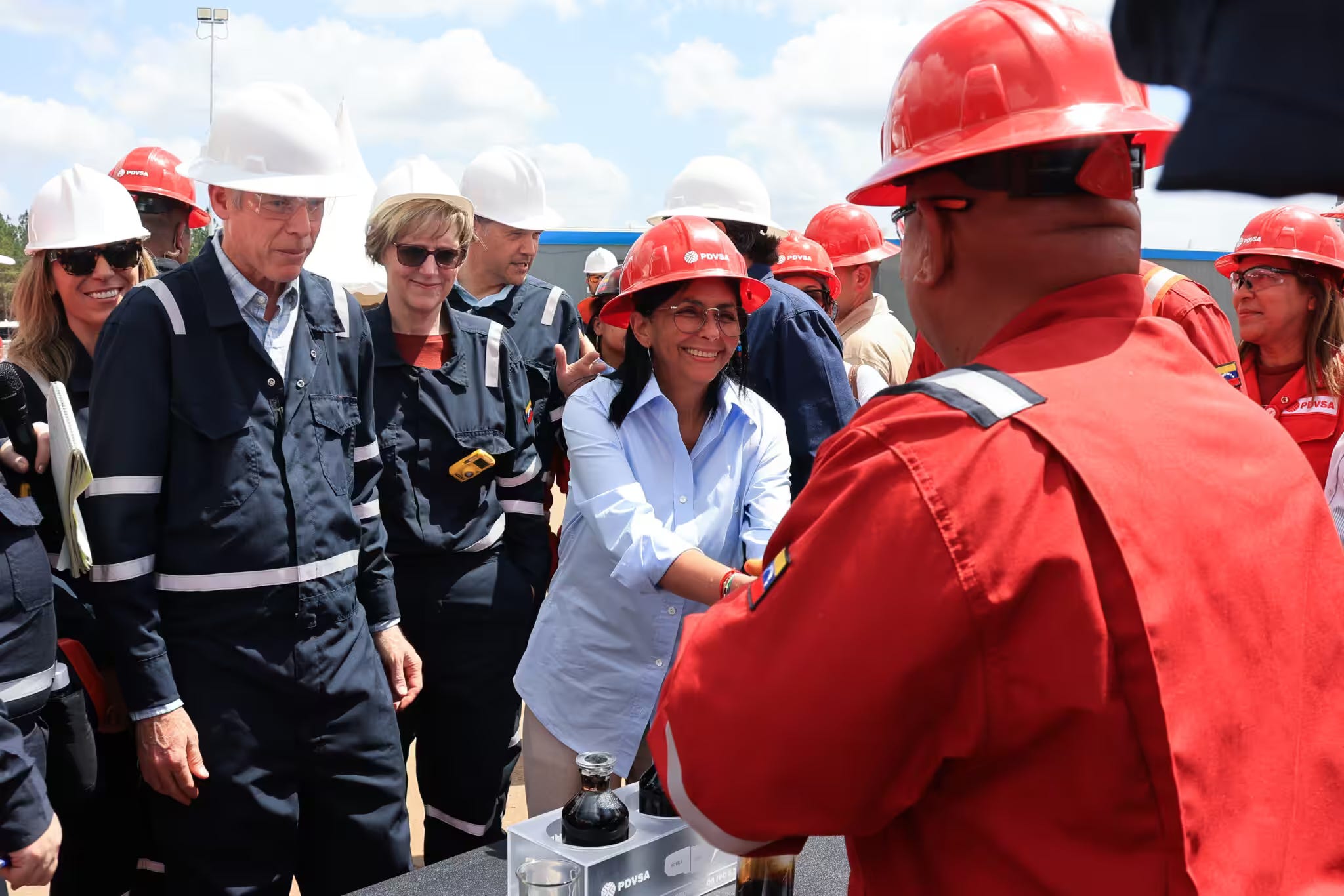
The United States is in final talks to assume an effective ownership stake in Venezuelan oil fields, according to reporting by Axios and Bloomberg. Interim Venezuelan President Delcy Rodriguez is also considering removing Venezuela from the Organization of Petroleum Exporting Countries (OPEC). The country was a founding member of the oil cartel along with Saudi Arabia, Iran, Iraq, and Kuwait in 1960.
The deal would reportedly give the US a majority stake in the largest oil reserves on the planet — estimated at 90 billion barrels — and deal a symbolic blow to OPEC, which the US has long accused of collusion to control energy prices.
US President Donald Trump has wanted this since before the US invaded Venezuela in January and captured then-president Nicolas Maduro, according to administration officials who spoke with US media.
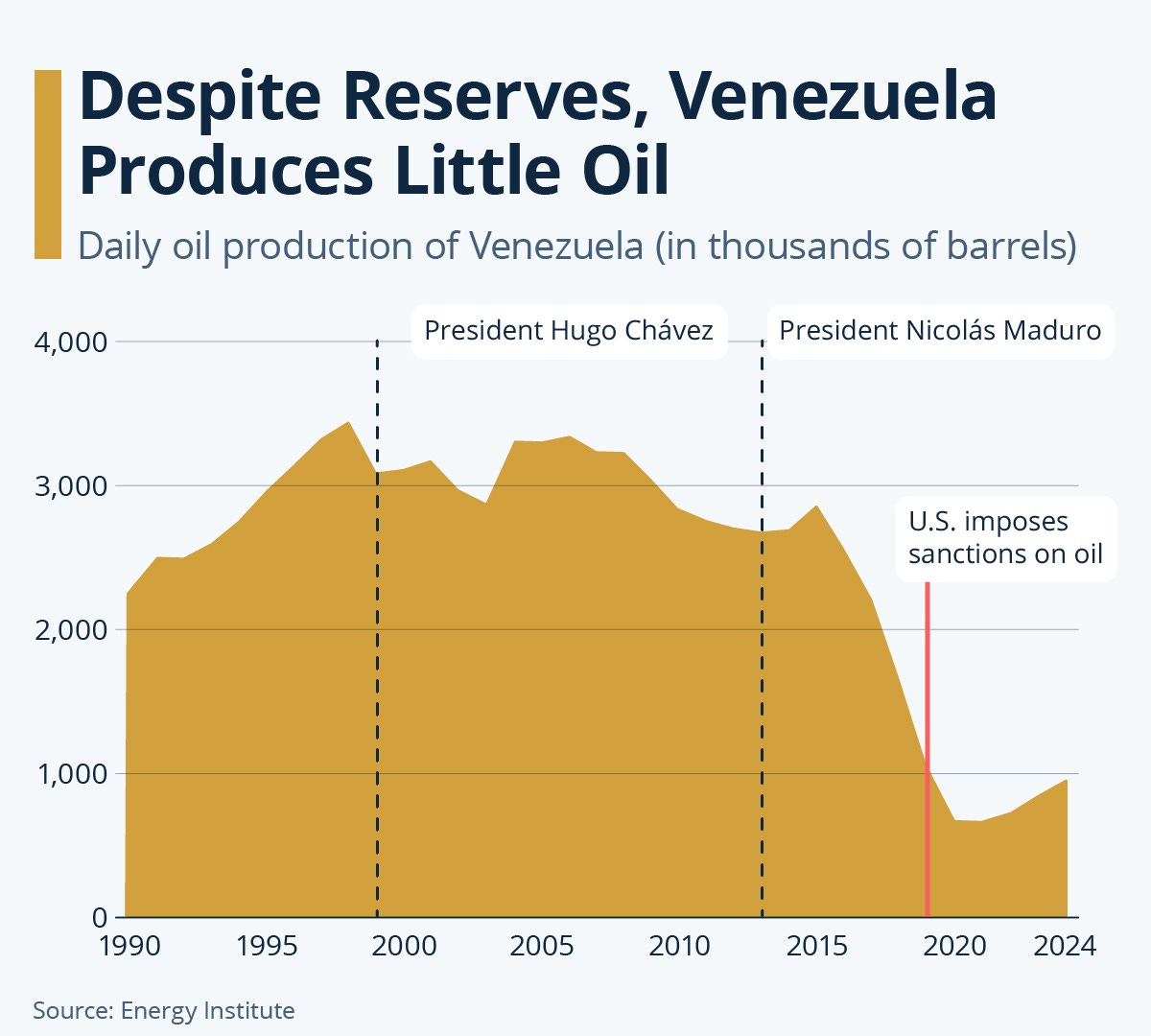
As Venezuelan oil production fell dramatically in recent years due to disrepair in the sector, the country was unable to participate in OPEC quotas. But its presence as the only OPEC country in the Western Hemisphere has been a point of irritation to the US for years.
Marco Rubio, Stephen Miller, and US Energy Secretary Chris Wright have reportedly been engaged in talks with Rodriguez and Venezuelan state-owned oil company PDVSA for months.
The talks reportedly include a “100-year lease” on the majority of proven oil deposits within Venezuela, a contract that amounts to outright ownership, in return for investment by US private companies to restore oil production.
The reported deal has already been criticized by Venezuelans both within the Rodriguez government and the opposition as “entreguismo”: a strategy of submission, surrender, or “selling out”, in which the interests of a group or nation are relinquished to external forces.
US officials are reportedly sensitive to the accusation. “We’re going out of our way to show how this will benefit the people of Venezuela, because it will,” one administration official told Axios.
Also part of the deal is a formal partnership between the US and Venezuela in long-term oil production benchmarks, a system that would effectively create a Western version of OPEC controlled by Washington, D.C.
The move, if it happens, could potentially create tension between the US and long-term ally Saudi Arabia, which could perceive the strategy as an economic attack by the US on Saudi Arabian interests, according to experts who spoke with Bloomberg.
The resource grab is the latest in a series of highly aggressive foreign policy policies being implemented across the Americas as part of Trump’s “Donroe Doctrine.”
OPEC has experienced internal tension in recent months, with Iraq often struggling to meet production quotas, and the United Arab Emirates repeatedly threatening to leave the organization.
The US is already the top oil-producing nation in the world, followed by Russia, Saudi Arabia, and Canada. US production in Venezuela would give it increased leverage over global energy markets and weaken the negotiating power of OPEC member countries, a particularly important geopolitical point given the difficulties faced by its ongoing war with Iran.
You can also donate a one-time gift via “Buy Me a Coffee”. It only takes a few moments, and you can do so here.
And if you can’t do any of that, please do help us by sharing the piece! We don’t have billionaire PR teams either.
Hasta pronto, piratas!