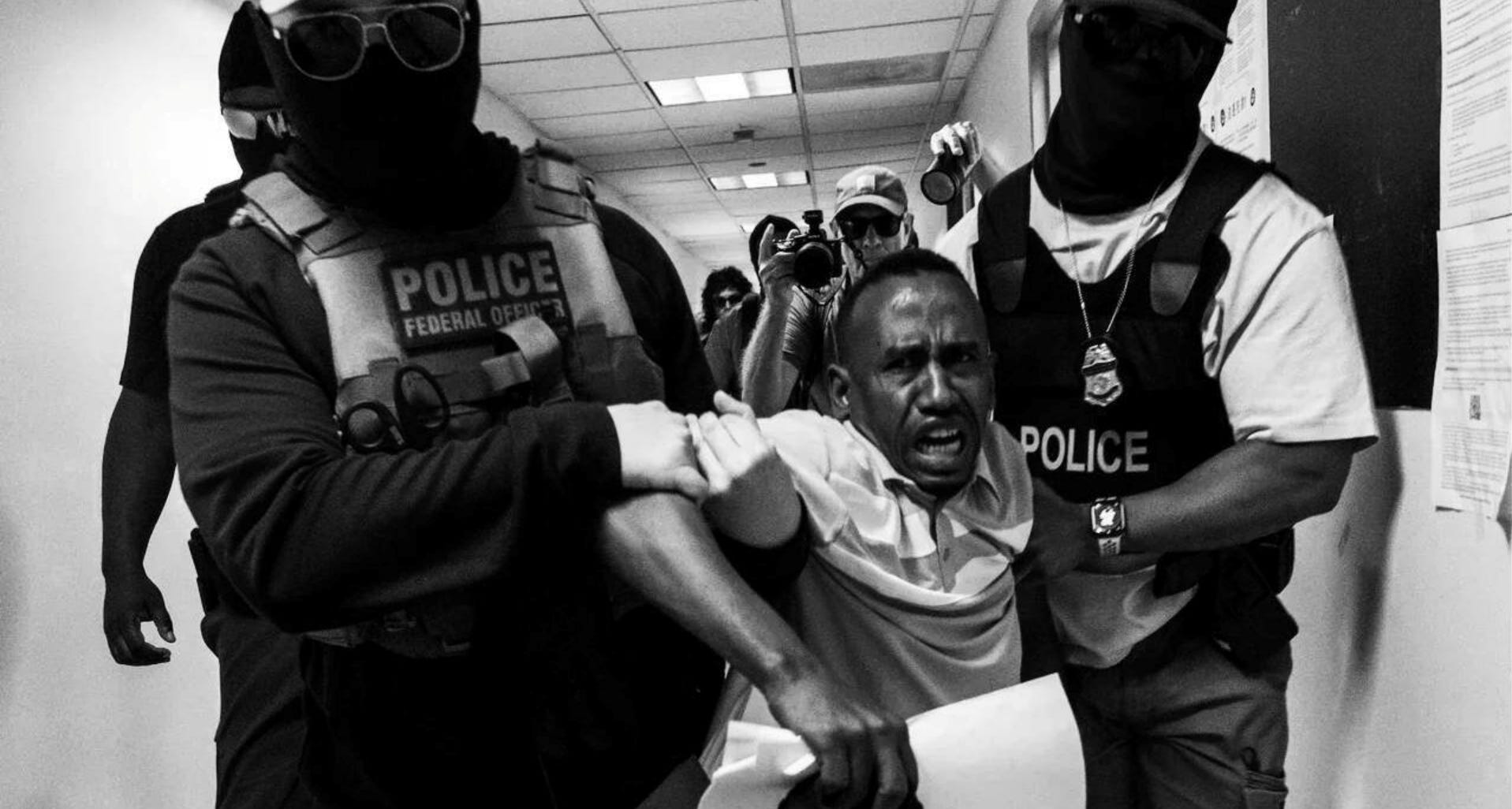
The Inter-American Commission on Human Rights (IACHR) held a public hearing today on the use of excessive force and authoritarian actions of the US government during immigration protests.
The preliminary hearing is the first by the Organization of American States (OAS) monitoring possible US human rights violations since Trump re-assumed office in 2025.
Witnesses, victims, civil rights lawyers and academics accused the US government of “using the tactics of dictatorships” in what they described as a violent and authoritarian crackdown on both dissent and free expression.
The hearing was also attended by the United Nations Human Rights Council (UNHR), the American Civil Liberties Union (ACLU), and UN Special Rapporteurs who have covered human rights abuses committed by security forces in other member-states.
Jim Cavallaro, Executive Director of UNHR, presented the results of a UNHR preliminary investigation into hundreds of use of force cases by officers from the Department of Homeland Security (DHS), in which experts identified a criminalization of protesters and migrants alike that aligns with tactics used by authoritarian leaders both currently and throughout history in Latin America.
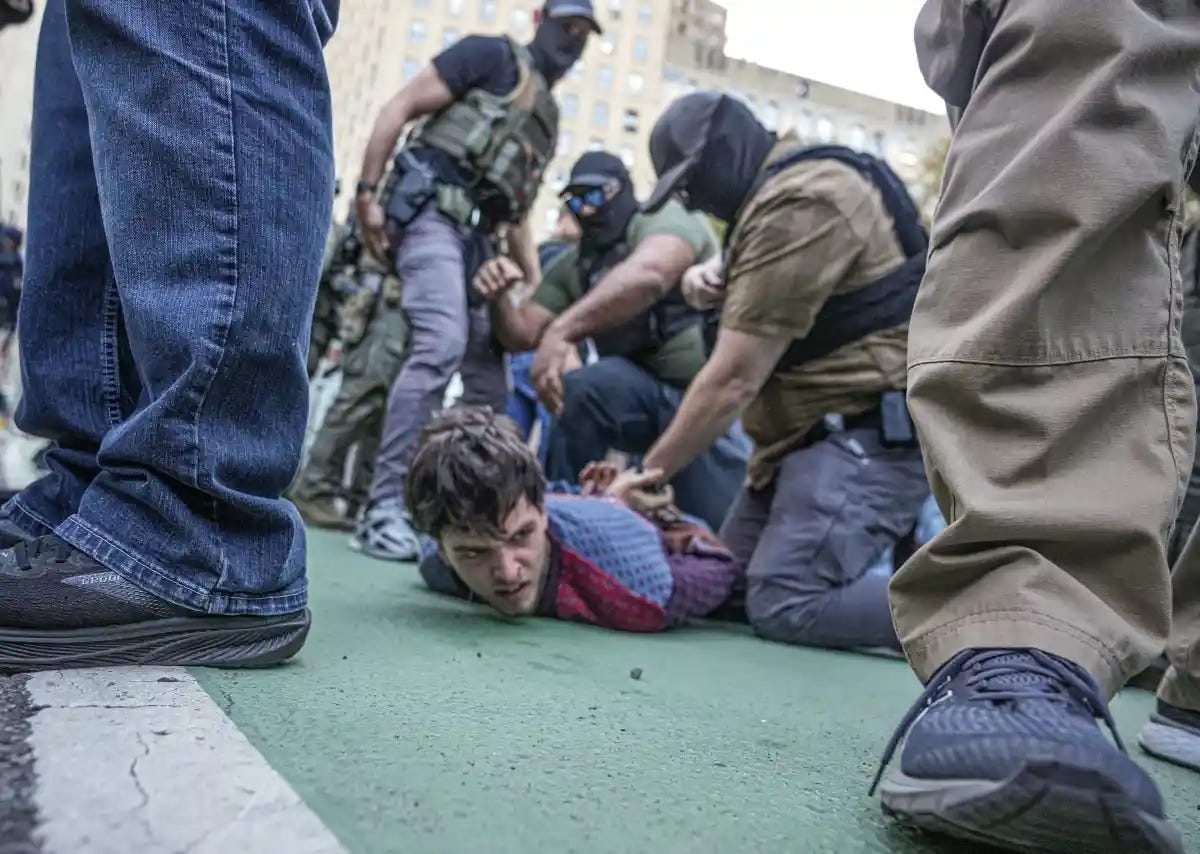
“On paper, there are legal protections for human rights in the United States,” said Cavallaro. However, he alleged that in practice, the administration of US President Donald Trump has ignored or side-stepped those protections to criminalize legal speech, including by blocking investigations into DHS officers, and demonizing protesters by associating them with terrorism.
Before the audience, Cavallaro read reporting on internal FBI documents showing that FBI agents, who have jurisdiction over DHS federal officers, had been ordered to stop investigating allegations of excessive force by DHS officers.
Cavallaro called for a full investigation by IACHR lawyers and representatives into US actions, alleging that UNHR had uncovered troubling indications of human and civil rights violations.
Cavallaro described US actions as going far beyond individual cases, but rather part of a larger pattern. He described his team’s preliminary investigation as discovering “beating after beating after beating, and humiliation after humiliation,” as well as killings by DHS personnel.
The hearing also featured testimony from Reverend David Black, a priest who was attacked outside of a DHS facility in Chicago in 2025. He described being “beaten, thrown to the ground…and shot repeatedly in the head with chemical agents” as he prayed in the street before DHS officers.
He described actions by the US government as “criminalization of peaceful protest and demonization of migrants and protesters,” in prepared statements.
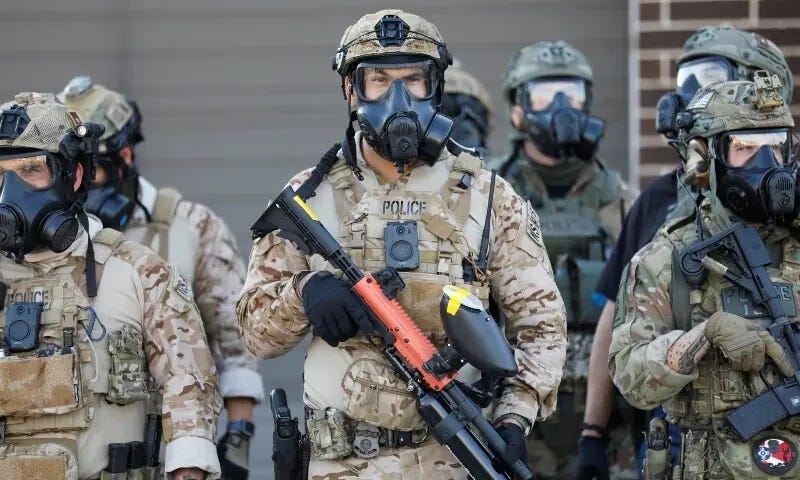
Speaking for the US State Department, Deputy Chief of Mission for the OAS, Julianna Aynes-Neville, rejected the need for an OAS investigation into US actions.
“It is countries that have weak legal and civil protections where the OAS should be focusing their attention, said Aynes-Neville. She claimed that legal procedures in the US are robust, that the OAS hearing violates due process for the US government because “investigation and litigation is ongoing, which is a critical threshold” for criticism by the organization.
“This administration has taken a particularly engaging approach to protecting freedom of speech and expression across the globe,” she stated.
Andrea Pochak, a lawyer representing the IACHR, rejected the idea that the hearing is part of an effort to single out the United States, pointing out that all OAS member states are subject to human and civil rights monitoring.
“Priests are not terrorists. Journalists are not terrorists,” she said. “And people expressing their solidarity for migrants are not terrorists.”
The US has used conspiracy and terrorism charges against ICE protesters, and the US State Department has often described the actions of anti-ICE activists as “terrorism.”
Antonio Romanucci, the lawyer representing the family of Renee Goode, who was killed by an ICE agent in Minneapolis earlier this year, also called for the OAS to carry out a “full transparent investigation” as “the only way Renee Goode’s family will ever find answers.”
“My client was killed by an ICE agent in her vehicle,” he said. “Her last words to the agent who murdered her were ‘I’m not mad at you.’
Romanucci accused the government of a pattern of making false statements about those that DHS personnel have attacked or killed, such as in the case of his client, Goode.
State Department and US officials have repeatedly lied about the actions of both migrants and activists before deploying force, in some cases lethal force.
OAS human rights decisions are not binding to US lawmakers under domestic law, but the US has often praised the organization’s work investigating autocratic regimes in Latin America.
You can also donate a one-time gift via “Buy Me a Coffee”. It only takes a few moments, and you can do so here.
And if you can’t do any of that, please do help us by sharing the piece! We don’t have billionaire PR teams either.
Hasta pronto, piratas!