This feature is an installation of The Ship’s Log, for paid PWS subscribers. The Logs are behind-the-scenes notes from our crew’s work as freelance journalists in an unpredictable region. If you’re a subscriber, thank you, and read on! If not, please consider supporting our work for just $5/month. This feature will become available to all readers in 5 days.
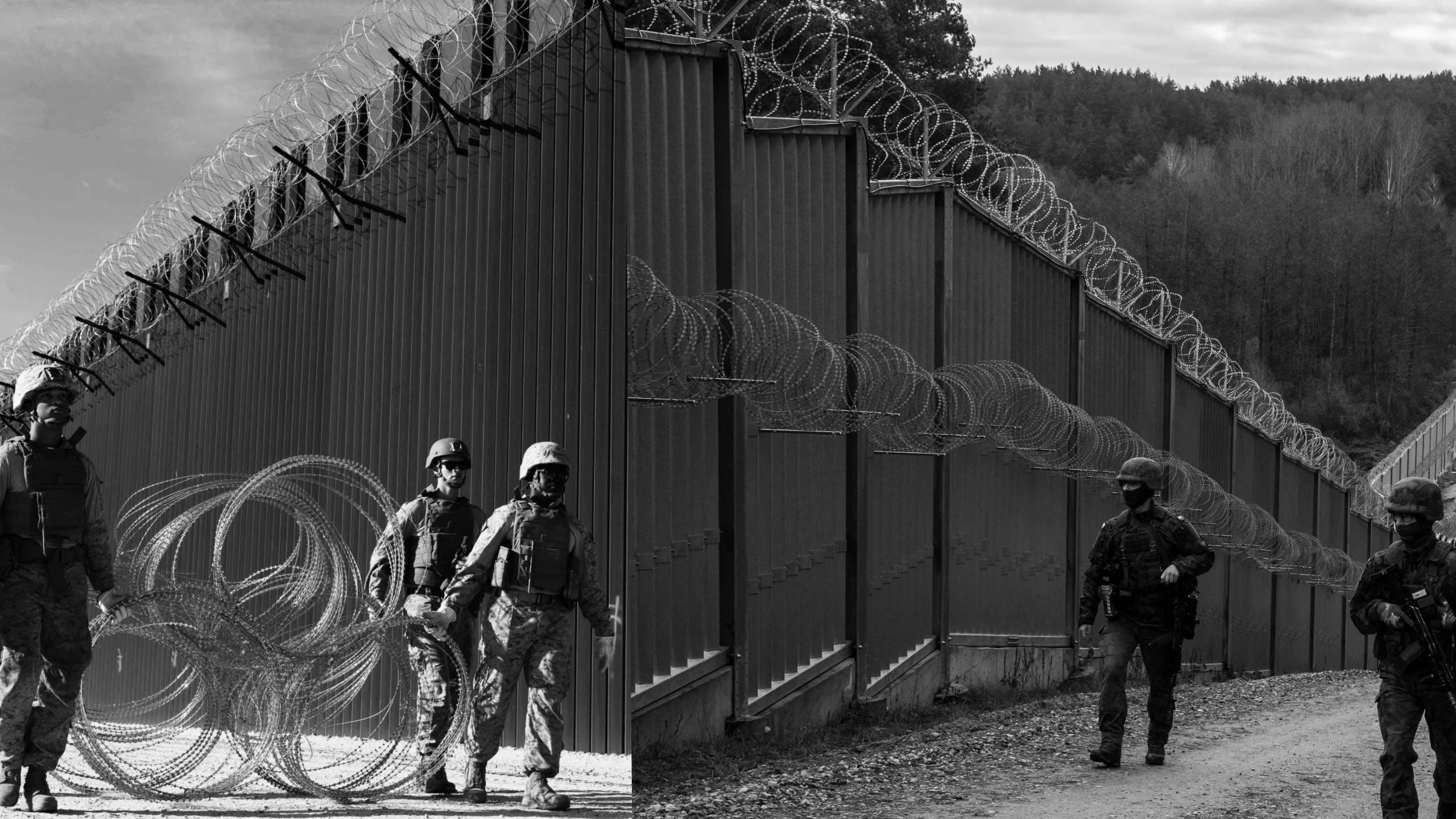
The world is getting smaller. As more and more countries veer towards militarized borders and migration crackdowns, walls restricting our movement are being erected everywhere — legally, metaphorically, and literally. Anti-migrant hysteria is sweeping wealthy nations across the world, and as it does so it leaves behind social devastation and ruined civil rights in its wake, for both migrants and native-born alike.
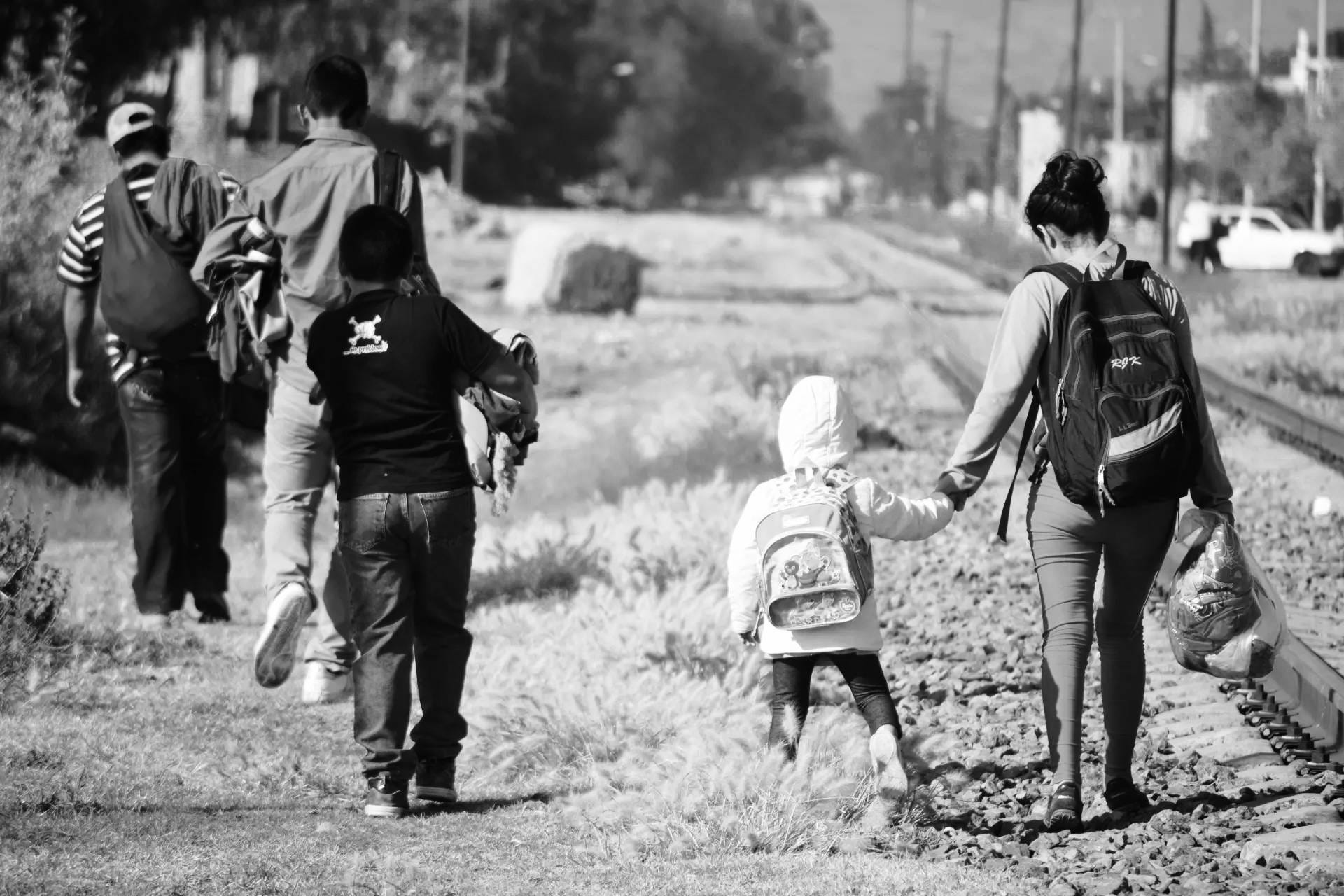
Countries are increasingly adopting stricter visa laws, carrying out domestic crackdowns based on racial profiling (that often sweep up not only migrants but also natural-born citizens), and using a host of excuses to dismantle the right of refugees around the world to seek asylum. Many countries are also enacting “deterrence” migration policies, which are designed to make migration as dangerous as possible so that fewer people attempt it.
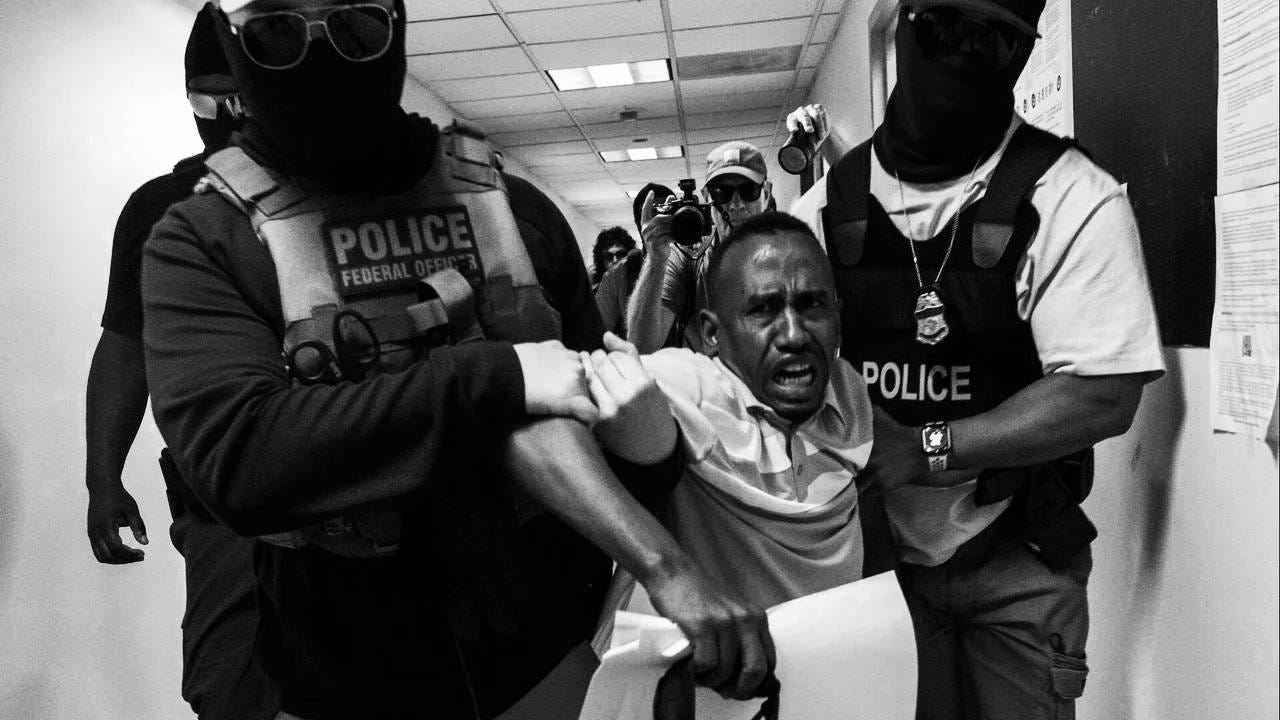
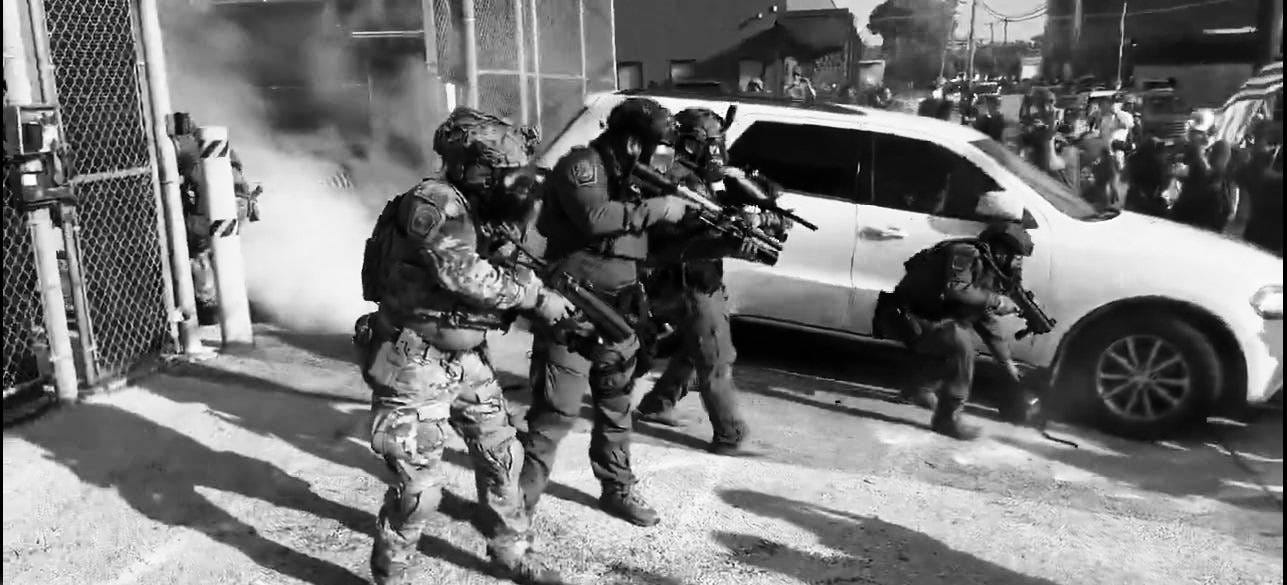
Crackdowns in the United States are the most visible, with heavily armed masked men snatching adults and children alike from streets, classrooms, churches, and even their own beds. But the US is far from alone. The European Union continues a relentless march towards becoming “Fortress Europe”, tightening asylum laws, over-policing racialized migrant communities, and enacting policies designed to make sea crossings into the continent more deadly.
“Migrants, asylum seekers, and refugees face violence, illegal pushbacks, and even death as a result of the EU’s focus on deterrence and externalization policies,” Human Rights Watch deputy European Director Benjamin Ward wrote in a December report on the trend.
In Eastern Europe, multiple countries are using the war in Ukraine as an excuse to turn away asylum seekers, refugees, and migrants alike, particularly those from poor countries in Africa and the Middle East.
Oxfam, in a report from this year, documented violence and discrimination in Poland that the NGO describes as “torture.” In Chile, the recent winner of presidential elections has promised to deport more than 350,000 Venezuelans, whom he falsely claims have increased crime rates in the country.
In Mexico, both the north and south borders has been hardened, in large part due to the insistence of Washington, D.C. Migrants attempting to cross the country from Guatemala have been arbitrarily detained, extorted, and subjected to both physical and sexual abuses at the hands of security forces.
And as politicians stoke the flames of anti-migrant hysteria for personal gain, scapegoating migrants for a host of societal problems, they often in turn demonize and even directly target journalists who report on migration issues.
Journalists around the world have been arrested, banned from producing coverage of migration abuses, physically attacked by authorities, and faced travel bans, confiscation of footage, and suffered both online and real-life intimidation and threats against their lives.
Normal citizens who help migrants are often criminalized as well.

The Roots of nativism aren’t economic. They aren’t even rational
Economic arguments against migration aren’t based in reality. Migrants don’t “steal jobs,” they create them by massively stimulating growth via consumption of goods and services. In all countries, especially when migrants are allowed to work, they pay more in taxes than they take in state services.
Multiple studies have suggested that if open borders were implemented globally, they would deliver a premium of over $100 trillion dollars to the world economy.
But the roots of nativism, though proponents may cite false claims about economics, are fundamentally based in something else entirely: irrational fear.
We humans are easily shaped by fear. When we believe we are threatened, even when we hold that belief falsely, we will often trade away our rights for security. We grant broad surveillance powers to the gendarmes in our respective nations, hoping that threat can be held at bay through crackdowns and abandonment of privacy, liberties and rights.
After 9/11 in the US, the “Patriot Act” ushered in an age of mass surveillance, expanded intelligence and police powers, oppressed marginalized communities and systematically dismantled fundamental civil rights — especially in Muslim, Arab, and South Asian communities.
In El Salvador, President Nayib Bukele, the self-styled “coolest dictator in the world,” has ushered in a meteoric rise in his popularity via “temporary” security measures that dismantle basic civil liberties enshrined in the Salvadoran Constitution. Bukele’s security policies have also led to arbitrary arrests, defendants who never see a day in court, extrajudicial killings, forced labor, torture, and politically motivated repression of government critics.
When we are afraid, we can rationalize almost anything. “Secret police in masks are necessary,” we may think. “They hide their identities to protect themselves and me.” Fear is like a sickness, a virus. And when we are afflicted by the disease of fear we do not believe that granting such broad powers to security forces is dangerous — quite the contrary. It is necessary. The threat is grave enough to merit it.
It doesn’t matter if our fears are based on lies. It doesn’t matter that if our ‘enemies’ are shadowgrams — figments of dark fantasies that have never, and will never, exist.
Hundreds of studies from dozens of countries show that migrants commit crimes, particularly violent crimes, at a much lower rate than natural-born citizens.
Colombia, which effectively conducted one of the largest modern open borders experiments in the modern era, has absorbed millions of Venezuelan migrants since 2015. Homicide rates have plummeted in that same period.
That is to say, migrants lower crime rates in receiving countries.
But much like the economic claims, anti-migration crime arguments aren’t based on data or logic. They are based on emotion.
This fear is being fabricated to attack our very liberties
Research has long shown that fear affects our very ability to reason. It can even change our memories. When we revisit a memory of a traumatic experience, our terror and anxiety reform the very images and sensations that we carry with us.
Many of those who endorse an authoritarian attack on our civil rights and liberties believe in a mythical past that was somehow better. Maybe they are old enough to know the anxiety and inconvenience of lost youth. Or maybe they are simply saturated in memes and mnemonic phrases that insist it was so.
If they are young, perhaps they believe that their lack of ability to get everything they want in the world — the posh job, the romantic partner, the feeling of security that would finally offer them refuge from the crippling fear — is due to migrants and not the fundamentals of the systems they live in.
It is common for humans to misattribute the causes of our fears. This malaise could certainly not be our own fault, we may believe. It must have an external cause.
It is a self-reinforcing loop that ignores all contrary data because it must.
Those with power over the societies we live in, politicians, business magnates, rulers of countless sorts, see that this fear is useful. They feed and nurture it. They instrumentalize it to transfer effective power away from society and into the hands of authoritarians.
Many, of course, realize the fear is irrational. They know that stoking moral panics and public night-terrors will require constant lying. But that is no problem. It gets them what they desire most in the world: power over others.
All of this is to say: the fear being sold by irresponsible journalists, politicians, and on social media is fabricated. It is manufactured. And it is being utilized to empower a global trend towards totalitarianism.
Those who advocate for draconian measures share tactics, propaganda, and policies. The same rhetoric used to demonize Africans in France or Greece is used to attack Haitians and Latinos in the US, Muslims in the Netherlands, and Syrians in the UK.
The targets are interchangeable. But we don’t have to buy this fear. If we value our liberties and freedoms, we must reject it. And we can. We can choose not to live in fear. We can encourage our communities and loved ones to do the same.
We can construct a social fabric that strengthens our communities and protect ourselves organically from the ground up. Authoritarians encourage isolation and individualism exactly because it makes us weaker as a society and easier to repress.
Rejecting fear is a radical political act. And doing so makes our communities tighter, safer, and more resilient. Just as migration does.
Attempting to use data and reason to convince those who embrace nativism, and the false rhetoric of authoritarianism, is a futile exercise, because these belief systems aren’t based on logic. But it can be combated among those close to us by rejecting fear in our communities and embracing trust, building a social fabric more resilient against manipulation.
We can defeat it by doing the work of building trust among our loved ones and in our communities. And trust in our communities is a fundamental requisite to true liberty.
The alternative is tyranny.