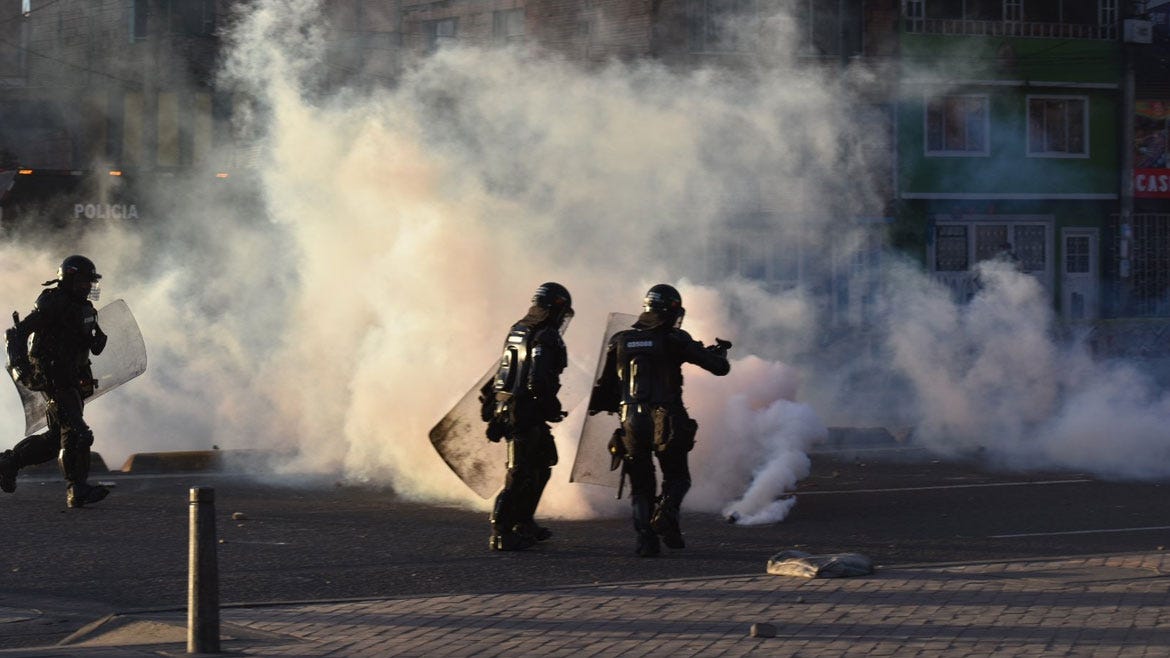
President Abelardo de la Espriella’s government is presenting Colombia’s Congress with a comprehensive “counterterrorism statute” that would give authorities enhanced powers to fight designated terrorist organizations.
Critics, however, claim the bill would not only criminalize some forms of dissent but also “wage a crusade against the political opposition, social movements, and social protest.”
A 116-page draft bill would facilitate a military approach to combating illegal armed groups and organized crime groups, for example through air strikes, and create a National Registry of Terrorist Organizations and Actors, which would make it easier to freeze the assets of suspected terrorists and their financiers.
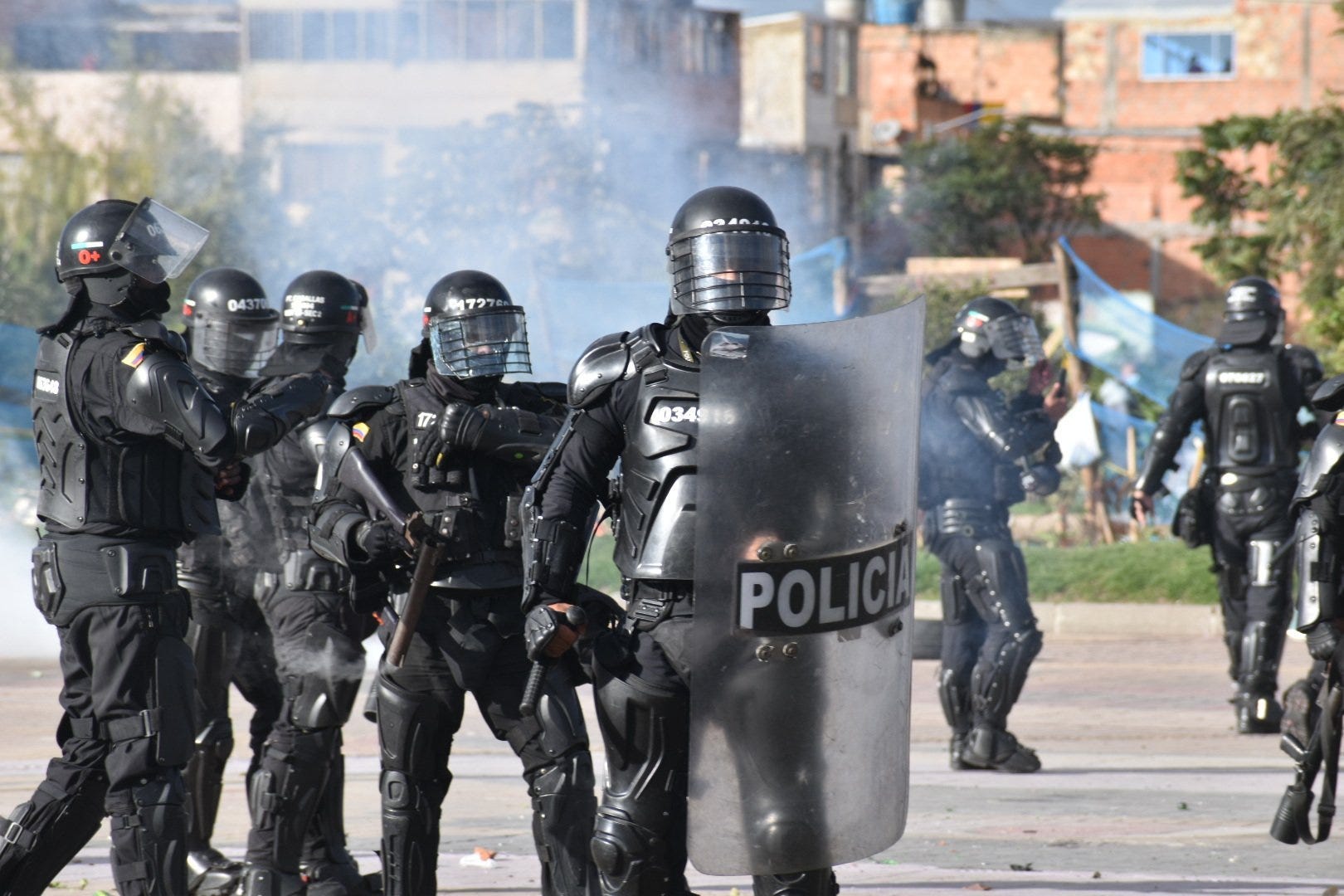
Further, the presence of any group or individual designated a “terrorist group” by the presidency at a protest would result in terrorism charges against protest organizers. As would any violence against police officers, or “rhetoric encouraging violence” against police officers.
Right-wing governments in Colombia have often falsely claimed that protests in the country are organized by left-wing rebel groups that the state designates as terrorist organizations.
Last but not least, the bill creates a presidential Terrorism Commissioner and a special prison regime for leaders of designated terrorist organizations.
The bill coincides with a presidential decree that would allow police to enter public universities during public protests. After a series of massacres inside campuses during student strikes, Colombia’s Constitution granted autonomy to universities, a law which police have long interpreted as a prohibition on crackdowns within their grounds.
Curious timing
De la Espriella didn’t get much of a honeymoon period after he took power in August after a razor-thin election victory. Accusations of a bungled response to earthquakes in the country were followed quickly by the takeover of an entire region on the northern coast by criminal armed group, ACSN.
His “iron fist” security policies have also inspired pushback and accusations of killing civilians. De la Espriella’s approval rating has been steadily trending downward since he assumed office.
Some union and student groups are already calling for a national strike in November. Many activists are interpreting the “counterterrorism” law as an attack on their right to dissent.
Police killed more than 60 people during Colombia’s national strike in 2021. The new law would grant broad powers to security forces to both prosecute and combat protesters that police did not possess at the time.
With a right-wing majority among lawmakers, approval is likely
Although not formally part of De la Espriella’s coalition, right-wing parties hold a majority in both the Senate and Congress. Centro Democrático, the party of former President Álvaro Uribe, has already expressed strong support for the proposed bill.
Opposition lawmakers, however, have promised stiff resistance. Ivan Cepeda, leader of the opposition coalition, and the Senator who narrowly lost Presidential elections to De la Espriella earlier this year has claimed that the new bill would essentially “form a dictatorial regime.”
“The true objectives of this statute are to wage a crusade against the political opposition, social movements, and social protest, “ said Cepeda in a video response to the proposal.
“Most of the articles in this draft are devoted to provisions that seriously undermine civil liberties, human rights, and the right to protest — not to illegal armed groups,” he said.
The broad legal definition of the word terrorism would allow the government to prosecute protest organizers on terrorism charges if any clashes occur between protesters and police.
Broadening the definition of “terrorism”
The antiterrorism statute seeks to change Colombia’s criminal law and define terrorism as any individual or collective conduct that produces “fear, panic or terror, creating risks, threats or the use of violence.”
A technical body of the National Security Council (NSC) will advise the council on the inclusion of organizations or individuals that ought to be included in its public National Registry of Terrorist Organizations and Actors.
In the case of riots, “the penalty shall be increased by up to double when the riot is directed against law enforcement units conducting operations; or is carried out in conjunction with listed terrorist organizations.”
The bill also allows Colombian authorities to investigate and prosecute terrorism, terrorism financing, or providing material support for terrorist organizations abroad.
The NSC will report directly to the Presidency, which will appoint its director and staff. The body would significantly expand the powers of the executive branch in the country.
This article contains additional reporting from Colombia Reports, re-published here with permission.

You can also donate a one-time gift via “Buy Me a Coffee”. It only takes a few moments, and you can do so here.
And if you can’t do any of that, please do help us by sharing the piece! We don’t have billionaire PR teams either.
Hasta pronto, piratas!