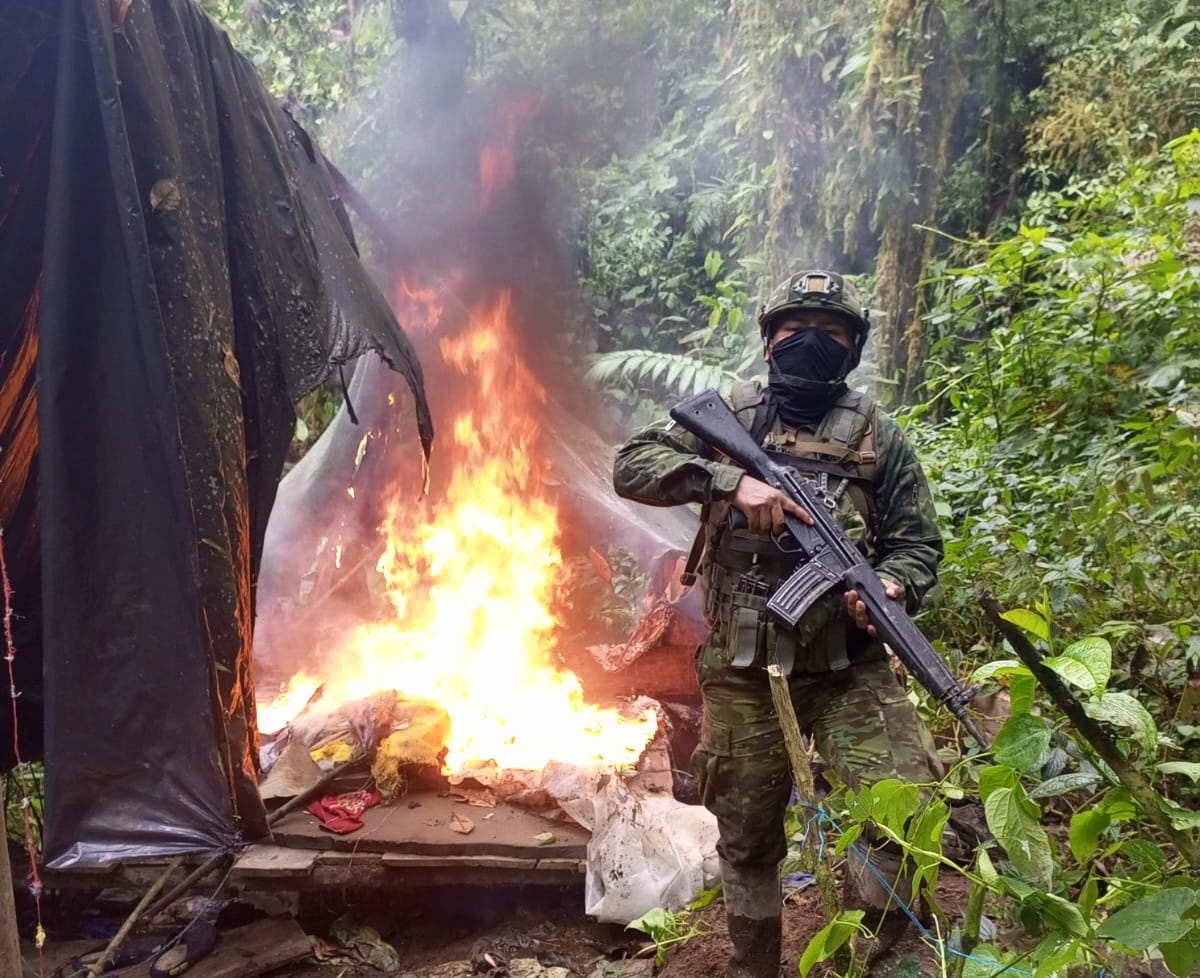
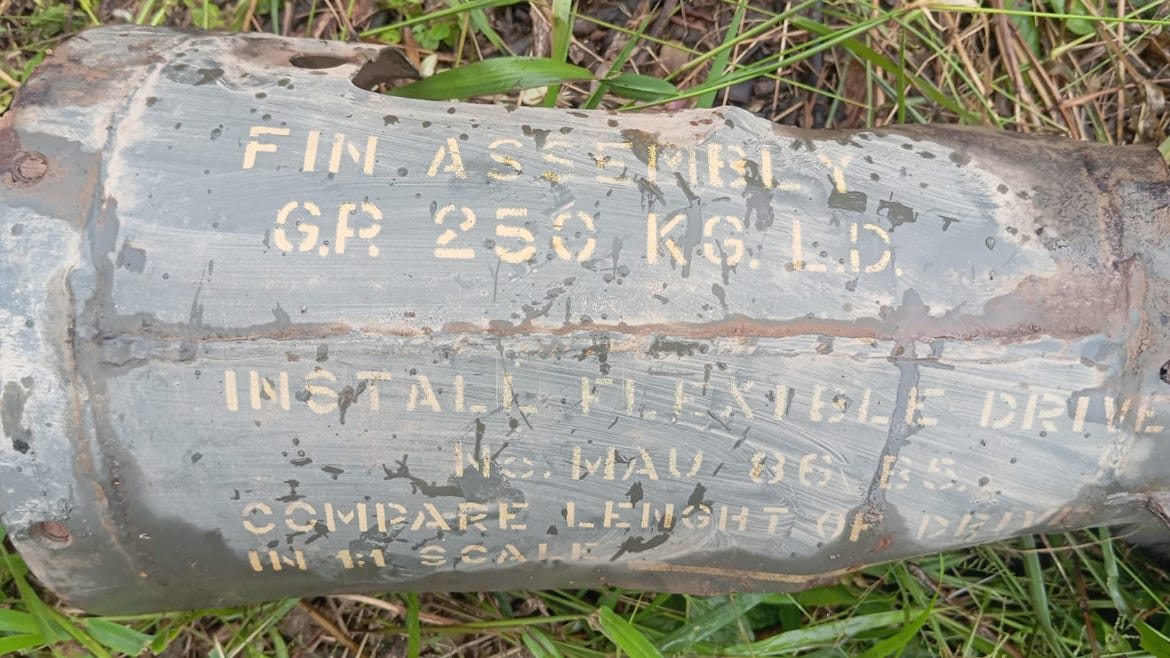
At a televised cabinet meeting Monday evening, Colombian President Gustavo Petro revealed the discovery of a 250 kilogram (552 pound) bomb in the municipality of Ipiales, Colombia, near the Ecuadorian border.
“We’re being bombed,” he said, explaining that the explosive artifact was Ecuadorian in origin, and linked to recent bombings Ecuador has carried out near the Colombian border in cooperation with the US military.
Ecuadorian President Daniel Noboa denied the accusations repeatedly even as photos of the bomb circulated in the press and social media.
The bomb was discovered by a resident of Ipiales, who told AFP that he discovered the unexploded ordinance “50 or 60 meters” from his home after seeing Ecuadorian aircraft conduct a bombing near the border on March 3.
Since Monday, Petro has insisted that the bomb is from Ecuador, and continued to provide new information to support those claims, even as Noboa doubled down on his denials.
Diplomatic relations between the two countries have been strained since late last year, when Ecuador imposed tariffs on all Colombian goods as Noboa blamed Colombia for recent increases in crime in Ecuador.
High-level meeting presents new hypothesis
In an effort to defuse the conflict, Colombia’s Defense Minister, Pedro Sánchez, and Ecuador’s Defense Minister, Gian Carlo Loffredo, held a 90-minute discussion about the incident on Wednesday evening, according to statements from both governments.
Following the meeting, Colombian Minister of Defense Pedro Sanchez said the explosive was the same as explosives used by Ecuador in a military action on March 3 near the Colombian border.
Sanchez wrote that “the leading theory suggests that the bomb did not enter Colombian territory deliberately.”
Sanchez and Ecuadorian officials said their preliminary theory is that the bomb was dropped on the Ecuadorian side of the border, just a few meters from Colombia, and after it failed to detonate “bounced” into Colombian territory.
“When (the bomb) fails to explode, it continues on its trajectory due to the laws of physics.” That could explain why “it strayed several meters into Colombian territory,” said Carlos Fernando Silva, commander of the Colombian Air Force, at a press conference following the meeting.
“We do not believe anyone did this deliberately, but rather that it was due to a physical effect,” he added, explaining that the device weighs 250 kilograms and measures approximately 1.50 meters.
Although Ecuador did not specifically admit that the explosive device originated from their military forces, they did not deny statements made by Colombian officials following the meeting.
Both countries have agreed to a full investigation, with details to be made public in upcoming days.
Noboa has promised more bombings against non-state armed actors and organized crime groups in the borderlands in operations carried out in cooperation with US military forces.

The device was detonated in a controlled manner by explosives experts, Sánchez reported.
“The investigation is ongoing to determine how and why that explosive device ended up on Colombian territory,” he added on X.
In 2008, Ecuador and Colombia experienced a similar diplomatic crisis following a bombing ordered by then-Colombian President Álvaro Uribe on Ecuadorian soil, where one of the commanders of the now-defunct FARC guerrilla group was killed.
Amid statements about the bomb, Petro mentioned the existence of “27 charred bodies,” raising questions about whether the two incidents were related.
Minister Sánchez clarified that the president was referring to another incident in January, when three explosions at cocaine laboratories killed at least 14 people in a border area.
You can also donate a one-time gift via “Buy Me a Coffee”. It only takes a few moments, and you can do so here.
And if you can’t do any of that, please do help us by sharing the piece! We don’t have billionaire PR teams either.
Hasta pronto, piratas!