

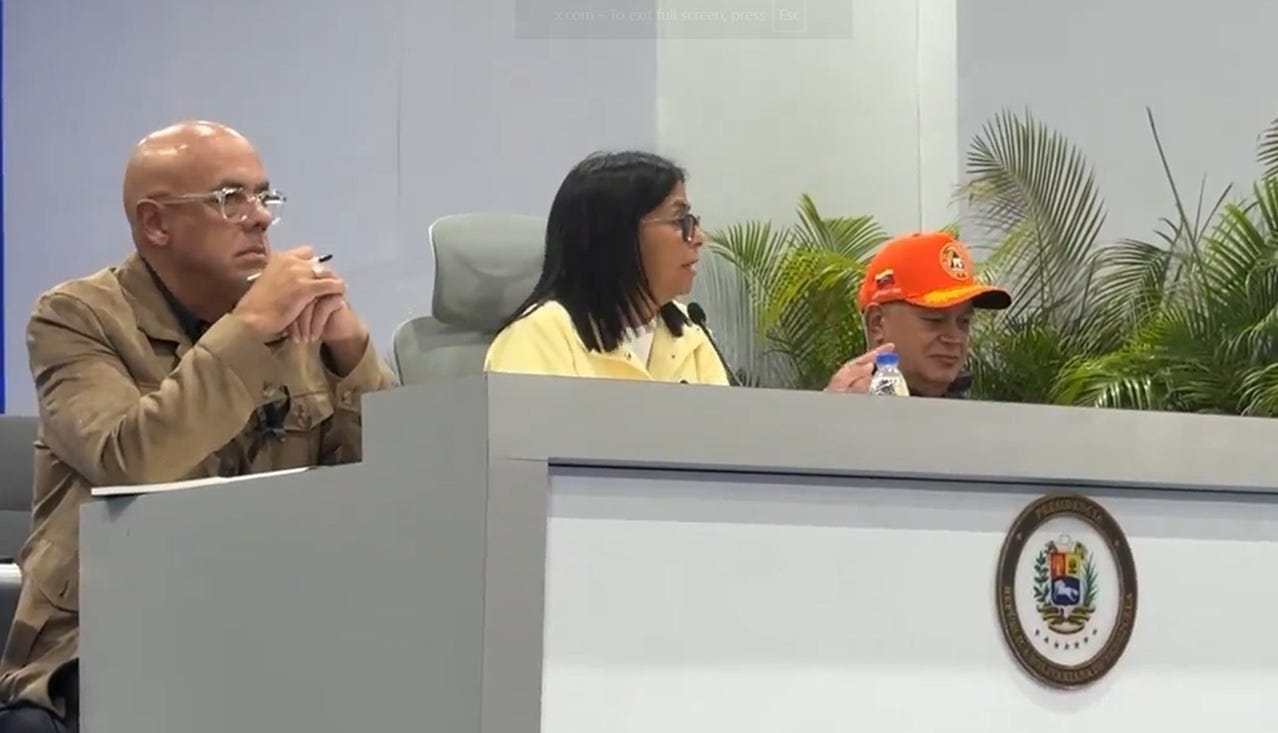
Venezuela’s Interim President Delcy Rodríguez was visibly irritated during a live press conference in Caracas. Her voice quavered at times as she pushed back on journalist after journalist from the international community who disputed her claims that response efforts by state forces were immediate and organized after twin earthquakes rocked the country on June 24.
“We can verify ourselves from reporting in the field,” said one journalist from Spanish newspaper El País, “that in those first hours it was very difficult to find any officials in affected areas. Not only was there a complete lack of journalists, but there was also no heavy machinery. We spoke to one official who said he couldn’t even find a pen to make a list of the dead.”
Rodriguez was visibly angry as she responded, almost yelling, “It is absolutely disgusting that elements of the press have created this narrative to harass, generate chaos, and interfere with rescue efforts!”
“This is why we militarized the zone!” she continued, even blaming journalists for blocking highways along rescue routes, “Disgusting!”
There is no evidence for Rodriguez’s claims about journalists blocking rescue efforts.
But journalist after journalist continued to push back, often sharing firsthand accounts that were confirmed by hundreds of videos on social media in the early hours after the earthquakes, showing that official information was lacking and that many affected areas received no help at all.
In response, Rodriguez also cited people in hospitals who are “alive only because they were rescued by Bolivarian forces,” she said, referring to the National Guard. “I invite you to visit and speak with them.”
It was a far cry from the press conferences that Rodriguez is used to, which are often attended only by state and friendly media companies, where stenography rather than journalism is the goal, and no journalist dares speak ill of the state.
But as criticism of the government disaster response mounts, both domestically and internationally, Rodriguez is showing she has many unlikely allies in Washington, D.C.
The U.S State Department’s Bureau of Western Affairs on Monday congratulated the Venezuelan government on “completely fulfilling” its responsibilities during rescue efforts, saying, “We remain steadfast in our commitment to stand with the Venezuelan people.”
Shortly after the disaster, Trump falsely claimed that Venezuelans were “dancing in the streets,” because of U.S rule over the country since January, when U.S forces attacked Caracas and captured then-president Nicolas Maduro.
“Venezuela has been fantastic. We have a great relationship,” Trump continued. “It was a one-day war. We struck them once, and now we’re taking millions of barrels of oil.”
Trump has reportedly even gone so far as to block opposition leader Maria Corina Machado from returning to the country. The two leaders have had a strained relationship for months, despite Machado offering him her Nobel Peace Prize last year.
Other officials in the Trump administration called Machado’s bid to return to the country “grotesque political opportunism,” claiming the opposition leader only “wants a photo op of her passing out our aid,” according to reporting from Axios and the New York Times.
Even Secretary of State Marco Rubio, who has long been a staunch ally of Machado, is losing patience, according to reporting by the Times.
Rodriguez was hand-picked by the administration to run Venezuela by the U.S, which has often seemed far more interested in exploiting oil, gold, and rare-earth minerals in the country than political reform.
She was reportedly in communication with U.S. officials before Maduro was captured and aware of their plans. And she has since been often congratulated by Trump as “doing a great job.”
It is a dramatic reversal for both the Republican party and Chavista leaders, the name of the socialist movement created by former Venezuelan President Hugo Chavez. Senior Chavista leaders, who for years have criticized the U.S as imperialists, opportunists, colonizers, and vultures, have had only glowing things to say about Trump since January.
Similarly, administration officials in the U.S, who only months ago were claiming that leadership in Venezuela were “drug traffickers,” “terrorists,” and “criminals,” in statements that often criticized socialism and human rights violations in the country, have become seemingly staunch allies.
Two disparate camps have been only too happy to plan lucrative business deals together, even if the U.S is keeping the lion’s share of profits. MAGA-Chavismo is in ascendancy, and it has thrown traditional campists from all sides into disarray.
Rodriguez supporters within her party make a strong point when they point out that the leader is effectively negotiating with a gun to her head, but it’s clear the relationship isn’t as simple as that.
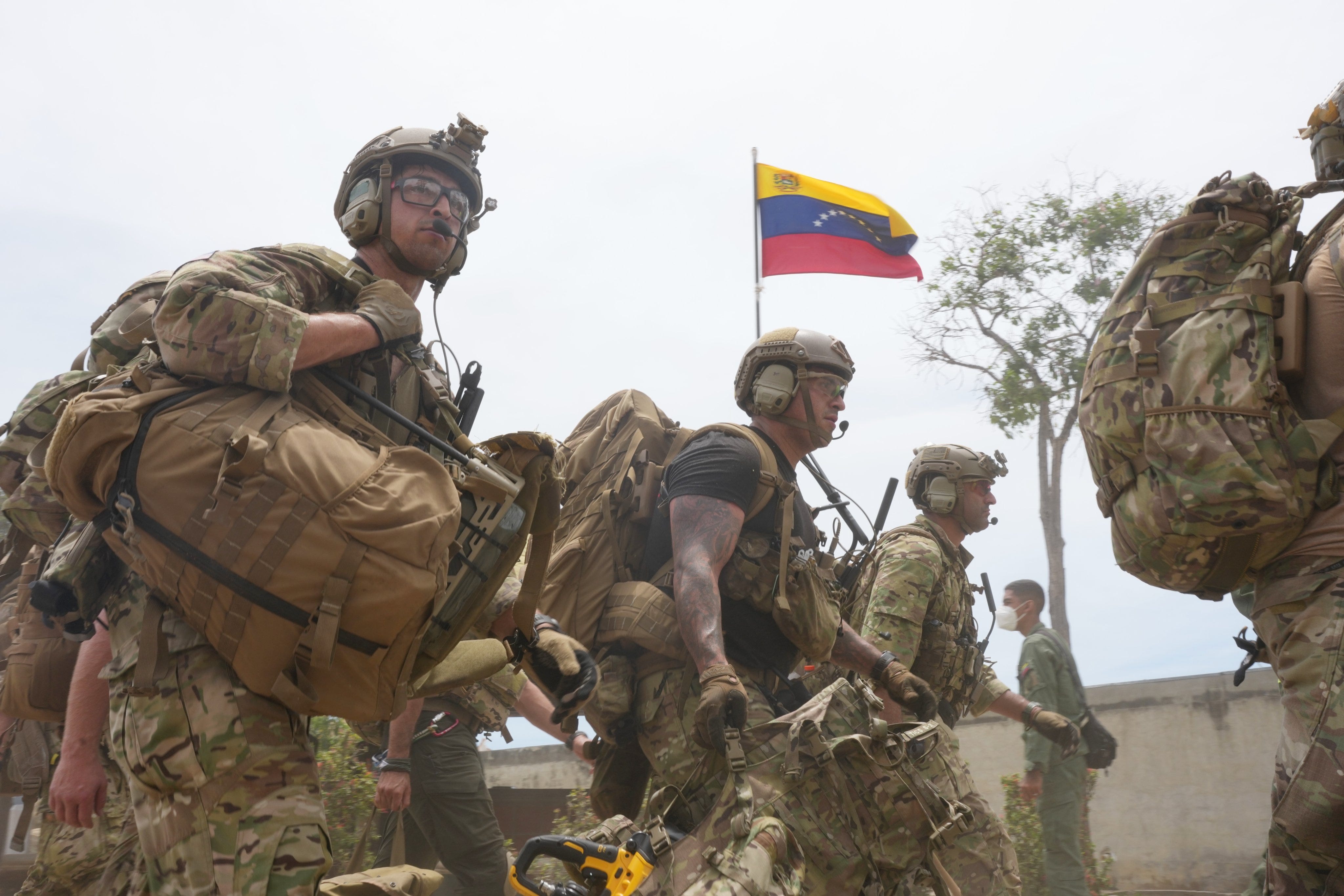
On the contrary, Rodriguez has often appeared eager to open up mineral reserves to foreign investors, often thanking Washington profusely for one-sided business deals, and even working directly with the US military and the US Central Intelligence Agency (CIA) to carry out strikes on criminal leaders in the country.
Combined with her talks with the CIA before Maduro’s capture, some former supporters even refer to Rodriguez as “Del-CIA.”
Meanwhile, the top U.S. diplomat in Venezuela, John Barret, has had nothing but support for the Rodriguez administration. He has credited Rodriguez with “lowering inflation” and often bragged about growing oil exports to the U.S.
As they say in the Andes, plata es plata, mijo: money is money, sweetheart. And that money seems to have made close friends of two groups who, at least on paper, claim to be staunchly ideologically opposed.
Washington clearly determined that they wanted to avoid “nation-building” —as the U.S tried and failed in Vietnam, Iraq, and Afghanistan— in Venezuela, and that Rodriguez represented the most stable (and cheapest) route to profits.
As one Venezuelan journalist pointed out to PWS in January in a conversation about how Chavista leaders were going to respond to effectively becoming a U.S client state, “There are, of course, some ideological reasons to resist US actions, but ultimately the bureaucracy in Venezuela is motivated by financial interests rather than political ones.”

Further reporting since those comments has shown his words to be prescient. Trump, Rubio, Rodriguez, the Venezuelan military, and even the CIA were all on the same page.
They wanted Chavistas to remain in power. It was both cheaper and more efficient for Washington.
The twin earthquakes have, quite literally, ground that strategy into dust. Venezuela does not have the money for reconstruction, and it will not be able to secure that money in the medium term. (I wrote an article about that this week for a US Latino media company if you’re interested in the details.)
If the U.S wants its client state to function, it is going to have to help rebuild it. And this week, Washington has signaled strongly that despite growing criticism, they believe Rodriguez is still the woman for the job.

And so we find ourselves in a strange reversal of traditional roles. Venezuelan Trump supporters in Miami are livid that the Trump administration is publicly backing the Chavista government while Chavistas in Latin America make statements that sound curiously similar to those made by the Trump administration.
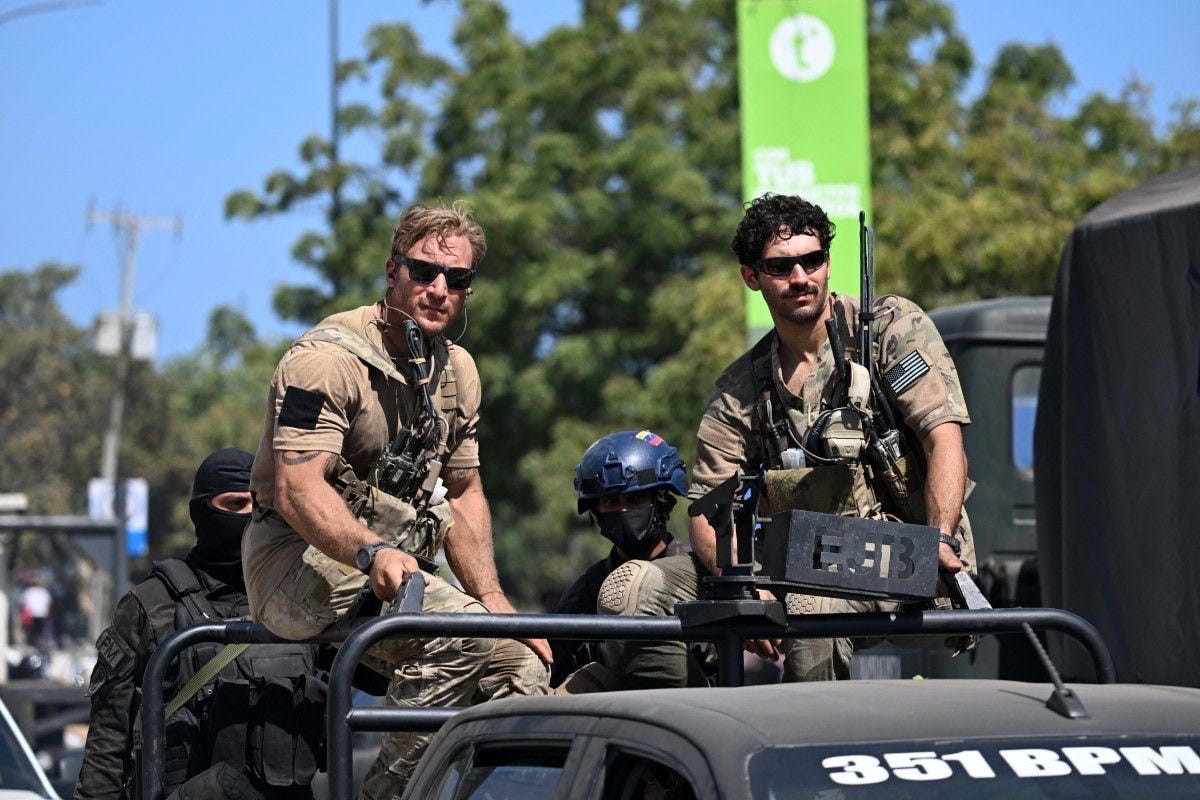
And all of this is occurring as U.S soldiers ride around in Venezuelan military vehicles that have “anti-imperialist” written on the side of them.
It would seem that disasters and business opportunities both make for interesting bedfellows.
You can also donate a one-time gift via “Buy Me a Coffee”. It only takes a few moments, and you can do so here.
And if you can’t do any of that, please do help us by sharing the piece! We don’t have billionaire PR teams either.
Hasta pronto, piratas!
Del -CIA